

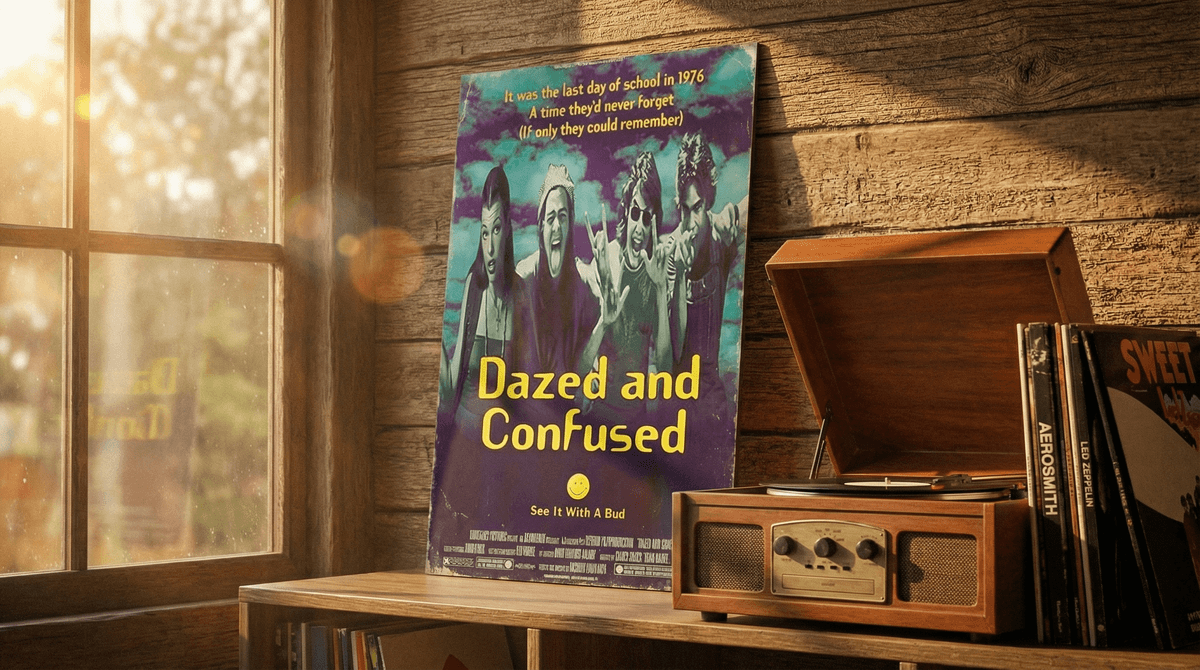
Dazed and Confused: What Parents Need to Know Before Teens Watch
TL;DR: This 1993 Richard Linklater film is a nostalgic look at the last day of school in 1976 Texas, but it's packed with constant marijuana use, heavy drinking, hazing rituals, sexual content, and pervasive strong language. It's rated R for good reason. If your teen is mature enough for a conversation about peer pressure, substance use, and the difference between romanticizing the past versus learning from it, this could be a worthwhile watch together around age 15-16+. But don't let the "classic coming-of-age film" label fool you into thinking it's harmless.
Dazed and Confused follows a group of Texas high schoolers and incoming freshmen on the last day of school in May 1976. There's no real plot—it's more a series of vignettes as these kids drive around, party, haze freshmen, philosophize, and try to figure out who they are. The cast includes early roles from Matthew McConaughey, Ben Affleck, Parker Posey, and Milla Jovovich.
The film has achieved cult classic status and is often praised for its authentic portrayal of teenage life and its incredible soundtrack. But "authentic" here means it doesn't pull punches about what some teenagers actually do—which includes a lot of behavior most parents would rather their kids not emulate.
Let's get into the details of what you're actually signing up for:
Drug Use (Constant and Pervasive) Marijuana use isn't just present in this film—it's practically a character. Kids smoke weed in nearly every scene. They smoke in cars, at parties, in parking lots, behind buildings. It's portrayed as completely normal and consequence-free. There's a running bit about buying a bag of weed, and multiple scenes of characters getting high and having philosophical conversations.
No one gets caught. No one has a bad experience. No one's parents find out. It's all presented as just part of the teenage experience, which is... not exactly the message most parents want to send.
Alcohol Use (Also Constant) Beer flows freely throughout the film. Kegs at parties, kids drinking and driving (yes, really), underage kids buying alcohol from older kids. Again, zero consequences. The "cool" kids are the ones throwing the keg party. Matthew McConaughey's character—who's in his early 20s—buys beer for high schoolers and hangs out with them, which is presented as charming rather than concerning.
Hazing and Physical Violence The film opens with senior boys hunting down incoming freshman boys to paddle them with wooden boards as part of an initiation ritual. This isn't played for horror—it's presented as tradition. The boys know it's coming, they run from it, but ultimately most submit to it. The paddling is shown on screen and looks genuinely painful.
The senior girls haze incoming freshman girls too, making them do humiliating things, cover themselves in condiments, and endure verbal abuse. One girl is forced to propose to a senior boy on her knees in a parking lot while covered in mustard and ketchup.
Ben Affleck's character is particularly cruel, taking genuine pleasure in hitting kids with a paddle. The film does present him as kind of a jerk, but the hazing itself is treated as just "how things are."
Sexual Content and Misogyny There's constant sexual talk and objectification of girls. Guys rate girls, discuss their bodies, and pressure each other about sexual conquests. There's a scene where a girl is pressured to perform oral sex (it's implied, not shown, but the setup is uncomfortable).
Several scenes show teenagers making out, and there are references to sex throughout. The general attitude toward girls from many of the male characters is pretty gross, though the film does show some of the female characters pushing back against this.
Language The f-word appears constantly—we're talking dozens and dozens of times. There's also frequent use of other profanity, sexual slang, and some homophobic language that was unfortunately common in the 70s (and sadly, still around today).
Here's the thing that makes this complicated: Dazed and Confused is actually a really well-made film. Richard Linklater captured something authentic about the aimlessness of adolescence, the anxiety of social hierarchies, and that specific feeling of a summer stretching out before you with infinite possibility.
The characters feel real. The dialogue sounds like how teenagers actually talk (or talked in the 70s, anyway). The soundtrack is phenomenal—Aerosmith, Alice Cooper, Deep Purple, ZZ Top. And underneath all the partying, there are genuine moments of kids trying to figure out their identities, questioning authority, and navigating the weird social dynamics of high school.
The film doesn't glorify everything it shows. Some characters question the hazing. Some kids choose not to participate in certain behaviors. The "coolest" character (played by Jason London) is actually pretty thoughtful and kind. But the film also doesn't condemn much of anything—it just observes.
Many parents who are now in their 40s and 50s saw this movie in their teens or twenties and have fond memories of it. It's easy to feel nostalgic about a film that captures a specific moment in time so well.
But here's what's worth remembering: the 1970s had the highest rate of teen drunk driving deaths in American history. The "consequences-free" drug and alcohol use shown in the film wasn't actually consequence-free in real life. And hazing rituals that were treated as normal tradition have since been recognized as harmful and are now illegal in many contexts.
Nostalgia can make us remember things as better or more harmless than they actually were. You might want to think critically about what you're nostalgic for before sharing it with your teen.
Ages 13 and under: No. Just no. The content is too mature, and younger teens don't yet have the critical thinking skills to contextualize what they're seeing.
Ages 14-15: Probably still too young for most kids, but it depends on maturity level. If your 15-year-old is already having conversations with you about peer pressure, substance use, and making good choices, and you're planning to watch together and discuss afterward, maybe. But this isn't a "throw it on during family movie night" situation.
Ages 16-17: This is the sweet spot if you're going to watch it at all. Older teens can better understand the film as a period piece and cultural artifact rather than a how-to guide. They're more likely to recognize the problematic elements and have conversations about them.
Ages 18+: At this point, they're adults and can make their own viewing choices. But if they haven't seen it yet and you're watching together, the conversation is still valuable.
This isn't The Breakfast Club or Ferris Bueller's Day Off. Those films have some mature content too, but they're fundamentally more optimistic and less focused on substance use. Dazed and Confused is grittier and more realistic in some ways, which means it's also more potentially influential.
The lack of consequences is the biggest issue. In the film's universe, kids drink and drive and nothing bad happens. They smoke weed constantly and no one gets in trouble. The hazing is painful but everyone survives and some even laugh about it later. Real life doesn't work this way, and teens need to understand that.
Your teen is probably already aware of most of this content. Let's be real—if your 16-year-old goes to a typical high school, they know kids who drink, vape, and experiment with substances. The film isn't going to introduce them to brand new concepts. But it might normalize behaviors you'd rather not normalize, which is why the conversation matters.
It can be a conversation starter. If you do watch together, this film opens up discussions about:
- Peer pressure and how it works
- The difference between how drugs and alcohol are portrayed in media versus their real effects
- Hazing culture and why traditions aren't always worth keeping
- How we romanticize the past
- Gender dynamics and respect
- Making choices that align with your values even when everyone else is doing something different
If you decide to watch Dazed and Confused with your teen, here are some conversation starters for afterward:
"What did you think about how the movie showed drinking and drug use?" Let them lead. See if they noticed the lack of consequences. Ask if they think that's realistic.
"The hazing scenes were pretty intense. What did you make of those?" Talk about the difference between tradition and bullying. Discuss consent and power dynamics.
"How do you think the movie portrayed girls versus boys?" There's a lot to unpack here about gender expectations and respect.
"Do you think things are different now than they were in the 70s?" Some things have changed (seatbelt laws, drunk driving awareness, hazing policies). Some things haven't (peer pressure, social hierarchies, kids trying to figure out who they are).
"What do you think the movie was trying to say?" This is a good one because honestly, the film doesn't have a clear moral message. It's more observational. What your teen takes from it will tell you a lot about their current thinking.
If you're looking for coming-of-age films that explore teenage life with less intense content, consider:
- The Edge of Seventeen - More modern, still has some mature content but less substance use
- Lady Bird - Beautiful mother-daughter dynamic, realistic teen experience
- Eighth Grade - Captures middle school anxiety perfectly, more appropriate for younger teens
- The Perks of Being a Wallflower - Deals with serious topics but with more depth and consequence
- Booksmart - Hilarious and heartfelt, though still R-rated
For more options, check out our guide to coming-of-age movies for teens.
Dazed and Confused is a well-crafted film that authentically captures a specific time and place. It's also got constant drug and alcohol use, painful hazing, sexual content, and pervasive strong language—all presented without meaningful consequences.
If your teen is 16 or older, mature, and you're willing to watch together and have real conversations afterward, it can be a worthwhile experience. The film can spark important discussions about peer pressure, substance use, tradition versus harm, and how we romanticize the past.
But if you're looking for a fun, nostalgic movie to throw on because you remember liking it back in the day, be aware that you're going to need to do some parenting work alongside it. This isn't a passive viewing experience—it's an active one that requires context and conversation.
And if your gut is telling you your teen isn't ready, trust that instinct. The movie will still be there when they're older. There's no rush.
Want to dig deeper? Learn more about talking to teens about substance use in media or explore how to discuss peer pressure and making independent choices.