

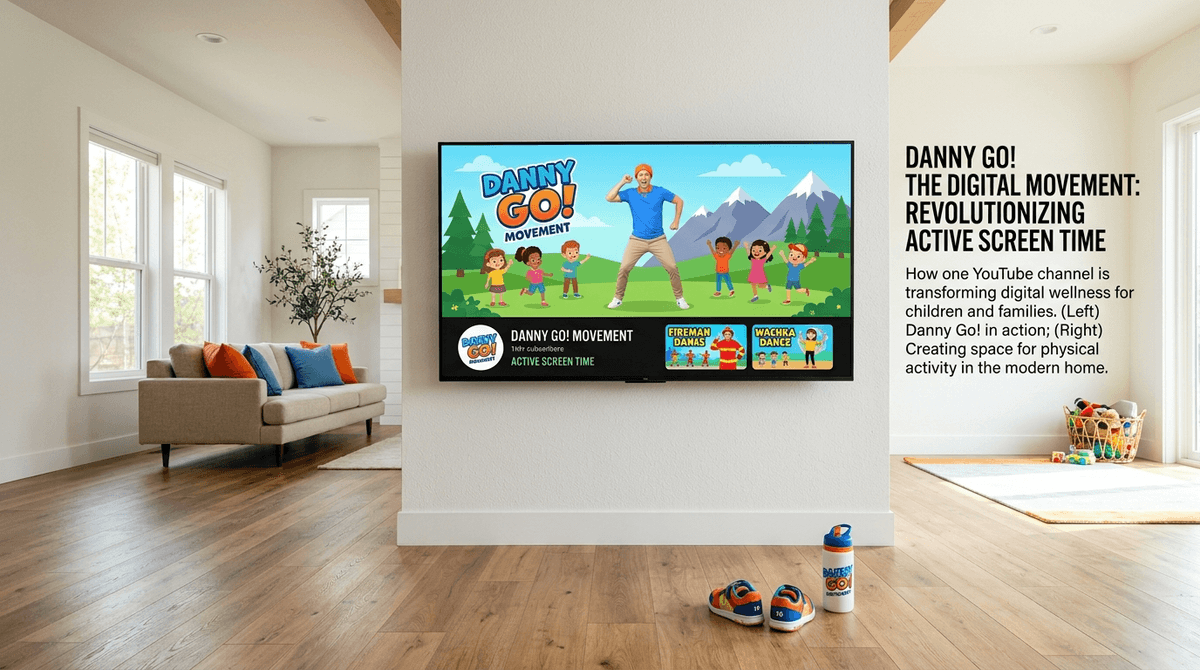
TL;DR: Danny Go! is the gold standard for "active" screen time. If you’re tired of the Cocomelon trance or the high-pitched chaos of Blippi, Danny Go is your new best friend. It’s high-energy, movement-based content that actually gets kids off the couch.
Quick Links for the "Witching Hour":
- Best for burning energy: The Floor is Lava
- Best for rainy days: The Indoor Scavenger Hunt
- Best alternative for mindfulness: Cosmic Kids Yoga
- Best "brain break" alternative: GoNoodle
If you haven’t encountered Danny Phillips (the man behind the orange cap), imagine a guy who has the energy of a Roblox character but the genuine "cool older cousin" vibe that doesn’t make you want to throw your remote through the TV.
Danny Go! is a YouTube channel centered around "brain breaks"—short, high-intensity movement videos. Unlike a lot of kids' content that’s designed to keep them glued to the screen in a dopamine-induced stupor, Danny Go is designed to be played with. He’s jumping, he’s running in place, he’s dodging imaginary lava, and he’s asking your kids to do the same.
In a digital landscape filled with "brain rot" (looking at you, Skibidi Toilet), Danny Go is a refreshing pivot toward physical wellness. It’s basically "exercise in disguise," wrapped in bright colors and catchy, original music that—dare I say—isn't actually annoying to listen to in the background.

Kids are currently obsessed with "gamified" reality. They love the aesthetics of games like Minecraft and Fall Guys, and Danny Go leans into that.
The videos often feature Danny navigating "levels" or completing "missions." When he’s running through a digital jungle or jumping over a giant swinging log, the editing makes it feel like the child is playing a live-action video game. It hits that same reward center in the brain that gaming does, but instead of twitching their thumbs on a controller, they’re actually sweating.
It’s also deeply relatable. Danny isn’t a cartoon; he’s a real guy. He’s silly, he makes mistakes, and he treats the "missions" with a level of earnestness that kids find infectious. For a 5-year-old, the floor is actually lava, and Danny is the only one taking that threat seriously.
We talk a lot at Screenwise about "passive" vs. "active" screen time.
- Passive Screen Time: Scrolling through YouTube Shorts, watching unboxing videos, or binge-watching Paw Patrol. This is where the "zombie stare" happens.
- Active Screen Time: Content that requires a physical or cognitive response.
Danny Go! is the ultimate active screen time. It’s a tool for transitions. If your kid is bouncing off the walls because they’ve been cooped up inside, or if they’re struggling to transition from school mode to homework mode, a 5-minute Danny Go video acts as a "reset button."
It’s the "Digital Brain Break" that teachers have been using in classrooms for years (often via GoNoodle), and it’s finally making its way into the living room as a primary entertainment choice.
Learn more about the difference between passive and active screen time
Target Age: 3 to 8 years old.
While older kids (9-12) might find Danny a bit "cringe" or "for babies," the preschool and early elementary crowd is the sweet spot.
- Ages 3-5: They will follow along with the basic movements. It’s great for developing gross motor skills like jumping, balancing on one foot, and following multi-step directions.
- Ages 6-8: They’ll get into the "challenges" and try to beat Danny at his own game. This age group also appreciates the music and the "lore" of the different missions.
- Ages 9+: They’ve likely moved on to MrBeast or Markiplier. If you try to put on Danny Go for a 10-year-old, expect an eye roll of epic proportions.
The content of Danny Go! itself is incredibly "clean." There’s no violence, no questionable language, and no hidden adult humor. It’s wholesome in a way that feels genuine, not forced.
However, the platform is still YouTube. Even if you start on a Danny Go video, the sidebar is a minefield.
- The "Up Next" Problem: YouTube’s algorithm is designed to keep eyes on screens. If a Danny Go video ends, the next video might be a weird, AI-generated "nursery rhyme" or a loud, over-stimulating toy review.
- Ads: Unless you have YouTube Premium, your kid is going to be hit with ads for toys, junk food, or other apps.
- Comments: While Danny Go’s comments are generally moderated, we always recommend disabling comments or using the YouTube Kids app to view this content.
Don't just use Danny Go as a "babysitter" while you're in the other room. Because it's movement-based, it's actually one of the few pieces of media that works well for co-viewing (or co-moving).
- The "Energy Dump": Use it at 5:00 PM when everyone is cranky and you need to get dinner on the table. Tell them, "Do three Danny Go missions, and then it's time to wash hands."
- The Reward: If they’ve been working hard on a non-digital task (like LEGOs or coloring), a Danny Go video is a great "active reward" that doesn't lead to a screen-time meltdown when it's over.
- The Workout: Honestly? Do it with them. It’s a legitimate cardio burst, and your kids will think it’s hilarious to see you dodging imaginary rocks in the living room.
Better Alternatives for Quiet Time
If you’re looking for something that isn't high-octane but still feels intentional, consider:
- Bluey: For emotional intelligence and imaginative play ideas.
- Storyline Online: For celebrated actors reading high-quality picture books.
- Tumble: A science podcast for kids that encourages listening skills without the screen.
A lot of parents ask: "Is this just another Blippi?"
The short answer: No.
While both involve a high-energy man in a hat, the "vibe" is entirely different. Blippi is often criticized for being overly repetitive, loud for the sake of being loud, and having a somewhat "off" persona (if you know the history of the creator, you know).
Danny Go feels like a guy who genuinely loves what he does and respects his audience's intelligence. The production value is higher, the music is better produced, and the focus is on doing rather than just watching someone else play with toys. It’s less about consumerism and more about activity.
Danny Go! is a rare win in the world of kids' YouTube. It’s one of the few channels where the "Screenwise Score" is high because it encourages kids to interact with the physical world rather than retreating from it.
It’s not "brain rot." It’s not a digital addiction loop. It’s just a guy, some catchy beats, and a lot of jumping. If you’re going to allow screen time, this is exactly the kind of intentional, high-quality content we recommend.
Next Steps:
- Subscribe to the Danny Go! YouTube channel but watch it through the YouTube Kids app.
- Try the "Floor is Lava" challenge this afternoon.
- Set a timer. Even active screen time should have a "done" point to help kids regulate their transitions.