

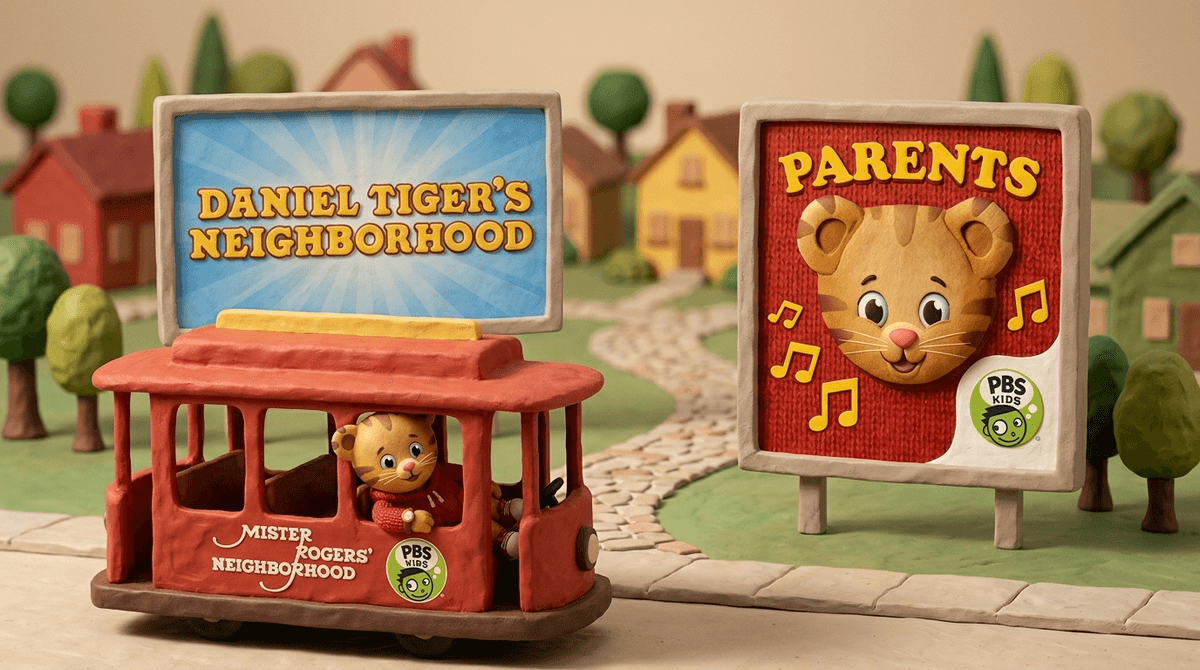
TL;DR: Daniel Tiger’s Neighborhood isn't just a show; it’s a functional operating system for a toddler's emotional development. While most "educational" shows are just bright colors and noise, Daniel Tiger uses "Strategy Songs" built on decades of child development research from the Fred Rogers Institute. These songs work because they provide musical mnemonics that bypass the "logic" brain (which shuts down during a meltdown) and go straight to the "action" brain.
Quick Links:
- Daniel Tiger's Neighborhood (Show)
- Daniel Tiger for Parents (App)
- PBS Kids (Website)
- Bluey (Show) - The next logical step for emotional intelligence.
- Inside Out (Movie) - For when they outgrow the tiger but still need the tools.
If you’ve spent more than five minutes with a three-year-old, you’ve probably heard the "potty song" or the "stomp three times" jingle. And if you’re like me, you’ve probably found yourself humming them in the grocery store long after the kids are in bed.
It’s easy to dismiss Daniel Tiger’s Neighborhood as just another animated reboot of a classic, but there is something fundamentally different happening here. While half of YouTube Kids is a "Skibidi" fever dream or literal brain rot designed to keep kids in a dopamine loop, Daniel Tiger is actually teaching them how to be human.
Here is the science of why those "little songs" are basically cheat codes for parenting.
Most kids' shows tell a story and hope the "moral" lands. Daniel Tiger takes a different approach by using Strategy Songs. These are short, four-bar musical phrases that repeat a specific social-emotional skill.
The reason they work isn't just that they’re "catchy." It’s about how the human brain processes information under stress. When a kid is mid-meltdown because you gave them the blue plate instead of the red one, their prefrontal cortex (the logic center) has essentially left the building. You cannot reason with a person whose brain is currently on fire.
However, the auditory cortex and the parts of the brain that process rhythm and melody are much more resilient. A song like "When you feel so mad that you want to roar, take a deep breath and count to four" provides a rhythmic anchor. It’s a script they can access even when they’ve lost the ability to "behave."

We have to give credit where it’s due. The show is produced by Fred Rogers Productions, and every single episode is vetted by child development experts. Unlike Cocomelon—which is essentially visual candy that can lead to overstimulation and "zombie mode"—Daniel Tiger is paced intentionally.
The "pauses" in the show, where Daniel looks at the camera and waits for the child to answer, are designed to encourage active viewing. It’s not just a screen; it’s a rehearsal for real-life interactions.
I’ve talked to parents of middle schoolers who admit that when things get "Ohio" (weird/chaotic) in their household, they still quote the show. Why? Because "You can take a turn, and then I'll get it back" is a universal truth of conflict resolution.
The show tackles complex "big kid" concepts like:
- Disappointment: "When you can't get what you want, stomp three times to help you feel better."
- Anxiety: "When we do something new, let’s talk about what we’ll do."
- Empathy: "Think about how someone else is feeling."
Even as adults, we use these same strategies; we just call them "mindfulness" or "cognitive behavioral therapy." Daniel Tiger just gives them a catchy beat.
While Daniel Tiger’s Neighborhood is the gold standard for the 2-5 age range, the "shelf life" of these lessons varies.
- Ages 2-4: This is the sweet spot. Use the Daniel Tiger for Parents app to find specific songs for whatever battle you’re currently fighting (bedtime, trying new foods, sharing).
- Ages 5-7: They might start to think Daniel is "for babies," but the lessons still apply. This is a great time to transition to Bluey, which handles similar emotional themes but with a bit more wit and "big kid" energy.
- Ages 8+: At this point, they’ll roll their eyes at the tiger. Move the conversation toward movies like Inside Out or games like Kind Words, which allow them to practice empathy in a more mature context.
I often get asked if Roblox is teaching kids about entrepreneurship. The answer is usually "no, it's just draining your bank account." But Daniel Tiger is the opposite. It’s one of the few pieces of media where the "ROI" is actually visible in your child's behavior.
However, a screen alone won't do the work. The "science" only sticks if you co-view or at least co-implement. If you aren't singing the songs back to them during the actual "mad" moments, it’s just background noise.
Check out our guide on how to co-view effectively without losing your mind
| Show/App | Goal | Screenwise Verdict |
|---|---|---|
| Daniel Tiger | Emotional Regulation | Essential. The "Strategy Songs" are legit. |
| Bluey | Social Dynamics/Play | Elite. Better for parents to watch too. |
| Cocomelon | Entertainment/Distraction | Skip it. High-dopamine, low-substance. |
| Sesame Street | Academic/Social Basics | Classic. Great for general literacy. |
| PBS Kids Games | Skill Building | Good. Safe, no-ad environment. |
You don't need to over-analyze the show with your toddler. Instead, use the language of the show to bridge the gap between the screen and real life.
- Acknowledge the Feeling: "I see you're feeling frustrated because the tower fell down. What does Daniel say we can do when we're frustrated?"
- Sing the Hook: Start the song. Usually, the child will join in (even if they're still crying).
- Validate the Success: "You took a deep breath. That was a great way to use your strategy."
Is Daniel Tiger’s Neighborhood "good" TV? From a cinematic standpoint, it’s fine. It’s bright, it’s simple, and the pacing is slow. But from a developmental standpoint? It’s arguably the most important show on television for the preschool set.
It doesn't just entertain; it gives children a vocabulary for their internal world. In a digital age where even kids' content is becoming increasingly fragmented and "loud," Daniel Tiger is a quiet, intentional, and scientifically-backed breath of fresh air.
If it means you have to hear the "Grown-ups come back" song for the 400th time, trust me—it’s worth it.
- Audit your "calm down" toolkit: Do you have a go-to song or phrase? If not, steal one from Daniel.
- Check out the PBS Kids website: They have great printables that reinforce these songs.
- Prepare for the "Bluey" transition: Once they hit age 5, the "Strategy Songs" might need to be replaced with the more nuanced roleplay found in Bluey.