

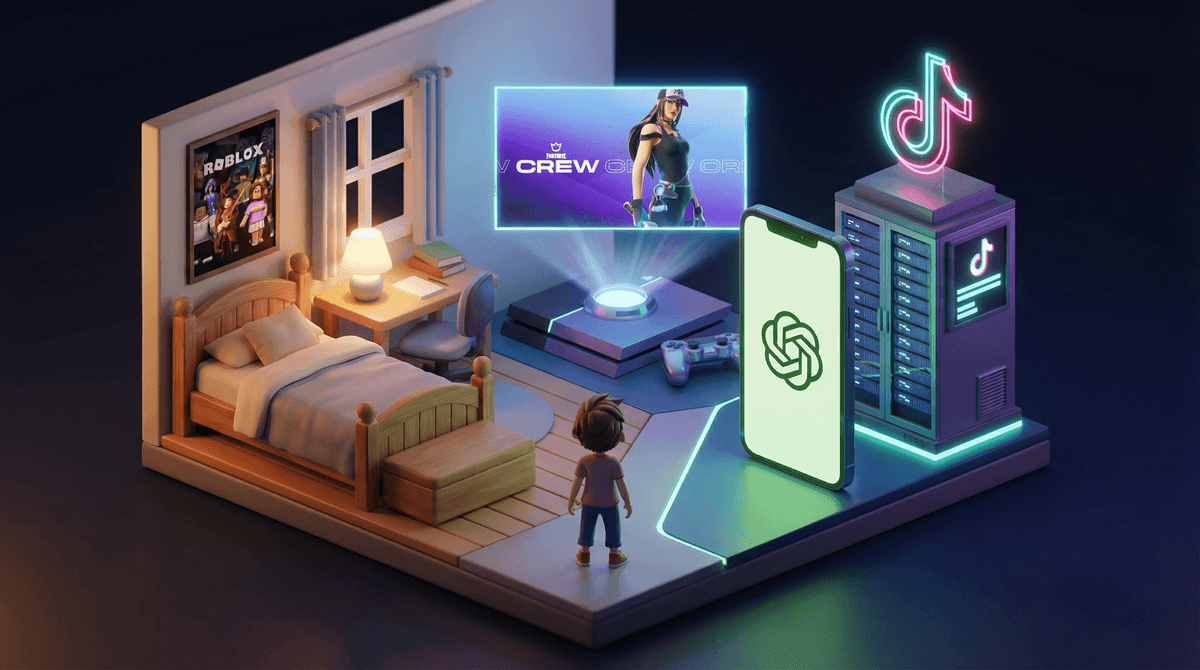
Let's be honest: when we think about teaching kids courage, we often picture them standing up to a bully or trying out for the soccer team. But in 2026, courage looks different than it did when we were growing up. Yes, it's still about speaking up when something's wrong and trying new things despite fear. But now it also means having the guts to not post that TikTok everyone's doing, to say "I don't want to play that" when friends are all on Fortnite, or to admit they don't understand the math homework instead of asking ChatGPT to do it for them.
Courage isn't about being fearless—it's about doing the right thing even when you're scared, uncomfortable, or worried about what others will think. And honestly? That's harder than ever when "what others think" is quantified in likes, views, and whether you got left on read.
Here's the thing: our kids are growing up in an environment where their social lives are simultaneously more public and more performative than any generation before them. They're navigating peer pressure that doesn't end when they leave school—it follows them home through their devices. They're making decisions about their digital footprint that could follow them for years. And they're doing all of this while their prefrontal cortex (you know, the part of the brain that handles decision-making and impulse control) won't be fully developed until their mid-20s.
The stakes feel higher because in some ways, they are. A moment of digital cowardice—going along with online bullying, sharing something they shouldn't, or staying silent when someone's being targeted—can have real, lasting consequences. But here's the good news: courage is a skill, not a personality trait. It can be practiced, developed, and strengthened over time.
Ages 5-8: The Foundation Years
At this age, courage looks like:
- Trying a new food or activity even when nervous
- Saying "I don't like that game" when friends are playing something that makes them uncomfortable
- Telling a trusted adult when something feels wrong
- Admitting mistakes instead of lying to avoid trouble
These kids are just starting to navigate friendships and social dynamics. They're learning that it's okay to have different preferences than their friends. If they're watching shows like Bluey, you've got built-in conversation starters about facing fears and doing hard things.
Ages 9-12: The Peer Pressure Intensifies
This is when things get real. Kids this age are:
- Starting to use social platforms (even if they're technically "too young")
- Forming tight friend groups with complex social hierarchies
- Becoming aware of their reputation and social standing
- Facing pressure around gaming, YouTube content, and group chats
Courage at this age means:
- Not forwarding that screenshot everyone's sharing
- Speaking up when friends are being mean about someone online
- Choosing not to play a game that's clearly age-inappropriate, even if "everyone" has it
- Being honest about how much time they're spending online
Ages 13-17: The High-Stakes Years
Teenagers face courage challenges that would make most adults sweat:
- Navigating romantic relationships and rejection
- Managing their digital identity across multiple platforms
- Dealing with sophisticated social manipulation and exclusion
- Making choices about content creation, sharing, and consumption
- Standing up for their values when it conflicts with peer norms
This is when learn more about how digital courage intersects with identity formation .
.
Here's something fascinating: many kids who would never participate in face-to-face bullying will pile on in a group chat. Kids who are thoughtful and kind in person will share content they know is problematic because "it's just a meme." Why?
Distance creates moral disengagement. When you're not seeing someone's face, when there's a screen between you and the consequence of your actions, it's easier to be a coward. It's easier to go along with the crowd. It's easier to prioritize fitting in over doing what's right.
This is why digital courage needs to be explicitly taught and practiced. It's not intuitive. The feedback loop is different. The social dynamics are different. The permanence is different.
1. Model it yourself
Kids learn courage by watching us navigate uncomfortable situations. When you:
- Admit you were wrong and apologize
- Set a boundary with another adult (even when it's awkward)
- Try something new and fail at it
- Speak up about something that matters to you
...you're teaching courage. Talk about these moments. "That was really hard for me, but I'm glad I did it" is a powerful lesson.
2. Practice in low-stakes situations
Before your kid needs to stand up to online bullying, they need practice standing up for smaller things:
- Ordering their own food at restaurants
- Returning something at a store
- Asking a teacher for help
- Making a phone call (yes, really—phone calls are terrifying to Gen Alpha)
3. Separate courage from outcome
This is huge: courage is about the action, not the result. Your kid might speak up about something and still lose the friend. They might try out for the team and not make it. They might report the bullying and have it backfire.
The courage was in the doing. Celebrate that, regardless of outcome.
4. Create a "courage culture" at home
Make it normal to talk about hard things:
- "What was something brave you did today?"
- "Tell me about a time this week when you wanted to speak up but didn't. What held you back?"
- "I noticed you made a different choice than your friends. That took guts."
5. Give them language
Kids often know something feels wrong but don't have the words to express it. Practice phrases like:
- "I'm not comfortable with that"
- "That doesn't feel right to me"
- "I need to think about it"
- "I'm going to pass"
- "Hey, that's not cool"
Role-play these in the car, at dinner, whenever. Make it feel normal and accessible.
Since you brought up Roblox: this is actually a perfect case study in courage. Yes, some kids are learning real entrepreneurship skills by creating games and experiences. But other kids are facing intense pressure to spend money, trade items, or participate in games that make them uncomfortable because "everyone's playing it."
Courage in Roblox might mean:
- Saying no to buying Robux when friends are pressuring them
- Leaving a game when things get toxic
- Not trading away something valuable just because a "friend" is asking
- Creating something they're genuinely interested in rather than copying what's popular
Check out our guide on navigating Roblox social dynamics for more on this.
Let's talk about the scenarios that keep parents up at night:
The group chat that turns mean: Your kid sees their friends ganging up on someone. Do they speak up? Leave the chat? Screenshot and tell an adult? Each option takes a different kind of courage and has different social costs.
The inappropriate content: Everyone's watching/playing/sharing something that's clearly not okay. Your kid knows it's wrong but doesn't want to be "that kid" who's left out.
The social media dilemma: Should they post that? Share that? Comment on that? The courage to pause, think, and choose not to participate is massive.
These situations don't have easy answers. But kids who have practiced courage in smaller ways, who have language for discomfort, and who know their parents will support them regardless of outcome are better equipped to navigate them.
Courage isn't about raising fearless kids—it's about raising kids who can act despite their fears. In our digital age, that means helping them develop the muscle to:
- Make choices aligned with their values, even when it's socially costly
- Speak up when something's wrong, even through a screen
- Try new things and risk failure
- Be honest about their struggles
- Set boundaries with friends, technology, and themselves
Start small. Practice often. Celebrate attempts, not just successes. And remember: you're not trying to raise perfect kids. You're trying to raise kids who can do hard things.
Want to dig deeper? Explore how to talk to kids about online peer pressure or learn about building digital resilience in tweens.
And if you're looking for media that models courage in age-appropriate ways, check out our guides for courage-themed books, shows that explore bravery, and games that build resilience.