

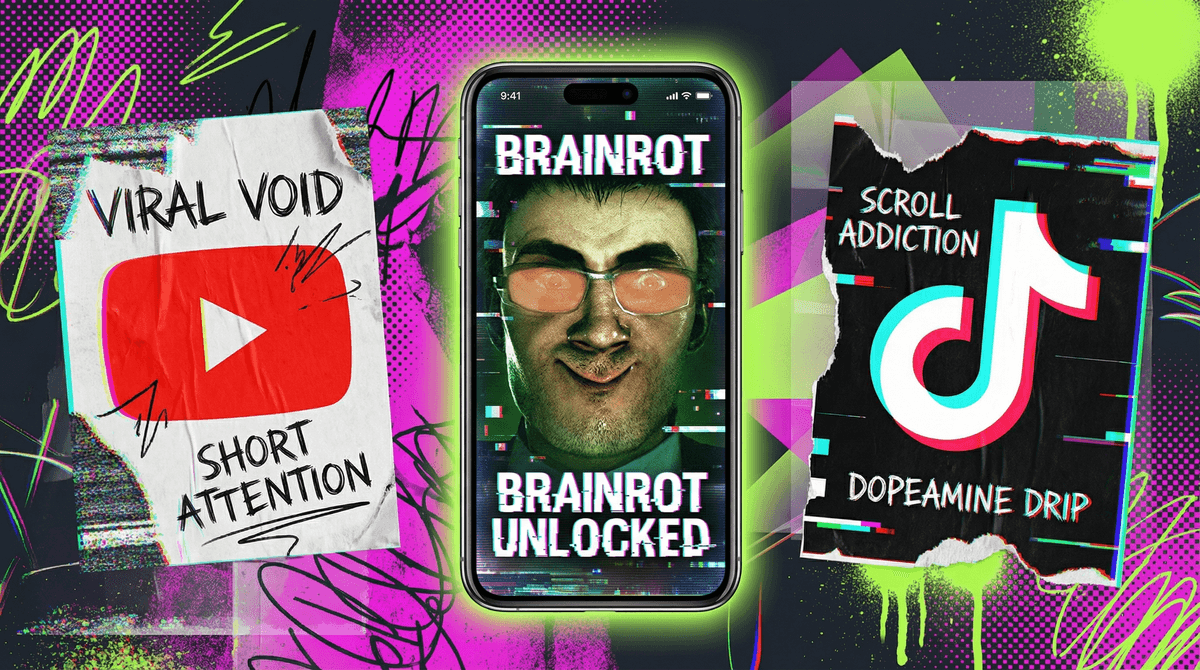
Okay, deep breath. If your kid has been walking around muttering "skibidi toilet Ohio rizz" or calling themselves a "sigma," you're not alone in feeling completely lost. Welcome to the world of brainrot – and no, it's not actually about their brains rotting (though I get why it feels that way sometimes).
"Brainrot" is what Gen Z and Gen Alpha call the internet slang, memes, and references that have completely saturated their online world. It's the stuff that makes zero sense to us but that kids can't stop saying. Think of it as the modern equivalent of when we drove our parents crazy with "talk to the hand" or "that's so random" – except on steroids, because the internet moves at warp speed.
The term itself is self-aware and kind of brilliant: kids know this stuff is absurd. They're literally calling it "brain rot." But that's part of the appeal – it's their language, their inside joke, and honestly? A lot of it is pretty funny once you understand it.
Let's decode the big ones you're probably hearing:
Skibidi Toilet is a bizarre YouTube series featuring singing heads in toilets battling camera-headed humanoids. Yes, really. It started as surreal animation and exploded into the biggest meme phenomenon among elementary and middle schoolers. Kids aren't watching it because it's good – they're watching it because it's so weird it's become a cultural touchstone. When they say "skibidi," they're just referencing something absurd or using it as a nonsense word for laughs.
Rizz actually makes sense once you know it. It's short for "charisma," specifically the ability to flirt or attract someone. "You've got rizz" means you're smooth, charming, good at talking to your crush. It's mostly harmless and honestly kind of adorable watching middle schoolers try to use it seriously.
Sigma comes from the alpha/beta/sigma male hierarchy that's been circulating online. A "sigma male" is supposedly a lone wolf who doesn't need social validation – think the brooding mysterious character. Kids use it mostly ironically, though there's a whole corner of YouTube and TikTok pushing this as actual lifestyle advice for boys, which is worth keeping an eye on.
Ohio has become slang for anything weird, cursed, or unsettling. Why Ohio? Honestly, it's random internet humor. "That's so Ohio" means "that's weird/bad/off." (Apologies to Ohio residents – the internet is weird.)
Gyat (or "gyatt") is an exclamation, often used when someone attractive walks by. It's evolved from a Twitch streamer's catchphrase and yes, it can get objectifying, especially when young boys are using it about girls' bodies.
This isn't just random nonsense – there's actually something important happening here. This language serves real purposes for kids:
It's identity and belonging. Knowing the latest brainrot terms is like having the password to the cool kids' clubhouse. It signals you're online, you're in the know, you're part of the culture.
It's generational boundary-setting. Just like we had our slang that made our parents roll their eyes, kids need language that's theirs. The fact that we don't get it is kind of the point.
It's genuinely funny. A lot of this stuff is absurdist humor. Kids are sophisticated enough to find the meta-joke amusing – they know it's ridiculous, and that's what makes it hilarious.
It evolves constantly. By the time we figure out what "bussin" means, they've moved on to something else. That rapid change is exciting for kids who live online.
Here's the thing: most brainrot language is harmless. Your kid saying "skibidi" at the dinner table isn't going to hurt them. But there are some legitimate concerns worth monitoring:
The pipeline to problematic content. That "sigma male" stuff? It can lead to Andrew Tate and actual misogyny if you're not careful. The algorithm doesn't care that your 11-year-old started with innocent memes – it'll serve up increasingly extreme content.
Objectification. Terms like "gyat" can normalize commenting on people's bodies in ways that make everyone uncomfortable. Worth a conversation about respect.
Actual brain rot. The real concern isn't the slang – it's the hours of low-quality content consumption that comes with it. TikTok, YouTube Shorts, and Instagram Reels are designed to be addictive, and kids can lose hours to mindless scrolling.
Social pressure. Kids who aren't online as much can feel left out when everyone's speaking this language. It's worth checking in about how your kid feels about all this.
Don't come in hot with judgment. If you mock what they're into, they'll just stop sharing with you. Instead:
Ask genuine questions. "I keep hearing you say 'skibidi' – what does that mean?" Most kids love explaining their world to interested adults.
Watch something together. Ask them to show you a Skibidi Toilet episode or their favorite meme compilation. You'll learn more in 10 minutes than reading any article.
Talk about the algorithm. Help them understand that the content they're seeing isn't random – platforms are designed to keep them watching. That's worth understanding at any age.
Set boundaries around consumption, not culture. You can limit screen time without dismissing what they enjoy. "I get that this stuff is funny, and we can watch some together, but let's also make time for other things."
Address the concerning stuff directly. If you see them watching content that's genuinely problematic – misogynistic, racist, violent – that's worth a direct conversation about values, not just a ban.
Brainrot culture is mostly harmless fun with some legitimate concerns mixed in. Your kid isn't damaged because they think Skibidi Toilet is hilarious or calls themselves a sigma. They're just participating in their generation's culture, which happens to live online.
The real work isn't about understanding every meme (you'll never keep up, and that's okay). It's about staying connected to your kid, monitoring their actual screen time and content consumption, and having ongoing conversations about what they're seeing and how it makes them feel.
You don't need to speak fluent brainrot. You just need to stay curious, non-judgmental, and engaged. And maybe, just maybe, find the humor in the absurdity of it all. Because honestly? Singing toilets battling camera people is objectively weird, and it's okay to laugh about that together.
- Check in on their actual viewing habits. It's less about the slang and more about how much time they're spending consuming this content. Screenwise can help you understand what's normal for their age.
- Learn about the platforms they're using. If they're getting this content from TikTok, YouTube Shorts, or Instagram, understand how those algorithms work.
- Watch for the concerning pipelines. If innocent memes are leading to Andrew Tate or other problematic influencers, that's worth addressing directly.
- Keep the conversation open. The more you can stay curious and non-judgmental, the more they'll keep sharing their world with you – and that's the real goal.
Here's what your kids are actually saying:
- Rizz Charisma, charm, flirting ability. Oxford's 2023 Word of the Year. Usage: "He's got mad rizz"
- Sigma A "lone wolf" type who doesn't follow social hierarchies. Often used ironically. Usage: "Sigma grindset"
- Gyat Exclamation of surprise. Can be objectifying (worth watching). Usage: "Gyat!" (expression of surprise)
- Fanum Tax Stealing someone's food (as a joke). Usage: "He Fanum taxed my fries"
- No Cap "No lie," "for real." From AAVE. Usage: "That's the best song, no cap"
- Bussin Really good, especially about food. From AAVE. Usage: "This meal is bussin"
- Slay To excel, to look amazing. From LGBTQ+ ballroom culture. Usage: "She slayed that performance"
- Bet "Okay," "sounds good." From AAVE. Usage: "Meet at 3pm?" "Bet.'"
- Ohio Something weird or bizarre. Usage: "Only in Ohio"