

TL;DR
If your kid just called their favorite teacher “Mother,” described a pair of shoes as “serving,” or told you that your dinner “ate,” they aren't speaking a secret code—they’re using the language of Ballroom Culture. While these terms have been hijacked by the TikTok algorithm and Gen Alpha’s obsession with "Ohio" memes, they actually originate from a deeply historical, underground Black and Latine LGBTQ+ subculture.
Understanding Ballroom is about more than just decoding slang; it’s about recognizing how your child’s digital world is built on the creativity of marginalized communities.
Quick Links for the Curious:
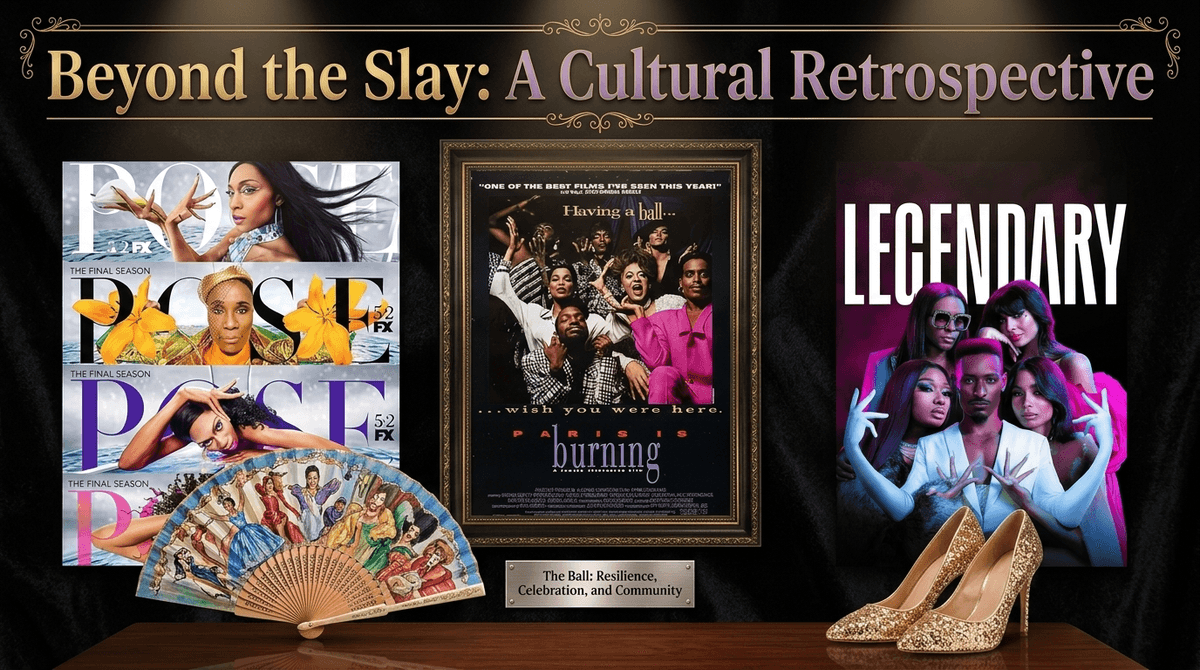
- The History: Paris is Burning (Ages 16+)
- The Drama: Pose (Ages 16+)
- The Competition: Legendary (Ages 14+)
- The Mainstream Hit: RuPaul's Drag Race (Ages 13+)
Forget the waltz and the foxtrot. Ballroom Culture (or "the scene") is an underground subculture that began in New York City, primarily in Harlem, as far back as the 1920s, but it really hit its stride in the 70s and 80s. It was created by Black and Latine LGBTQ+ people who were excluded from the mainstream (and often white) pageant world.
In this world, people join "Houses"—which are essentially chosen families—led by a "Mother" or "Father." These houses compete in "Balls," which are part fashion show, part dance competition, and part performance art. Categories range from "Executive Realness" to "Vogue Femme."
When your kid uses this language, they are participating in a linguistic lineage that was originally designed as a survival mechanism and a form of radical self-expression for people who weren't allowed to exist safely in public.
Learn more about the history of LGBTQ+ subcultures
Most kids aren't watching 1990s documentaries about Harlem. They are seeing these trends filtered through TikTok, Instagram, and even Roblox.
The "Ballroom" aesthetic—high energy, dramatic reveals, and razor-sharp wit—is perfect for the short-form video era. The algorithm loves a "glow up" or a "reveal," both of which are staples of the Ball scene.
The "Mother" of All Slang
The most common term you’ll hear right now is "Mother." In Ballroom, a Mother is the matriarch of a House—someone who provides guidance, shelter, and support to queer youth who may have been kicked out of their biological homes. On the internet today, "Mother" is used to describe any woman (or person) who is doing something iconic. If Lady Gaga drops a new song? Mother. If a kid’s friend wears a cool outfit? Mother. It’s the ultimate compliment of status and style.
Slay, Ate, and Serving
- Slay: To do something exceptionally well.
- Ate: Short for "ate and left no crumbs," meaning they performed perfectly.
- Serving: Presenting a specific look or vibe (e.g., "serving 90s supermodel").
- Reading: The art of pointing out someone’s flaws in a witty, devastating way. (Think: "The library is open.")
Check out our full guide to digital slang
If you want to move beyond the TikTok sounds and actually understand the art form, there are some incredible pieces of media to check out. Just a heads up: Ballroom culture is adult in nature because it deals with real-world themes of identity, sexuality, and survival.
Ages 16+ This is the "Old Testament" of Ballroom. This 1990 documentary is essential viewing for anyone who wants to understand where "Voguing" actually came from. It’s beautiful, heartbreaking, and raw. It’s a great conversation starter for older teens about race, class, and the origins of the slang they use every day.
Ages 16+ Created by Ryan Murphy, this scripted series is a love letter to the 80s and 90s Ball scene. It features the largest cast of transgender actors in series regular roles. It’s phenomenal television—emotional, vibrant, and educational without feeling like a textbook. It deals with the HIV/AIDS crisis, so be prepared for some heavy (but important) themes.
Ages 14+ If your kid likes So You Think You Can Dance, they will love this. It’s a modern reality competition where real-life Houses compete for a cash prize. It’s the best way to see what modern Ballroom looks like today. The fashion is incredible, and the talent is mind-blowing.
Ages 13+ While Drag and Ballroom are two different things, they overlap significantly. Drag Race is the reason terms like "Sashay Away" and "Tea" entered the mainstream. It’s generally fun and campy, though it can get a bit "adult" with the humor.
Find age-appropriate LGBTQ+ media
Here is the "No-BS" part: A lot of the kids (and adults) using this language have no idea that it was created by Black trans women who were fighting for their lives.
When a brand uses "Slay" to sell detergent, or a TikToker from the suburbs uses "Ate" to describe their Starbucks order, it can feel like cultural appropriation—taking the "cool" parts of a culture without acknowledging the struggle or the people behind it.
The "Ohio" Factor: You might hear your kid say "Only in Ohio" or "Skibidi" in the same breath as "Slay." While "Ohio" is just a weird Gen Alpha meme about things being chaotic, "Slay" has a history. Helping your kid understand that some words have "weight" and others are just "brain rot" is a key part of digital wellness.
Read our guide on understanding TikTok trends
- Elementary (Ages 5-10): They likely won't see much of this unless they are on YouTube or Roblox. If they say "Slay," it's harmless, but it's a good time to mention that "we use words that belong to everyone, but we also want to be respectful."
- Middle School (Ages 11-13): This is the prime age for Ballroom slang. They are seeing it on TikTok. You can start explaining that this language comes from a specific community. Shows like Legendary are usually okay here with some supervision.
- High School (Ages 14-18): This is the time to watch Pose or Paris is Burning. These are great "media literacy" moments to discuss how subcultures get absorbed by the mainstream.
You don't need to give a lecture. Just wait for the next time they use a term and ask a curious question.
- "I've been hearing 'Mother' a lot lately. Do you know where that actually comes from?" (Then you can mention the "Houses" and chosen families).
- "It’s interesting how TikTok takes slang from the queer community and makes it a trend. What do you think about that?"
- "If you're interested in the dancing or the fashion, there's a really cool documentary we could watch together."
Check out our guide on LGBTQ+ representation in media
Ballroom culture is a story of resilience, creativity, and family. While the digital version your kid sees might be a watered-down, "glitter-fied" version of the real thing, it’s an entry point to a much bigger conversation about history and inclusivity.
Digital parenting isn't just about blocking apps; it's about being the bridge between the "brain rot" of the week and the actual culture that shapes our world. So, the next time your kid says you "ate" that dinner, just take the win. You're doing great, Mother. (Or Father. Or Parent.)
Next Steps:
- Watch a clip of Voguing on YouTube to see the athleticism involved.
- Check your kid's TikTok "Following" list—see if they are following any creators from the Ballroom scene.
- Get a deeper dive into any of these shows