

TL;DR
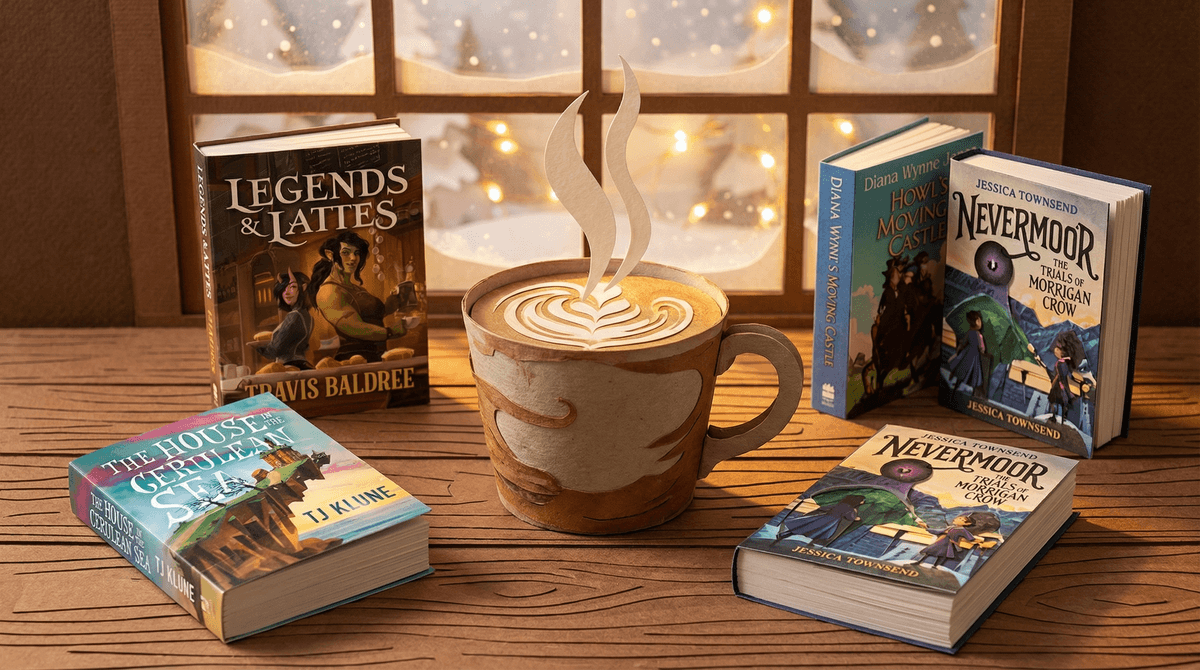
Grab your iced latte (yes, even when it's 20 degrees outside) and settle in with these cozy fantasy reads that deliver comfort without the cringe. Think low-stakes magic, found families, and problems that get solved with baking instead of battles.
Top picks:
If your kids are deep into Stardew Valley or obsessed with Animal Crossing, they already get the vibe. Cozy fantasy is the book equivalent of those games—worlds where the biggest conflict might be perfecting a recipe or helping a neighbor, not saving the universe from dark lords.
Think Studio Ghibli in book form. Magic exists, but it's used to brew better coffee or grow impressive vegetables. Characters have problems, sure, but they're solved through community, creativity, and usually some really good food. No one's parent dies in the first chapter (looking at you, every other fantasy novel).
This genre has exploded in the past few years, partly because we're all exhausted, and partly because kids raised on cozy games are now demanding cozy books. The market has responded with everything from orc-run coffee shops to anxious robots finding their purpose.
Here's what makes cozy fantasy different from the typical middle-grade and YA fantasy your kids might be reading:
Lower anxiety levels. If your kid gets stressed by high-stakes plots (and honestly, who doesn't right now?), these books deliver the satisfaction of a complete story without the cortisol spike. No one's getting tortured in a dungeon. The dragon might just want to open a bakery.
Actual representation of daily life. Most fantasy is about Chosen Ones doing Chosen One things. Cozy fantasy is about regular people (or orcs, or robots, or witches) living their lives and finding meaning in small moments. That's... kind of what we all do? It's weirdly more relatable than saving the world.
Built-in conversation starters. These books often deal with finding your purpose, building community, dealing with burnout, and figuring out what actually matters. Heavy themes, but delivered with such a gentle touch that they're perfect for family discussions.
Ages 10+ (some mild fantasy violence in backstory)
An orc barbarian retires from adventuring to open a coffee shop in a city that's never heard of coffee. That's it. That's the plot. And it's delightful.
Viv is done with the whole "swing a sword, collect treasure, repeat" lifestyle. She wants to grind beans and perfect her latte art. The conflict comes from business challenges, a budding romance with a succubus carpenter, and some old enemies who can't believe she's serious about this career change.
Why it works: The world-building is rich enough to feel lived-in, but the stakes stay refreshingly low. Your kid gets to see a character actively choosing a different path than what's expected of them. Plus, it's genuinely funny without trying too hard.
Parent note: There's a sweet, age-appropriate romance and some mentions of Viv's violent past, but nothing graphic. The found family aspect is chef's kiss.
Ages 12+
A caseworker for magical children gets assigned to investigate an orphanage on a remote island. The kids include the literal Antichrist (who's six and obsessed with records), a wyvern, a gnome, and others. Instead of the horror story he expects, he finds a family.
This book will make you cry in the best way. It's about belonging, acceptance, and what makes a family. The magic is window dressing for a story about people (and magical beings) who've been told they're too much, too dangerous, too different—and finding a place where they're just right.
Why it works: The found family trope is executed perfectly. The humor is sharp but never mean. And the message about acceptance and fighting for what's right is delivered without being preachy.
Parent note: LGBTQ+ themes (the protagonist is gay, there's a sweet romance), discussions of discrimination and bureaucratic cruelty (not graphic, but present), and some emotional intensity around rejection and belonging.
Ages 13+ (more for reading level than content)
In a world where robots gained consciousness and peacefully left society centuries ago, a tea monk meets a robot in the wilderness. They talk about purpose, meaning, and what makes a life well-lived. It's 160 pages of pure comfort.
This is the book for your anxious teen who's already worried about college and their future. The protagonist is dealing with burnout and existential questions, but in the gentlest possible way. The robot is curious, kind, and asking the same questions we all ask: "What do people need?"
Why it works: It's short enough to not feel overwhelming, but deep enough to stick with you. The world is post-scarcity and post-apocalyptic in the best way—humans figured it out, and now they're just trying to live well.
Parent note: Genuinely no content warnings. The protagonist is non-binary (uses they/them pronouns). This is as wholesome as books get.
Ages 10+
If your kid loved the Studio Ghibli movie, the book is even better. Sophie gets cursed to be old, moves into a wizard's moving castle, and proceeds to clean everything while solving everyone's problems.
The book is funnier and weirder than the movie, with more plot twists and a Sophie who's even more delightfully grumpy. Howl is dramatic and vain, Calcifer the fire demon is snarky, and Sophie just wants everyone to stop being ridiculous so she can get things done.
Why it works: The magic system is creative but not overwhelming. The romance develops slowly and feels earned. And Sophie's superpower is basically being competent and caring, which is refreshing.
Parent note: Some mild peril, but nothing scary. The themes around self-worth and aging are surprisingly sophisticated for a middle-grade book.
Ages 8+
A witch accidentally feeds a baby moonlight instead of starlight, giving her wild magic. She raises the girl with a tiny dragon and a swamp monster, and it's as cozy as that sounds—until the girl's powers start emerging.
This won the Newbery Medal for good reason. The writing is gorgeous, the world-building is rich, and the themes about love, sacrifice, and truth are handled with care. It's got slightly higher stakes than pure cozy fantasy, but the tone stays warm throughout.
Why it works for read-alouds: The chapters are well-paced for reading sessions. Multiple perspectives keep things interesting. And there are enough discussion points to keep older kids engaged while younger ones enjoy the story.
Ages 9+
Morrigan Crow is cursed to die on her eleventh birthday, but gets whisked away to a magical city where she competes for a spot in a prestigious society. It's got Harry Potter vibes but with more whimsy and less trauma.
The world of Nevermoor is delightfully weird—hotels that change layouts, umbrella travel, a cat who might be a person. The found family aspect is strong, and Morrigan's journey from outcast to belonging is satisfying without being predictable.
Why it works for read-alouds: The humor lands for all ages. The magic system is creative enough to spark imagination. And there are now four books in the series, so if your family loves it, you've got a whole winter of reading ahead.
The Very Secret Society of Irregular Witches by Sangu Mandanna (Ages 14+) - A lonely witch gets hired to teach three young witches at a manor. Romance, found family, and magical hijinks ensue. Sweet and funny.
Elatsoe by Darcie Little Badger (Ages 12+) - A Lipan Apache girl who can raise dead animals investigates her cousin's death. More mystery than pure cozy, but the family bonds and cultural grounding give it warmth.
Emily Wilde's Encyclopaedia of Faeries by Heather Fawcett (Ages 14+) - A grumpy academic studies faeries in a remote village. Epistolary format, slow-burn romance, and cozy winter vibes despite the occasionally dangerous fae.
The Witches of World War II series by M.K. Lobb (Ages 13+) - Historical fantasy about witches fighting Nazis. Sounds intense, but the focus is on sisterhood and resistance through community rather than graphic violence.
Ages 8-10: Stick with Nevermoor, The Girl Who Drank the Moon, and Howl's Moving Castle. These have the clearest good vs. evil dynamics and age-appropriate stakes.
Ages 11-13: Add Legends & Lattes and The House in the Cerulean Sea. These introduce more complex themes around identity and belonging without being heavy-handed.
Ages 14+: Everything's on the table, including A Psalm for the Wild-Built and Emily Wilde's Encyclopaedia of Faeries. These books trust teens to sit with existential questions and nuanced character development.
Reading level vs. content: Many of these books have higher reading levels but gentle content. If your 10-year-old is a strong reader, they can probably handle the vocabulary in A Psalm for the Wild-Built, even if some themes go over their head. Conversely, Legends & Lattes is technically adult fiction but totally appropriate for middle schoolers.
These books won't "rot their brain." If your kid is coming off a Fortnite binge or a TikTok spiral, cozy fantasy is a gentle on-ramp back to sustained attention and imagination. The low stakes make it easier to stick with than epic fantasy, but they're still exercising those reading muscles.
The "cozy" label doesn't mean simple. These books deal with real themes—burnout, belonging, identity, purpose—but approach them with kindness rather than darkness. That's actually harder to write well, and more useful for kids to read.
Representation matters here. Many cozy fantasy authors are intentionally inclusive in ways that feel natural rather than performative. LGBTQ+ characters, diverse cultural backgrounds, neurodivergent protagonists—they're just part of the world. If your kid is used to seeing themselves as the side character, these books might be revelatory.
The found family trope is everywhere. If you notice your kid gravitating toward these stories, it might be worth a conversation about what appeals to them about chosen families. Are they feeling disconnected from peers? Worried about fitting in? Or just enjoying stories about people who care for each other? All valid, but worth understanding.
Gateway to other genres. Kids who love cozy fantasy often branch into slice-of-life manga, cozy games, and even non-fiction about topics like sustainable living or small business. Follow their interests—See related recommendations .
.
Cozy fantasy isn't escapism in the "ignore real problems" sense. It's more like... a reminder that small joys matter, that community can be built, and that not every story needs to be about saving the world. Sometimes opening a coffee shop or finding where you belong is enough.
Your kid doesn't need to be anxious or burned out to enjoy these books (though if they are, these will help). They're just good stories that happen to be kind. In a media landscape that often rewards intensity and drama, that's actually pretty radical.
Next steps:
- Start with one book from the age-appropriate section and read it together
- If your kid loves it, explore more cozy fantasy recommendations
- Check out cozy games that pair well with these books
- Join the Screenwise community to see what other families are reading this winter
And yes, you can absolutely drink an iced latte while reading these in winter. No judgment here.