

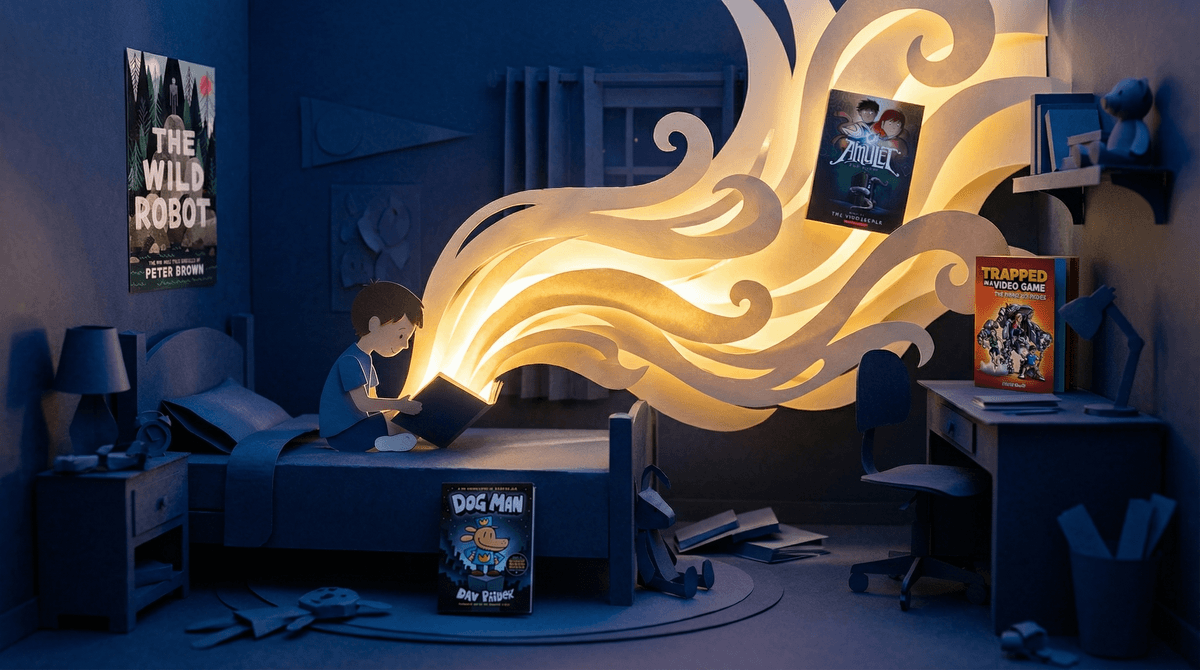
Let's be real: "reluctant reader" is just a nicer way of saying your kid would rather do literally anything else than pick up a book. They'll reorganize their Pokémon cards. They'll watch paint dry. They'll even volunteer to empty the dishwasher. But reading? Hard pass.
Here's the thing though—these kids aren't broken, and they're not destined to hate reading forever. They just haven't found their book yet. The one that makes them forget they're reading. The one that makes them sneak a flashlight under the covers. The one that turns "just one chapter" into "wait, it's 10 PM?"
And if you're worried that all they want to read are graphic novels or books about farts or whatever—graphic novels absolutely count as reading. So do comics. So do manga. So do those weird hybrid books that are half comic, half novel. Reading is reading, full stop.
Yeah, we all know reading is important for school and vocabulary and all that. But here's what actually matters for reluctant readers: finding the entry point that makes reading feel like a choice, not a chore.
Because once a kid discovers they can get lost in a story—really lost, the way they get lost in Minecraft or YouTube—something clicks. They realize books aren't just homework. They're portals.
Plus, in a world where every other activity involves a screen, there's something genuinely different about the way reading engages the brain. It's active imagination, not passive consumption. But you can't force that realization. You have to let them discover it.
After talking to countless kids who "hate reading" (and then watching them devour the right book), here's what actually hooks them:
High action, low fluff. They don't want three pages describing a sunset. They want things to happen.
Characters who feel real. Not perfect kids who always make good choices. Real kids who mess up, get embarrassed, and have actual personalities.
Books that respect their intelligence. Just because they're reluctant doesn't mean they're immature. They can handle complex themes—they just need them delivered in an engaging way.
Visual elements. Illustrations, comics, photos, diagrams—anything that breaks up walls of text and gives their eyes a rest.
Topics they're already into. If they're obsessed with space or sharks or Greek mythology or true crime, start there. Use their existing interests as the bridge.
For Kids Who Love Gaming (Ages 8-12)
The Wild Robot by Peter Brown—A robot stranded on an island learning to survive. It's got that survival-game energy kids love, plus gorgeous illustrations.
Hilo series by Judd Winick—Pure graphic novel chaos. A robot boy from space crashes to Earth. Think action-packed video game energy in book form.
Trapped in a Video Game series by Dustin Brady—Exactly what it sounds like. Kids get sucked into video games. Short chapters, high stakes, perfect for the Roblox-obsessed.
For Kids Who Like Gross/Funny Stuff (Ages 7-10)
Dog Man series by Dav Pilkey—Part dog, part man, all ridiculous. It's silly, it's gross, and kids absolutely tear through these.
The Day My Butt Went Psycho by Andy Griffiths—Yes, it's about butts. Yes, it's absurd. Yes, kids love it and actually finish it.
Captain Underpants series by Dav Pilkey—The OG potty humor series that got a generation of reluctant readers hooked.
For Kids Who Want Real Stakes (Ages 10-14)
Refugee by Alan Gratz—Three kids, three time periods, all fleeing danger. It's intense, it's important, and it moves fast.
Hatchet by Gary Paulsen—Survival story. Plane crash. Wilderness. No fluff. Just a kid trying not to die. Still hooks readers decades later.
Percy Jackson series by Rick Riordan—Greek mythology meets modern middle school. The main character literally has ADHD and dyslexia, which makes so many reluctant readers feel seen.
For Kids Who Like Graphic Novels (All Ages)
Amulet series by Kazu Kibuishi—Gorgeous art, epic fantasy quest, actually compelling plot. Not dumbed down at all.
Smile by Raina Telgemeier—Memoir about middle school, braces, and friendship drama. Relatable and real.
New Kid by Jerry Craft—About being one of the few kids of color at a fancy private school. Funny, honest, and beautifully drawn.
Forcing "quality" literature too early. Yes, the classics are great. But a kid who hates reading isn't going to suddenly love Treasure Island just because you think they should. Let them read what they want first. Literary appreciation can come later.
Dismissing graphic novels. If you're thinking "but those aren't real books," you're wrong. Graphic novels require visual literacy, inference skills, and complex comprehension. Plus, they're a gateway. Most kids who start with graphic novels eventually branch out.
Making it about school. If every book comes with a book report or discussion questions, reading becomes homework. Let some books just be for fun. No strings attached.
Comparing them to siblings or other kids. "Your sister was reading chapter books at your age" is a guaranteed way to make a kid hate reading even more. Every kid's path is different.
Let them quit books. Seriously. If they're not into it after a few chapters, let them bail. Life's too short to force-read boring books. The freedom to quit actually makes them more likely to keep trying new ones.
Audiobooks count. If they'll listen to Percy Jackson on audiobook during car rides, that's reading. They're following plot, building vocabulary, and engaging with story. Don't gatekeep.
Read together, even if they're "too old." Some kids just need the cozy routine of shared reading time. You read a chapter, they read a chapter. Or you both read silently in the same room. It takes the pressure off.
Use their screen time interests. They love Bluey? There are Bluey books. Obsessed with Minecraft? There are Minecraft novels (and they're actually decent). Meet them where they are.
Take them to the bookstore or library with zero agenda. Let them browse. Let them pick weird stuff. Let them choose books you think are too easy or too silly. The goal is to make reading feel like their choice.
Reluctant readers aren't a lost cause—they're just waiting for the right book. And "right" doesn't mean literary or educational or parent-approved. It means the book that makes them forget they're reading.
So yes, let them read graphic novels. Let them read books about butts. Let them read the same series over and over. Let them listen to audiobooks. Let them quit books that bore them.
Because the goal isn't to create a kid who reads what you think they should read. It's to create a kid who reads. Period.
And once that happens? Once they find that first book that really hooks them? Everything changes. They'll start asking for the sequel. They'll read past bedtime. They'll tell you about the characters like they're real people.
That's when you know you've won. Not because you forced it, but because you got out of the way and let them discover it themselves.
Start with one book. Not a stack. Not a reading list. One book that matches their actual interests right now. Get recommendations based on what your kid's already into based on what your kid's already into.
Make it low-pressure. Leave it on their nightstand. Read it yourself and mention something funny that happened. Don't make a big deal about it.
Give it time. Some kids need to see a book lying around for weeks before they pick it up. That's fine. The book isn't going anywhere.
And remember: every single adult who loves reading was once a kid who had to find their first real book. Your reluctant reader will find theirs too. You just have to help them look.