

Look, if your kid is spending hours in Roblox or Minecraft, you've probably wondered: could all that screen time actually lead somewhere productive? Books and shows about game design pull back the curtain on how games are actually made—the art, the code, the storytelling, the problem-solving. And honestly? They're some of the most engaging middle grade content out there right now.
These aren't dry textbooks. We're talking graphic novels where kids design games to save the world, Netflix shows that follow actual game developers, and chapter books that make coding feel like magic. The best ones sneak in real skills (logic, iteration, creative thinking) while keeping kids genuinely entertained.
Here's the thing: 55% of families in the Screenwise community have kids who game regularly. That's more than half. And for those kids, games aren't just entertainment—they're a legitimate interest, maybe even a passion. When we give them content that shows how games are built, we're doing a few things at once:
We're validating their interest. Instead of just consuming games, they start thinking critically about why a game is fun, what makes it work, how it could be better. That's media literacy in action.
We're opening career pathways. Game design is a massive industry—art, programming, sound design, writing, project management. These books and shows introduce kids to possibilities they might not know exist.
We're teaching real skills. Design thinking, debugging, collaboration, handling failure and iteration—these are life skills wrapped in a topic kids actually care about.
The Wild Robot by Peter Brown isn't about game design per se, but hear me out: it's basically a masterclass in how characters "level up" through problem-solving and adaptation. Kids who love games will recognize the progression system, and it's a beautiful gateway into thinking about game mechanics in storytelling.
"The Imaginary Veterinary" series by Suzanne Selfors has a book called The Sasquatch Escape where kids literally have to think through puzzle logic. Again, not explicitly about game design, but it scratches that same itch.
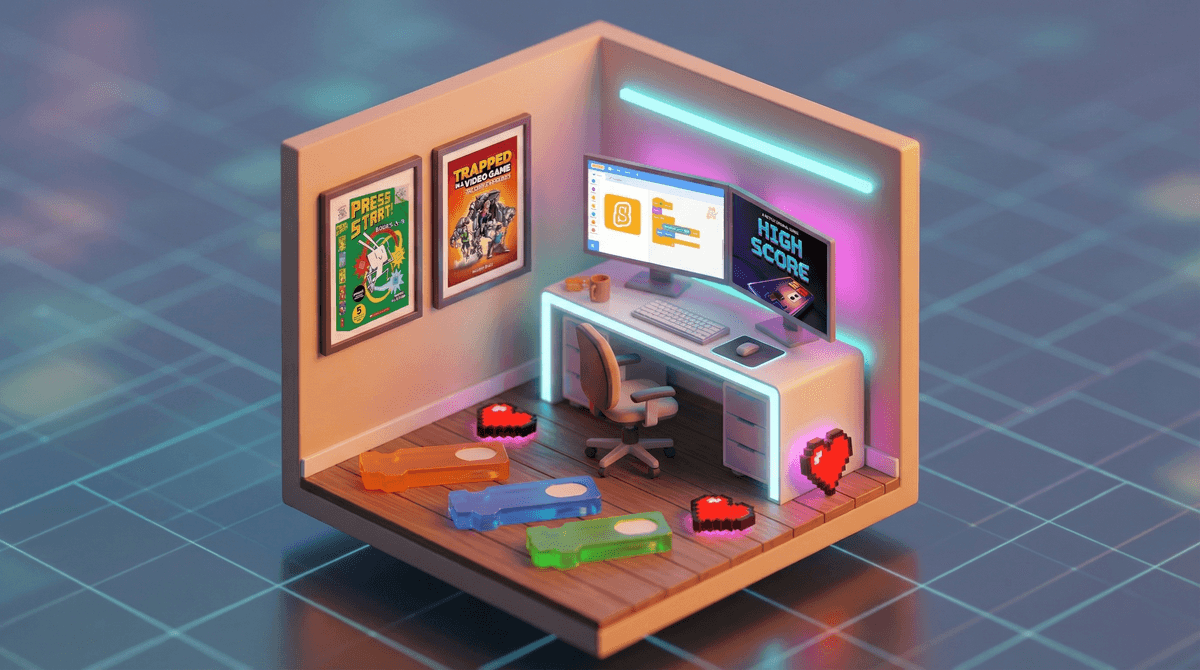
For actual game design content, "Press Start!" series by Thomas Flintham is perfect for younger middle graders (ages 8-10). It's a graphic novel series where the main character gets sucked into video games and has to understand game logic to escape. It's funny, fast-paced, and sneaks in concepts like NPCs, power-ups, and game objectives.
"Trapped in a Video Game" series by Dustin Brady is another solid choice—five books that are basically crack for kids who love gaming. The protagonist has to figure out game mechanics to survive, and there are actual coding concepts woven throughout.
For kids ready for something meatier (ages 10-13), "The Last Reality" by Jason Segel and Kirsten Miller tackles VR gaming and the ethics of game design. It's got adventure, but also real questions about what makes a game addictive versus fun, and whether that's intentional.
High Score on Netflix is a documentary series about the history of video games, and while it's not specifically for kids, it's totally appropriate for tweens (ages 10+). Each episode is under an hour, and they profile actual game creators—the people who made Doom, Final Fantasy, Street Fighter. My favorite thing about it? It shows that game designers aren't all the same type of person. There are artists, programmers, storytellers, all bringing different skills.
The Toys That Made Us (also Netflix) has episodes on Nintendo and other gaming companies. It's more about the business side, which honestly some kids find fascinating—how do you market a game? What makes people want to buy it?
For something more hands-on feeling, YouTube channels like Extra Credits have a "Extra History" series but also game design explainers that are surprisingly kid-friendly. They break down concepts like "what makes a good tutorial level" or "how do games teach you without feeling like school."
Ages 7-9: Stick with graphic novels and lighter chapter books. The "Press Start!" series is perfect. They're getting concepts without feeling like homework.
Ages 10-12: This is the sweet spot for most game design content. Kids can handle more complex ideas about coding, design iteration, and even some of the ethical questions. "Trapped in a Video Game" series, "The Last Reality," and High Score documentary are all great here.
Ages 13+: They're ready for basically anything, including more technical books about actual coding or game engines. But honestly, at this age, if they're interested, they're probably already watching YouTube tutorials and maybe even trying Scratch or Roblox Studio.
These books won't magically turn screen time into productivity. Let's be real. Your kid reading about game design doesn't mean they'll suddenly start coding instead of playing Fortnite. But it plants seeds. It changes how they think about games.
The best next step is creation, not just consumption. If a kid gets genuinely excited about this stuff, the natural progression is to try making something. Scratch is free and perfect for beginners. Roblox Studio lets kids actually build games other people can play. Minecraft has redstone logic that's basically circuit design. Support that experimentation .
.
Not every kid who loves playing games will love making them. And that's fine! Some kids just want to play, and that's a completely valid hobby. But for the ones who are curious about the "how"—these books and shows are gold.
With 60% of Screenwise families' kids playing on Roblox servers and gaming being such a huge part of kid culture, giving them content that demystifies game creation is genuinely valuable. It's not about turning every gamer into a programmer—it's about helping kids think critically about something they love.
Start with one book or show that matches your kid's current interests. If they're into Minecraft, try "Trapped in a Video Game." If they're visual learners, go for "Press Start!" graphic novels. If they're ready for something more sophisticated, queue up High Score for family viewing.
The goal isn't to replace gaming—it's to enrich it. And who knows? You might learn something too.
Ready to explore more? Check out alternatives to Roblox that teach coding or learn about Scratch for beginners. And if your kid's interest takes off, here's how to talk about game design as a real career path.