

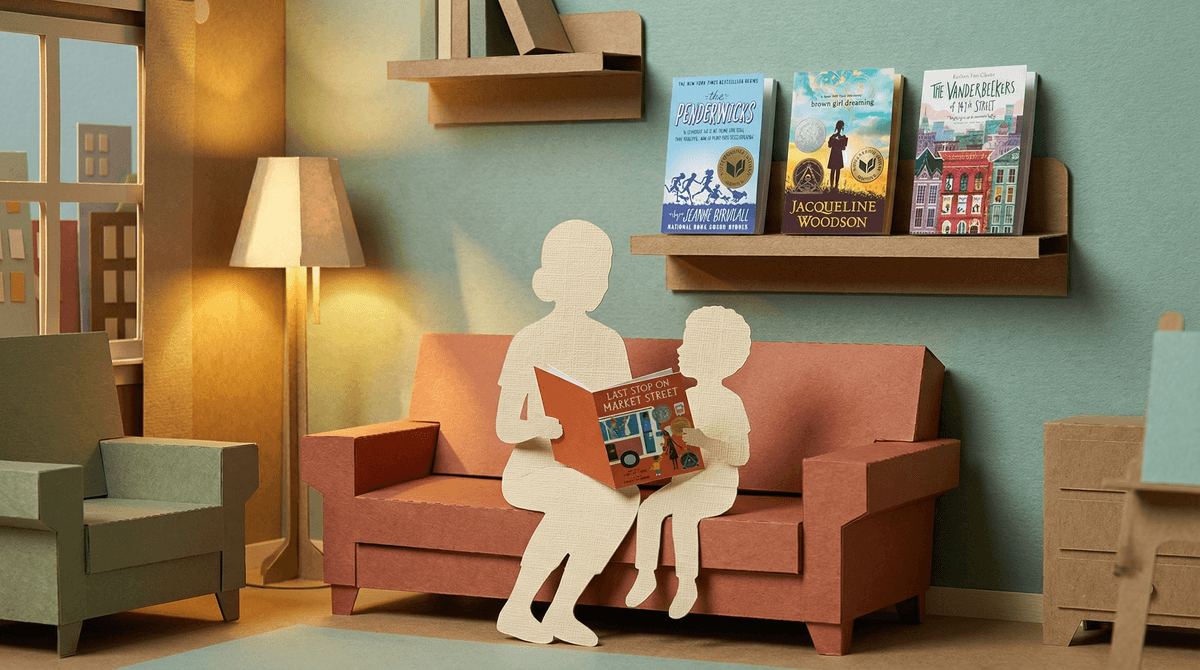
Look, in a house where "one more episode" negotiations happen daily and everyone's got their face in a different screen, books about family might be the sneakiest tool in your parenting arsenal. These aren't just stories with parents and kids in them—they're books that explore what family actually means. The messy parts. The beautiful parts. The "why is my sibling like this" parts.
We're talking picture books that show diverse family structures, middle-grade novels about navigating sibling rivalry, chapter books that tackle divorce or adoption, and everything in between. From The Penderwicks to Brown Girl Dreaming, these stories give kids language for the complicated feelings that come with being part of a family unit.
Here's what I've noticed: kids will talk about ANYTHING when they're talking about a character instead of themselves. Your 9-year-old who won't tell you why they're mad at their brother? They'll spend 20 minutes analyzing why Ramona Quimby is frustrated with Beezus.
Family-centered books create this perfect third space—not quite your family's drama, but close enough that kids can process their own experiences without the vulnerability of direct conversation. It's like emotional scaffolding.
Plus, in an era where kids are spending hours in Roblox worlds or watching YouTube creators who definitely don't model healthy family dynamics, books give them a chance to see what functional (and dysfunctional) families look like. They're seeing problem-solving, conflict resolution, and—revolutionary concept—people actually talking to each other.
Ages 3-6: Building the Foundation
The Family Book by Todd Parr is the gold standard for showing kids that families come in all configurations. It's simple, colorful, and doesn't make a big deal about difference—which is exactly the point.
Last Stop on Market Street by Matt de la Peña is gorgeous and shows a grandmother-grandson relationship that's just chef's kiss. It's about gratitude and seeing beauty in your community, but it's never preachy.
Ages 6-9: Getting Into the Feelings
Ivy and Bean series—yes, it's about friendship, but the family dynamics are chef's kiss. Bean's older sister Nancy is peak annoying sibling energy, and the parents are actually present and reasonable.
Juana & Lucas by Juana Medina is a bilingual gem about a Colombian-American girl and her relationship with her abuelo. The family warmth is palpable.
Ages 9-12: The Complicated Stuff
The Vanderbeekers series is like a modern-day multicultural family adventure. Five siblings, Harlem brownstone, actual problems that get solved through teamwork. It's wholesome without being saccharine.
Front Desk by Kelly Yang tackles immigration, financial stress, and family sacrifice in a way that's honest but hopeful. If your kid thinks family struggles are just about who gets the iPad first, this is an important read.
New Kid by Jerry Craft—yes, it's about school, but Jordan's relationship with his parents and grandmother (who hilariously doesn't understand his art dreams) is so real it hurts.
Ages 12+: The Real Real
The Hate U Give by Angie Thomas—the family in this book is everything. Protective parents trying to keep their kids safe while teaching them to be strong. It's heavy but essential.
Aristotle and Dante Discover the Secrets of the Universe has some of the most beautiful father-son relationships in YA literature. Both boys have complicated family dynamics that feel achingly real.
Don't force the conversation. Read the book together (or let them read it alone), and just... be available. Sometimes the best talk happens three days later when they randomly bring up a character while you're making dinner.
Representation matters, but so does just good storytelling. Yes, seek out books that reflect your family structure, but also expose kids to family stories that look nothing like yours. Other Words for Home might be about a Syrian refugee family, but the sibling dynamics and parent-child love are universal.
Use these books as a mirror and a window. Some books will reflect your family back at you (The Penderwicks if you've got a chaotic sibling crew), others will be windows into different experiences. Both are valuable.
Balance the heavy with the light. Not every family book needs to tackle divorce, death, or discrimination. Sometimes Ramona Quimby, Age 8 and her everyday family chaos is exactly what your kid needs.
In a digital world where your kids are more likely to see family dynamics play out through Bluey (which, honestly, is pretty great) or some random YouTube family vlog (which, honestly, is often pretty terrible), books give you a curated, thoughtful way to explore what family means.
They're not going to solve your sibling rivalry problems or make your tween suddenly appreciate you. But they might give your kid the language to say "I feel left out like Fudge does" or "I wish we could solve problems together like the Vanderbeekers." And that's a start.
Start a family book club. Pick one book a month, everyone reads it (yes, even the adults), and you talk about it over pizza. Make it low-pressure and fun.
Ask your librarian. Seriously, children's librarians are magic and can recommend books based on your specific family situation.
Balance books with other media. Use Screenwise to find shows and movies about families too—sometimes a visual medium hits different. But make books the foundation.
Model reading about families yourself. Let your kids see you reading memoirs or novels about family dynamics. Talk about what you're learning. They're watching.
The goal isn't to replace screen time entirely—it's to add something richer to the mix. And honestly? A kid curled up with a good book about family might just be the best screen-free moment you'll get all week.