

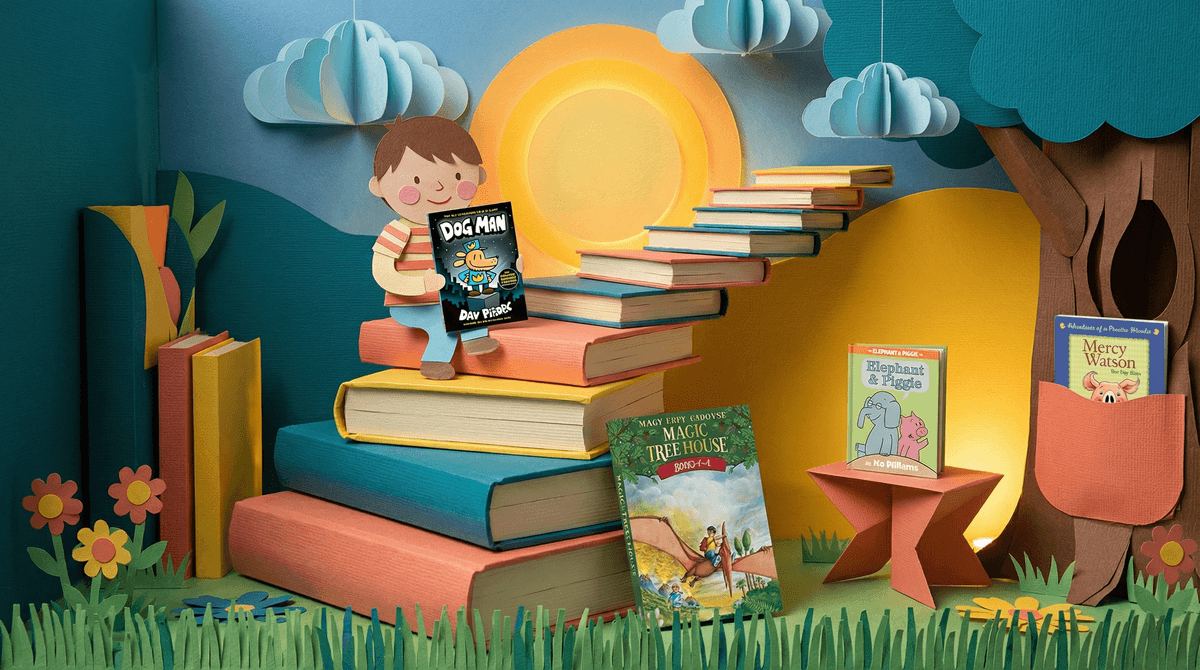
Book series for early readers are collections of books designed for kids typically ages 5-9 who are transitioning from picture books to chapter books. Think Magic Tree House, Junie B. Jones, Dog Man, Ivy + Bean — stories with consistent characters, familiar settings, and progressive reading difficulty that builds confidence one chapter at a time.
These aren't just "easier books." They're specifically engineered to hook young readers with repetition, predictability, and the comfort of knowing their favorite characters will be back in the next book. And honestly? That's the secret sauce. When a kid finishes a book and immediately asks "Is there another one?" — that's the moment reading shifts from homework to habit.
Here's the thing: we're competing with Roblox, YouTube, and whatever the latest TikTok trend is (currently... still Skibidi Toilet, somehow). Books don't auto-play the next episode. They don't have notifications. They require sustained attention in a world that's actively training kids to fragment their focus.
Series books are the bridge. They give kids:
- Familiarity - Once they love a character, they're invested. No more "I don't know what to read next" paralysis.
- Confidence - Each book in a series is slightly more complex, building skills without kids realizing they're leveling up.
- Identity - Kids become "a Dog Man kid" or "a Keeper of the Lost Cities kid." It's their thing.
- Social currency - Series create shared experiences. Trading books, discussing plots, debating which book was best — this is what we want.
And look, I'm not anti-screen. But the research is pretty clear that reading for pleasure correlates with better outcomes across the board — vocabulary, empathy, focus, academic performance. Series books are the gateway drug to becoming a reader.
Early Chapter Books (Ages 5-7)
These are for kids who can technically read but need big fonts, lots of illustrations, and short chapters. We're talking 50-100 pages max.
The heavy hitters:
- Dog Man by Dav Pilkey - Part comic, part chapter book, 100% potty humor. Parents hate it, kids devour it. (Let them have this one.)
- Elephant & Piggie by Mo Willems - Technically early readers, but the emotional intelligence is chef's kiss.
- Mercy Watson by Kate DiCamillo - A pig who loves toast. Weirdly charming.
- Narwhal and Jelly - Graphic novel format, genuinely funny, teaches friendship without being preachy.
The controversial take: Yes, graphic novels and hybrid books "count" as reading. The visual literacy kids develop is actually valuable. Stop gatekeeping.
Middle Chapter Books (Ages 7-9)
This is the sweet spot. Kids are reading independently, can handle more complex plots, but still need high-interest, fast-paced stories.
The classics that still work:
- Magic Tree House by Mary Pope Osborne - 130+ books. Educational without feeling like homework. Solid.
- Junie B. Jones by Barbara Park - Grammatically questionable, emotionally authentic. Kids see themselves in her chaos.
- Ivy + Bean by Annie Barrows - Friendship, mischief, and kids who feel real.
- The Bad Guys by Aaron Blabey - Graphic novel series about villains trying to be heroes. Moves fast.
The newer generation:
- The Last Kids on Earth by Max Brallier - Zombies, monsters, and video game vibes. Gateway to longer series.
- Dork Diaries - Middle school drama in diary format. Huge with girls who aren't ready for Diary of a Wimpy Kid.
Transitional Series (Ages 8-10)
These are for kids ready to graduate to meatier plots, longer books (150-300 pages), and more complex themes.
- Wings of Fire by Tui T. Sutherland - Dragon politics. Genuinely engaging worldbuilding. 15+ books.
- Percy Jackson by Rick Riordan - The gold standard. Mythology, humor, ADHD representation that doesn't feel tokenized.
- Keeper of the Lost Cities by Shannon Messenger - Fantasy series with a devoted fanbase. Long books, but kids stick with it.
- Who Was/What Was series - Biography series that's actually readable. Great for nonfiction-loving kids.
Start with interest, not reading level. A reluctant reader will push through a harder book about dinosaurs before they'll touch an "appropriate" book about feelings.
Let them read "below" their level. If your 8-year-old wants to reread Captain Underpants for the tenth time, that's fine. Fluency matters. Enjoyment matters more.
Graphic novels are books. Say it with me. Amulet, Smile, Hilo — these are legitimate reading experiences.
Use the library. Series are expensive. Libraries have entire sections devoted to this. Most also have apps (Libby, Hoopla) for digital access.
Try the "rule of five." Have your kid read a page. If they stumble on more than five words, it might be too hard right now. (But also: if they're motivated, they'll figure it out.)
The "bad grammar" panic: Yes, Junie B. Jones speaks in incorrect grammar. Yes, Dog Man has spelling errors (intentional, it's written by a kid character). Your child will not be permanently damaged. If anything, recognizing "wrong" grammar means they understand "right" grammar.
The "too easy" worry: If your kid is reading happily, they're building fluency, vocabulary, and positive associations with reading. This is the goal. We can push complexity later.
The series trap: Some kids get stuck reading the same series forever. That's okay for a while, but gently introduce variety. "Hey, if you liked Wimpy Kid, you might like Big Nate."
The content question: Most early reader series are pretty safe, but some (like Captain Underpants) have bathroom humor, and transitional series can have mild violence or scary themes. Check Common Sense Media or Screenwise ratings if you're unsure.
Book series for early readers aren't just "training wheels" for "real books." They're the foundation of reading identity. They teach kids that books can be fun, immersive, and worth choosing over screens.
Start with what your kid loves — whether that's fart jokes, dragons, or diary-style drama — and let them run with it. The goal isn't to create a literary critic at age 7. The goal is to create a kid who chooses to read.
And if that means your second-grader reads 47 Dog Man books before touching anything else? That's a win.
- Hit the library - Ask the children's librarian for series recommendations based on your kid's interests. They live for this.
- Create a reading routine - 15-20 minutes before bed, no screens, just books. Make it non-negotiable.
- Model reading - Kids who see parents reading are more likely to read themselves. (Yes, even if you're reading thriller trash. It counts.)
- Explore alternatives - If your kid genuinely hates reading, try audiobooks or read-aloud podcasts as a bridge.