

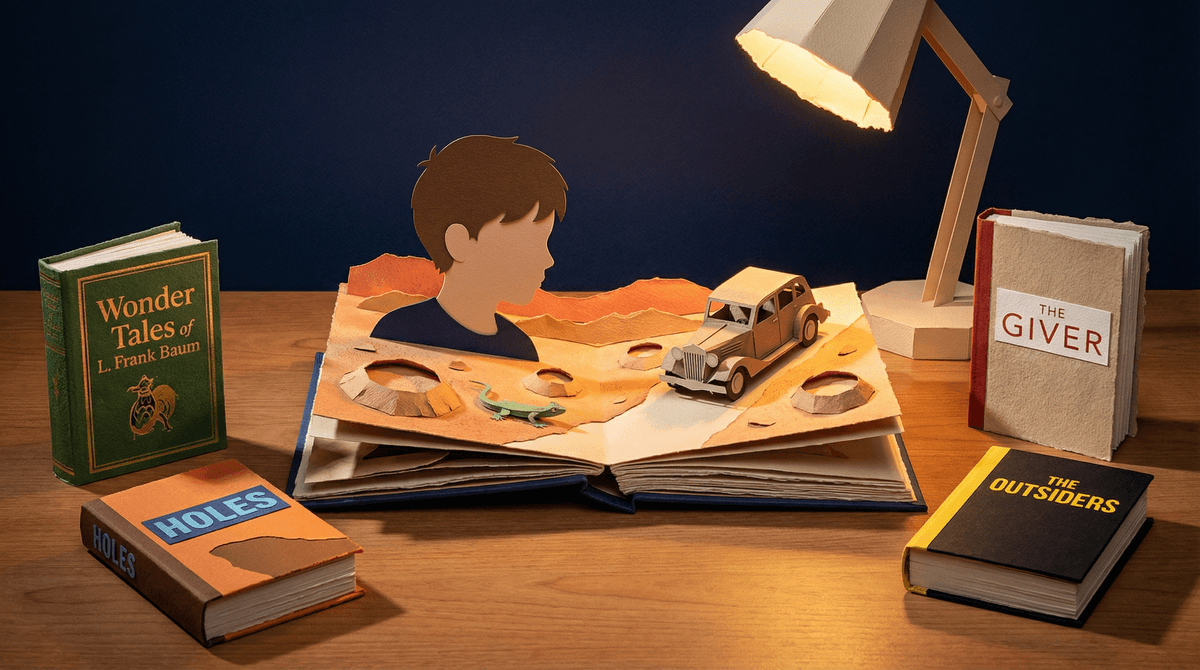
Look, we need to talk about the middle school book report. It's that classic assignment that's been around forever, but suddenly you're staring at a list of titles wondering if Lord of the Flies is really appropriate for your 12-year-old, or if The Outsiders is going to spark conversations you're not ready for at 7pm on a Tuesday.
Book report books are typically novels assigned by teachers (or chosen from a pre-approved list) that students read independently and then analyze through written reports, presentations, or projects. These aren't the picture books from elementary school anymore—we're talking about real novels with complex themes, moral ambiguity, and sometimes content that makes you go "wait, they're reading WHAT in 7th grade?"
The challenge isn't just finding books that meet the assignment requirements. It's finding titles that are actually age-appropriate for YOUR kid, that won't bore them to tears, and that ideally spark some genuine interest in reading rather than cementing their belief that books are torture devices invented by English teachers.
Middle school is when kids either become readers or they don't. It's that simple and that high-stakes. A bad book report experience—forcing through a 300-page novel they hate, about topics they can't relate to, written in a style that feels like eating cardboard—can turn a kid off reading for years.
But here's the thing: the "classics" that teachers love aren't always the right fit for every kid. Yes, To Kill a Mockingbird is important literature. It's also about rape, racism, and injustice in ways that might be better suited for 9th grade than 6th. And Animal Farm? Brilliant political allegory if you understand Stalinism. Confusing story about mean pigs if you're 11.
The other issue? Many traditional book report lists were created decades ago and haven't been updated. They don't reflect diverse voices, modern storytelling, or frankly, what actually engages middle schoolers in 2026. Your kid might be watching complex narratives on Netflix and playing story-driven games like Hades, but then they're assigned books that feel dated and preachy.
Let's get real about some frequent book report assignments:
The Classics That Usually Work:
- The Giver by Lois Lowry - Dystopian, thought-provoking, appropriate for ages 10+. Deals with conformity and memory in accessible ways.
- Holes by Louis Sachar - Mystery, humor, friendship. Ages 9-13. Generally a crowd-pleaser.
- Wonder by R.J. Palacio - Empathy-building story about facial differences. Ages 10+. Tends to genuinely move kids.
The Classics That Need Context:
- Lord of the Flies - Violence, death, dark view of humanity. Better for 8th grade+ with discussion support.
- The Outsiders - Gang violence, death, class conflict. Age 12+ but know it's heavy.
- Of Mice and Men - Ableism, violence, tragic ending. 13+ and be ready to talk about it.
The "Wait, That's Assigned?" Titles:
- 1984 - Torture, totalitarianism, sexual content. Honestly better for high school.
- The Handmaid's Tale - Sexual violence, dystopian reproductive control. High school material, full stop.
If your kid comes home with a required reading list, actually read the summaries (or better yet, search for parent reviews ). Teachers sometimes assign books without fully considering the range of maturity levels in a classroom, or they're working from outdated curriculum.
6th Grade (Ages 11-12): Look for books with clear protagonists, relatable middle school situations, and themes like friendship, identity, and fairness. Mild language and conflict are fine; graphic violence and sexual content are not.
Good choices:
- Percy Jackson series by Rick Riordan
- Esperanza Rising by Pam Muñoz Ryan
- Hatchet by Gary Paulsen
7th Grade (Ages 12-13): Kids can handle more moral complexity, historical context, and emotional depth. They're ready for books that don't have neat happy endings but should still have some hope or growth.
Good choices:
- The Hunger Games by Suzanne Collins (violence but not gratuitous)
- Refugee by Alan Gratz
- Ghost by Jason Reynolds
8th Grade (Ages 13-14): This is when "young adult" really kicks in. More mature themes are appropriate, including social justice, identity struggles, and darker historical events. Still, there's a difference between mature themes and graphic content.
Good choices:
- The Hate U Give by Angie Thomas
- Speak by Laurie Halse Anderson (deals with sexual assault—important but needs support)
- Long Way Down by Jason Reynolds
If they're struggling to get through it:
- Audiobooks count as reading. Seriously. Check your library's Libby app for free access.
- Read alongside them and have casual conversations about the plot. "So what's happening with the main character?" beats "what are the themes?"
- Break it into chunks. 20 pages a night is more manageable than "read 200 pages by Friday."
If they hate the assigned book:
- Check if the teacher allows alternatives. Many do if you email and ask respectfully.
- Don't force them to love it, but do require them to finish it. Sometimes the lesson is "you won't love every book, and that's okay."
- Find connections to things they DO like. Reading dystopia? They might like The Maze Runner better than 1984.
If the content concerns you:
- Email the teacher. Ask about the learning objectives and whether there are alternative titles that meet the same goals.
- Read it yourself (or at least read detailed summaries) so you can discuss it together.
- Remember that "uncomfortable" and "inappropriate" aren't the same thing. Books should sometimes make us uncomfortable—that's how we grow.
The best book report book is one your kid will actually read and think about. If the assigned title seems like a terrible fit—too mature, too boring, too far from their interests—it's worth having a conversation with the teacher about alternatives.
But also: sometimes kids surprise us. The book they groan about becomes the one they can't put down. The "boring" historical fiction opens up a whole new interest. Part of middle school is learning to engage with material that wasn't chosen specifically for you.
Your job isn't to make sure they love every assigned book. It's to help them develop the skills to engage with challenging texts, think critically about what they read, and discover that reading can be genuinely enjoyable—even when it's homework.
- Check if your school posts book lists in advance so you can preview titles
- Set up a library card if you don't have one (audiobooks, ebooks, and physical books—all free)
- Ask your kid's teacher about their philosophy on book selection and whether alternatives are allowed
- Explore age-appropriate book recommendations that match your kid's interests
And hey, if your kid comes home with Animal Farm and you're thinking "is this really the move?"—trust that instinct and ask some questions. You know your kid better than any standardized reading list does.