

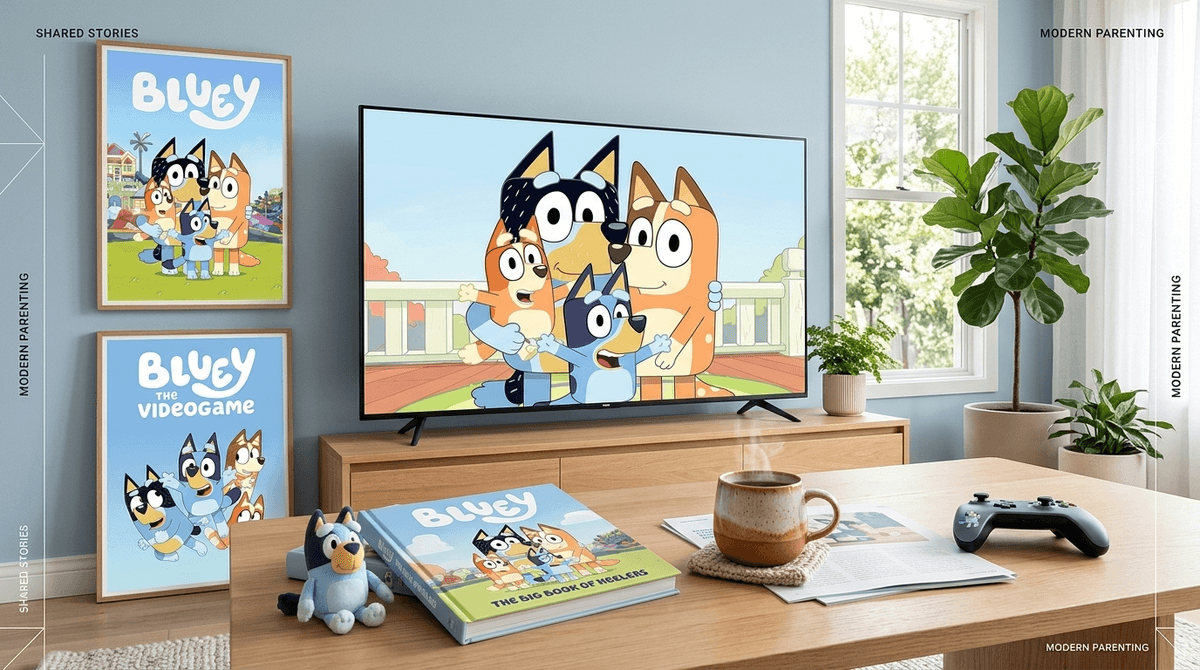
TL;DR: If you’ve been living under a rock (or just haven't had a toddler screaming for "Real Life" lately), Bluey recently dropped two of the most significant episodes in modern children’s television history: "The Sign" and "Surprise." These aren't just 7-to-28-minute distractions; they are masterclasses in emotional intelligence, resilience, and the "good luck, bad luck, who knows" nature of parenting.
Quick Links for the Heeler-Obsessed:
For the uninitiated, Bluey is an Australian animated series about a family of Blue Heelers. It’s become a global phenomenon because it’s one of the few "kids' shows" that actually treats parents like real people and kids like capable, emotional beings.
"The Sign" is a 28-minute special (quadruple the length of a standard episode) that centers on the Heeler family putting their house up for sale. It deals with the impending move to a new city for Bandit’s new job, a wedding between Uncle Rad and Frisky, and the crushing weight of "the for sale sign" in the front yard.
"Surprise" followed a week later, acting as a secret epilogue. It’s a classic chaotic Bluey episode where Bandit is forced to play two different games at once, ending with a "flash-forward" that left the internet in shambles.
In a digital landscape filled with "brain rot"—I'm looking at you, Skibidi Toilet and the endless "Ohio" memes—Bluey remains the high-water mark for intentional media.
These episodes matter because they tackle existential dread in a way a five-year-old can digest. "The Sign" uses the "Parable of the Farmer" (good luck, bad luck, who knows?) to explain that we can’t always see the full picture of our lives while we’re living through the hard parts.
For parents, "The Sign" was a mirror. We saw Bandit and Chilli struggling with the "right" decision: Is a better-paying job worth uprooting your children’s happiness? It’s a conversation many of us have in hushed tones after the kids are in bed, and seeing it play out on screen is surprisingly cathartic.
Learn more about how Bluey models healthy adult relationships
Kids love Bluey because it validates their play. In "Surprise," the game is simple: Bluey wants Bandit to play "Sponge" (throwing balls at him) while Bingo wants to play "Children" (pretending to have 100 babies). It’s chaotic, loud, and physically demanding—exactly how kids actually play.
Parents love it because it doesn’t sugarcoat the exhaustion. When Bandit is panting on the floor, covered in foam balls and imaginary toddlers, we feel that in our souls.
But the real "hook" in these episodes was the lore. The "Surprise" ending shows an adult Bluey returning home to visit her parents, with a child of her own hiding behind the door to "surprise" Bandit. It’s a beautiful, full-circle moment that reminds us that the exhausting days of "Sponge" and "Children" eventually turn into memories.
Ages 2-4: They will enjoy the slapstick humor and the wedding festivities in "The Sign." They might not grasp the gravity of moving house, but they’ll feel the "vibe" of the characters' emotions.
Ages 5-8: This is the sweet spot. Kids this age are starting to understand that life involves changes they can’t control. "The Sign" is an excellent tool for discussing anxiety about school, moving, or friendships.
Ages 9+: Surprisingly, even older kids who have "aged out" of Peppa Pig often still tune in for Bluey. The "Surprise" flash-forward is a great conversation starter about growing up and what they imagine their own futures looking like.
Let’s be real: "The Sign" is an emotional gauntlet. If you are currently going through a divorce, a move, or a job change, grab the tissues.
From a "digital wellness" perspective, Bluey is the ultimate "low-arousal" content. Unlike the frantic editing of Cocomelon or the sensory overload of many YouTube Kids channels, Bluey uses a fixed camera style and natural pacing. It doesn't overstimulate, which means your kids are less likely to have a "screen time meltdown" when you turn it off.
However, be prepared for the "Bluey Effect." Your kids will want you to play the games they see on screen. If you aren't prepared to be a "human sponge" or a "hospital patient" for 20 minutes, maybe save these episodes for a weekend when you have some energy.
These episodes provide a perfect "bridge" to talk about real-life stuff without it feeling like a lecture.
- On Moving/Change: "Remember how Chilli didn't want to leave the house because of all the memories? What's your favorite memory in our house?"
- On Uncertainty: Talk about the "Good luck, bad luck, who knows?" story. Share a time when something "bad" happened (like a rainout at a park) that led to something "good" (like a fun indoor movie night).
- On Growing Up: After watching "Surprise," ask your kids: "What kind of games do you think you’ll play with your kids one day?"
If your kids can't get enough of the Heeler family, there are ways to extend the "Bluey" philosophy into other media without falling into the "brain rot" trap.
- For the Gamers: Bluey: The Videogame is a decent, though very simple, introduction to gaming for preschoolers. It’s basically an interactive episode.
- For the Builders: If they loved the Heeler house, try Minecraft (Creative Mode) to let them build their own "Dream House."
- For the Readers: There are plenty of Bluey books that retell the episodes, which are great for winding down at bedtime.
Find shows like Bluey for parents who hate annoying cartoons
"The Sign" and "Surprise" aren't just hype. They are significant cultural touchstones that prove children’s media can be high-art. They offer a rare opportunity for parents and kids to sit on the same side of the screen and feel the same things.
In a world where we're constantly worried about what our kids are absorbing through their tablets, Bluey is the one thing you can feel 100% good about. It isn't teaching them how to be "influencers" or how to buy Robux; it’s teaching them how to be humans.
Next Steps:
- Watch "The Sign" first, then "Surprise."
- If your child is anxious about a change, re-watch the "Farmer" story segment within "The Sign."
- Check your Screenwise dashboard to see how Bluey compares to other shows your community is watching.