

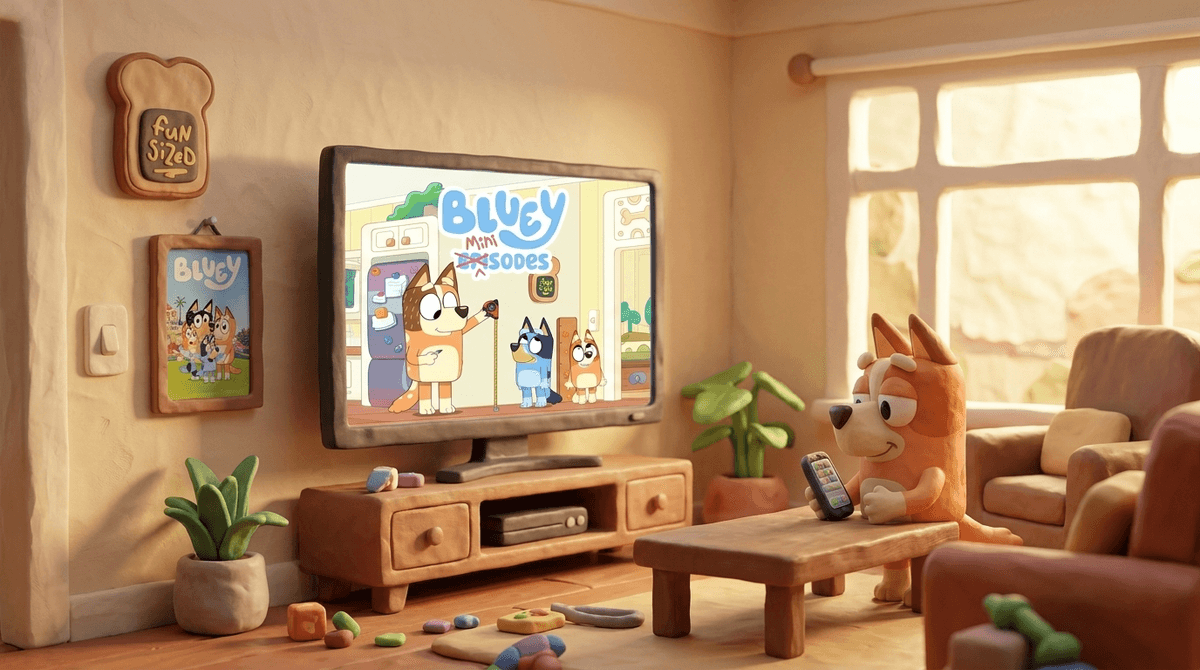
TL;DR: Bluey Minisodes are 1–3 minute "bite-sized" stories that carry the same emotional weight and humor as the full series. They are the ultimate parenting tool for "closing the loop" on screen time without the 20-minute negotiation process.
Quick Links:
- Watch the full series: Bluey
- The short-form version: Bluey Minisodes
- For more gentle transitions: Puffin Rock
- If you need a YouTube alternative: PBS Kids
We’ve all lived through the "One More Show" hostage negotiation. You know the one. You’ve got five minutes before you have to leave for soccer practice, or the pasta is exactly three minutes from being "al dente," and your kid is looking at you with those soul-shattering eyes, begging for one more episode.
Usually, saying "yes" to a standard 7-to-9-minute episode of Bluey means you’re going to be late. Saying "no" means a meltdown that lasts longer than the show itself would have.
Enter the Bluey Minisodes.
These aren't just "clips" or "best-of" compilations. They are standalone, scripted, high-quality micro-stories—and they are the most effective tool I’ve found for managing screen time transitions in years.
In 2024, Ludo Studio (the geniuses behind the Heeler family) started releasing these "Minisodes." Each one clocks in between one and three minutes. They feature the same voice cast, the same beautiful animation, and the same "makes-parents-cry-at-least-once-a-season" heart as the main show.
They cover everything from Muffin unboxing a toy to Bingo playing with a "Burger Dog" toy. They are short, punchy, and—crucially—they feel like a complete "win" for a kid who just wants to see their favorite characters one last time before the TV goes dark.
Screen time struggles often boil down to transitions. Transitioning from a high-dopamine activity (watching a show) to a low-dopamine activity (putting on shoes or eating broccoli) is biologically difficult for a developing brain.
When we say "No more shows," we are creating a hard stop. When we use a Bluey Minisode, we are providing a "taper."
It’s the "Final Yes" Strategy:
- Kid asks for one more show.
- You say, "We don't have time for a full episode, but we can do one Minisode."
- The kid feels like they won the negotiation.
- The show ends in 120 seconds.
- The transition to the next activity happens while they still feel that "win."
We talk a lot at Screenwise about "brain rot"—that specific brand of hyper-stimulating, low-substance content that leaves kids' brains feeling fried. Think of the endless, nonsensical loops of Skibidi Toilet or some of the weirder "unboxing" videos on YouTube Kids.
Bluey Minisodes are the literal opposite of brain rot. They maintain the "slow-burn" humor and emotional intelligence of the original series. They don't rely on screaming, neon colors, or rapid-fire cuts to keep a child's attention. They rely on good storytelling.
If you're looking for other high-quality, short-form options that aren't junk, check out:
- Trash Truck (Netflix) - Very gentle, great for winding down.
- Lucas the Spider - Short, sweet, and visually stunning.
- Storyline Online - Famous actors reading picture books (usually 5-10 minutes, but great for transitions).
Target Age: 2–7 years old
While the "official" demographic is preschool and early elementary, let's be honest: about 40% of the people watching Bluey are parents who have forgotten their kids left the room twenty minutes ago.
For the 2-4 age group, the Minisodes are actually sometimes better than the full episodes because they match the shorter attention spans of toddlers.
For the 5-7 age group, they serve as great conversation starters about humor, sibling dynamics, and how to be a "good sport" (looking at you, Muffin).
Check out our guide on why Bluey is great for social-emotional learning
The Platform Trap
The Minisodes are available on Disney+ and YouTube.
- On Disney+: They are usually grouped together as their own series or tucked into the "Extras" tab of the main Bluey page. This is the "safe" way to watch.
- On YouTube: They are on the official Bluey channel. While the content is safe, YouTube is designed to keep you watching. If you use the Minisode hack on YouTube, be prepared for the "Autoplay" to try and suck your kid into a 2-hour compilation of "Funny Bluey Moments." Turn off Autoplay.
The "Muffin" Factor
A few of the Minisodes feature Muffin (the chaotic cousin). If your child tends to mimic "naughty" behavior for laughs, you might want to pre-screen the ones where Muffin is at her peak chaos. That said, Bluey is excellent at showing the consequences of that behavior, which is why we love it.
It’s Not a Substitute for "Boredom"
While these are great for transitions, try not to use them as a "pacifier" for every 2-minute wait (like standing in line at the grocery store). Part of digital wellness is teaching kids how to be bored without a screen. Save the Minisodes for the "High-Stakes Transitions" at home.
When you introduce the Minisodes, explain the "why" to your kids. It sounds like this:
"I know you want to see Bluey, and I want you to have fun, but we have to leave in three minutes. A full show is too long and we’d have to turn it off in the middle—and I know that feels frustrating. Let’s do a Minisode instead so we can see the whole story before we go."
By doing this, you're teaching them time management and emotional regulation. You're acknowledging their desire while maintaining the boundary.
Bluey Minisodes are a rare win-win in the digital parenting world. They offer the high-quality content we trust from the Heeler family in a format that actually respects the reality of a busy parent's schedule.
They aren't "brain rot," they aren't "filler," and they aren't just ads for toys. They are legitimate short stories that can turn a potential afternoon meltdown into a shared two-minute laugh.
- Find them now: Locate the Minisodes on Disney+ so you aren't hunting for them when the "negotiation" starts.
- Set the rule: Establish that Minisodes are for "quick breaks" or "one last show" moments.
- Explore more: If your kid loves the short-form storytelling, consider moving into podcasts for kids like Brains On! for screen-free transitions.
Learn more about managing screen time tantrums Check out our guide to the best Disney+ shows for ages 3-6