

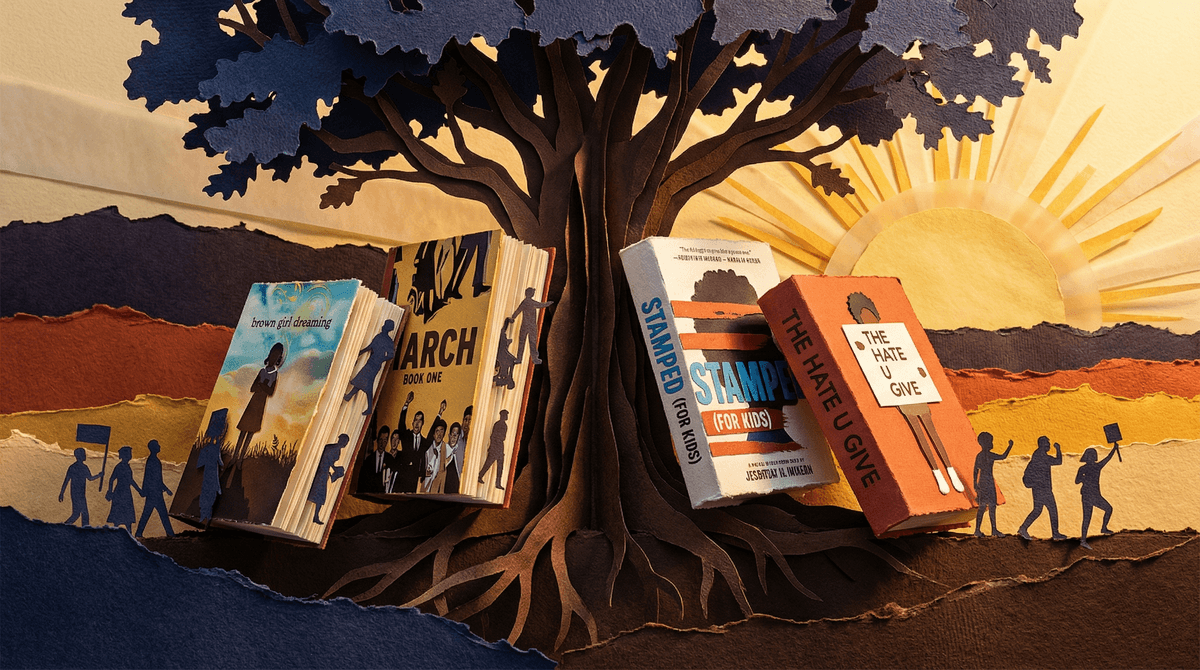
Let's be real: the history curriculum in most schools is... incomplete. And that's putting it generously. Black history books for teens fill those gaps with stories of resistance, innovation, joy, and complexity that don't make it into standard textbooks. We're talking about books that center Black voices, experiences, and perspectives — not just during February, but year-round.
These aren't just "educational" reads (though they absolutely are). They're page-turners, memoirs, graphic novels, historical fiction, and contemporary stories that help teens understand how we got here and imagine where we're going. For Black teens, these books can be mirrors that reflect their own experiences and heritage. For all teens, they're windows into perspectives that make them better thinkers and more empathetic humans.
Here's what happens when teens read diverse, authentic stories about Black history and Black lives: they develop critical thinking skills about power, justice, and systemic issues. They see themselves or their peers in complex, fully realized characters. They learn that history isn't just dates and dead white guys — it's living, breathing, and deeply relevant to today's world.
And honestly? The conversations that come from these books are often more valuable than the books themselves. When a teen reads The Hate U Give by Angie Thomas and wants to talk about police violence, or picks up Stamped: Racism, Antiracism, and You by Jason Reynolds and Ibram X. Kendi and starts questioning what they learned in social studies — that's when real learning happens.
For families raising Black children, these books are essential for building pride, understanding legacy, and processing the world they're navigating. For families raising non-Black children, these books are equally essential for developing empathy, challenging assumptions, and understanding that their experience isn't universal.
Let's talk specific titles that teens actually want to read (not just books that look good on a syllabus):
For teens who love stories:
- The Hate U Give — Angie Thomas's debut is powerful without being preachy, and it sparked more dinner table conversations than maybe any YA book in recent years
- Children of Blood and Bone — Tomi Adeyemi's fantasy epic with West African mythology that shows Black characters as heroes, magic-wielders, and complex humans
- The Poet X — Elizabeth Acevedo's novel-in-verse about a Dominican-American teen finding her voice
For teens who want the real history:
- Stamped: Racism, Antiracism, and You — Jason Reynolds remixes Ibram X. Kendi's work for teens, and it's actually readable (high praise for a history book)
- March trilogy — John Lewis's graphic memoir of the Civil Rights Movement is visceral and necessary
- The 1619 Project: Born on the Water — Gorgeous illustrated book that traces the journey from Africa to America
For teens who need to see joy and everyday life:
- Brown Girl Dreaming — Jacqueline Woodson's memoir-in-verse is beautiful and intimate
- Long Way Down — Another Jason Reynolds hit, this one about grief, violence, and choice
- Concrete Rose — Angie Thomas's prequel about Starr's dad, showing young Black fatherhood with nuance
Ages 12-14: Start with accessible narratives like Brown Girl Dreaming or Ghost (Jason Reynolds). Graphic novels like March work beautifully for visual learners and reluctant readers.
Ages 15-18: They can handle the heavier stuff. The Hate U Give deals with police violence. Stamped gets into systemic racism. Dear Martin by Nic Stone tackles racial profiling. These books don't shy away from hard truths, and teens appreciate that respect.
Content heads-up: Many of these books deal with racism, violence, death, and trauma — because that's part of Black history and Black life in America. That's not a reason to avoid them; it's a reason to read them together or be available for conversations afterward.
Don't just hand over a book and disappear. The magic happens in the discussion.
Ask open-ended questions:
- "What surprised you?"
- "Did anything make you angry or uncomfortable? Why?"
- "How does this connect to what you're seeing in the news?"
- "What would you do in that situation?"
Listen more than you talk. Especially if you're a white parent with a teen who's processing stories about racism — your job is to hold space, not explain or defend.
Make it ongoing. Black history isn't a unit or a month. Keep these books in rotation. Follow up The Hate U Give with All American Boys by Jason Reynolds and Brendan Kiely. Read memoirs alongside fiction. Mix in contemporary stories with historical ones.
Connect to current events. When something happens in the news, having read these books gives teens context and language to process it. They're not starting from zero.
Black history books aren't "special interest" reading — they're essential for every teen. They build empathy, critical thinking, and historical literacy. They show Black teens that their stories matter and their history is rich and complex. They show all teens that the world is bigger and more nuanced than their immediate experience.
The best part? Most of these books are genuinely good reads. They're not medicine you have to force down. They're stories that stick with you, characters you think about long after you close the book, and ideas that change how you see the world.
Start with one book. See what resonates. Follow the threads. And be ready for some really good conversations.
- Check your library first — most of these titles are available, and librarians are excellent at recommendations
- Ask your teen what they're interested in — there's a Black history book for every interest (sports, fantasy, romance, mystery, you name it)
- Read together or separately — whatever works for your family, but make space to discuss
- Don't make it homework — the goal is engagement, not a book report
Want more book recommendations for your specific teen? Tell us what they're into, and we'll help you find the perfect match.