

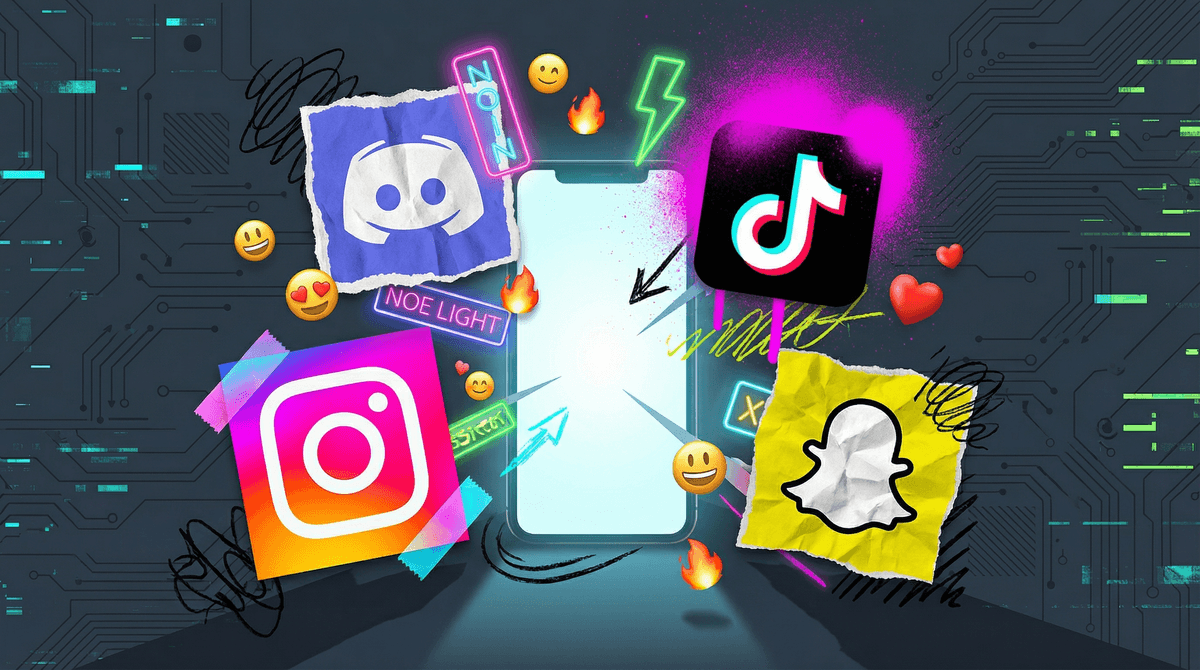
Let's be real: asking "what are the best apps for teens" is kind of like asking "what's the best food?" It depends entirely on what you're hungry for. But unlike food, apps come with a side of privacy concerns, social pressure, and the occasional existential dread about what the algorithm is doing to our kids' brains.
The apps dominating teen life right now fall into a few categories: social media (obviously), messaging, creative tools, and entertainment. Some are genuinely useful. Some are... well, they're what teens are using, so we need to understand them. And a few are actually pretty great, even if we don't totally get the appeal.
Here's the thing: the "best" app isn't necessarily the safest one, or the one you'd choose. It's about understanding what your teen is drawn to and why, then helping them navigate it. So let's break down what's actually happening in teen digital life right now.
TikTok - Let's start with the elephant in the room. Or should I say the dancing elephant? TikTok is the dominant force in teen social life, and pretending otherwise is like pretending teens don't care about fitting in. The algorithm is genuinely scary-good at showing people exactly what will keep them scrolling. The creative tools are legitimately impressive. The community can be incredibly supportive... or incredibly toxic.
What parents need to know: The "For You" page is a black box that can serve up everything from wholesome cooking tutorials to content that glorifies eating disorders in the span of 30 seconds. The app is designed for infinite scroll, and it's VERY good at what it does. That said, many teens are using it primarily as a search engine (yes, really) and creative outlet, not just passive consumption.
Instagram - Still massive with teens, though it's evolved. Stories and Reels are where the action is now; the main feed is almost quaint at this point. The comparison culture is real, but so is the creative community. Many teens curate their Instagram carefully, treating it like a portfolio rather than a diary.
Snapchat - Don't sleep on Snapchat just because you don't get it. For many teens, this is their primary messaging app. The disappearing messages feel lower-stakes than permanent posts. Snap Maps shows friends' locations in real-time (yes, you should talk about this ), and streaks create artificial social pressure that's honestly exhausting to watch.
Discord - Originally for gamers, now it's basically where teens hang out in topic-based communities. Think of it as the internet's living room, with different rooms for different conversations. It can be genuinely great for finding niche communities (coding, art, specific games), but the lack of central moderation means you need to be paying attention to which servers your teen joins.
iMessage/Messages - Yes, the default texting app counts. For teens with iPhones (which is most of them in the US), the blue bubble vs. green bubble thing is real social currency. Group chats are where a lot of social dynamics play out, for better or worse.
YouTube - Still the king of video content. Teens use it for everything: entertainment, education, tutorials, music, and increasingly as a search engine instead of Google. The rabbit hole potential is real, but so is the genuinely educational content. Understanding YouTube's algorithm and recommendation system is worth your time.
Spotify or Apple Music - Music streaming is basically universal at this point. The podcast discovery is actually great, and music is a huge part of teen identity formation. Pretty low-risk overall, though you might want to check in on podcast content occasionally.
BeReal - The "anti-Instagram" that prompts users once a day to post an unfiltered photo within two minutes. It had a huge moment, and while the hype has cooled, many teens still use it. The pressure to be "authentically unfiltered" at the exact moment the app demands is its own kind of performance, but it's generally lower-stakes than other platforms.
[Roblox](https://screenwiseapp.com/media/roblox-game - If your teen is still on Roblox, it's likely because they're creating games, not just playing them. The platform skews younger, but teen creators are building genuinely impressive stuff. The social dynamics and in-app purchases deserve attention.
Twitch - Live streaming platform where teens watch other people play games, create art, or just chat. It's like TV, but interactive. The parasocial relationships can get intense, and the chat can be... a lot.
Look, teens are also using apps that should give you pause. Omegle shut down in 2023 (good riddance), but there are always new "chat with strangers" apps popping up. Anonymous question apps like NGL or Sendit (integrated with Snapchat) are breeding grounds for cyberbullying disguised as "honest feedback."
Dating apps technically require users to be 18+, but teens lie about their age. If your 16-year-old is on Tinder or Bumble, that's a conversation worth having about safety, consent, and why they feel the need to be there.
Ages 13-14: This is when most platforms legally allow accounts. That doesn't mean your 13-year-old needs to be on everything. Consider starting with one or two platforms with strong parental controls. Instagram and YouTube are common starting points. Discord can work if they're joining specific, moderated communities for interests like gaming or art.
Ages 15-16: Most teens this age are on multiple platforms. The focus shifts from "should they have this?" to "do they understand how to use it safely?" This is prime time for conversations about digital footprint, privacy settings, and the performative nature of social media.
Ages 17+: They're almost adults. Your role is more consultant than gatekeeper at this point. Focus on critical thinking about algorithms, time management, and the difference between online personas and real relationships.
The app itself isn't the whole story. TikTok can be a creative outlet or a comparison trap. Discord can be a supportive community or a toxic cesspool. It depends on how it's used, who they're connecting with, and how much time they're spending.
Your teen probably has apps you don't know about. Not because they're being sneaky (though maybe), but because apps rise and fall faster than we can keep track. The best approach isn't monitoring every download—it's creating a relationship where they feel comfortable talking about what they're using.
"Educational" apps aren't always better. Sure, Duolingo is great for language learning, and Khan Academy is genuinely useful. But teens also need social connection and creative outlets. Entertainment isn't the enemy.
Privacy settings are not set-and-forget. Apps change their policies, add new features, and update their defaults. What was private last month might be public now. Regular check-ins matter.
There's no perfect app roster for teens. The "best" apps are the ones your teen can use in a way that adds value to their life without consuming it. That means different things for different kids.
Some teens thrive on the creative challenges of TikTok. Others find their people in Discord communities. Some are perfectly happy with just texting friends and watching YouTube. The goal isn't to find the objectively "best" apps—it's to help your teen develop the skills to navigate whatever digital landscape they're in.
Start by asking what they're actually using and why. Not in an interrogation way, but genuine curiosity. You might be surprised by how thoughtful they are about it (or how little they've considered it, which is also useful information).
And remember: the app is just the tool. The real work is teaching them to think critically about what they're consuming, how they're presenting themselves, and how much of their life they want to hand over to an algorithm designed to keep them scrolling.
- Have a no-judgment conversation about what apps your teen is currently using
- Pick one app to explore together—have them show you what they like about it
- Review privacy settings on their most-used apps (do this together, not as surveillance)
- Set up some basic ground rules around screen time that make sense for your family
- Check in regularly about how they're feeling about their digital life—not just what they're using, but how it makes them feel
Want to dig deeper into any specific app? See specific safety concerns or explore alternatives to popular apps that might be a better fit for your family.