

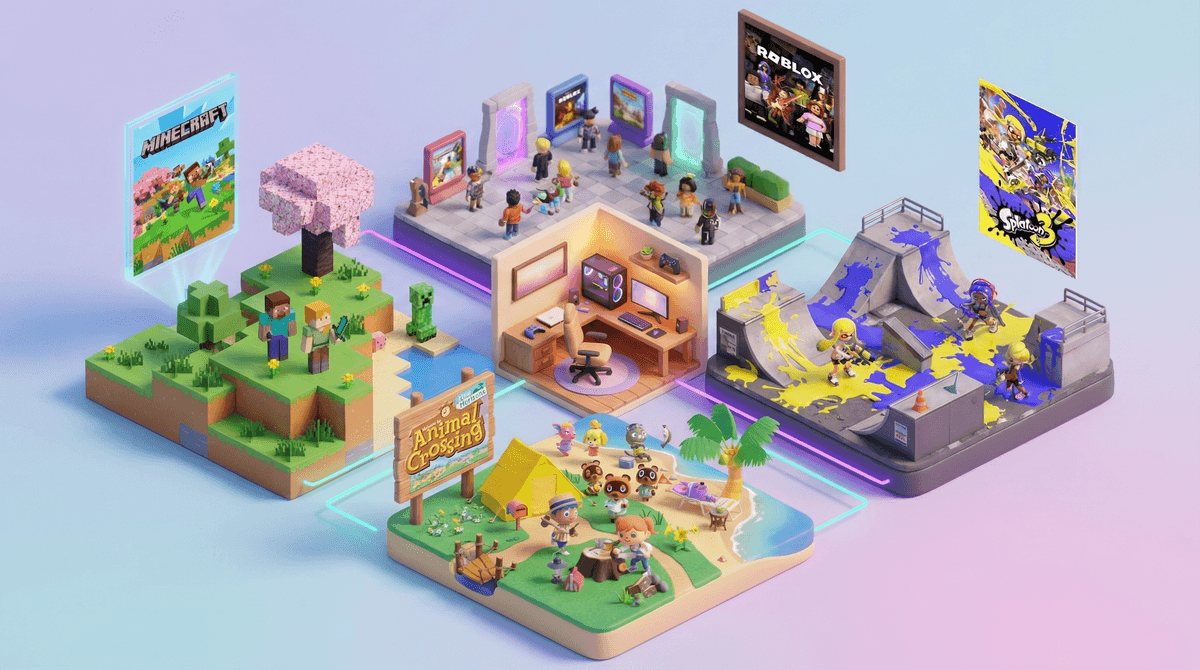
Let's start with what we're actually talking about here. Multiplayer online games are video games where kids play together over the internet—sometimes with friends, sometimes with strangers from around the world. We're not talking about passing a controller back and forth on the couch (though that's lovely too). These are games where your kid is wearing a headset, chatting with other players, and building/battling/exploring in real-time with people they may or may not know IRL.
The good news? These games can be genuinely amazing for building friendships, teaching collaboration, and developing problem-solving skills. The less-good news? They can also expose kids to toxic behavior, inappropriate content, and the kind of language that would make a sailor blush.
The key is knowing which games actually have decent communities, understanding what safety features exist, and being realistic about what your kid is mature enough to handle.
Here's the thing: multiplayer games aren't just about the gameplay. They're the digital equivalent of the neighborhood playground—where kids are actually hanging out these days. When your 10-year-old says they're "playing Minecraft," they're often just... hanging out. Building stuff together. Chatting. Showing off their latest creation.
The social aspect is the point. And honestly? In a world where kids can't just roam the neighborhood freely anymore, having safe digital spaces to connect with friends isn't the worst thing.
These games also teach real skills: resource management, strategic thinking, teamwork, creative problem-solving. Some kids are learning basic coding in Roblox. Others are developing leadership skills by organizing raids in other games. It's not all mindless button-mashing.
Ages 6-8: Training Wheels Territory
Minecraft (with parental controls locked down tight) This is the gold standard for a reason. In creative mode on a private server with known friends only, it's basically digital LEGOs. The community can get rough in public servers, so keep it friends-only at this age. Learn how to set up Minecraft safely.
Animal Crossing: New Horizons Wholesome to the point of being almost aggressively pleasant. Kids can visit each other's islands, trade items, and there's basically no way to be toxic. The worst thing that can happen is someone picks your flowers. The main downside? It's Switch-only and requires a Nintendo Online subscription.
Splatoon 3 If your kid wants a shooter but you're not ready for guns, this is it. Teams of squid-kids spray ink at each other. It's colorful, fast-paced, and the community is surprisingly chill for a competitive game. Also Switch-only.
Ages 9-12: The Sweet Spot
Roblox
Look, Roblox is complicated. It's not one game—it's a platform with millions of user-created games, ranging from genuinely creative to absolute garbage. The chat can get dicey. There are real concerns about the Robux economy and kids spending real money. BUT. It's also where like 70% of kids this age are hanging out, and many of the games are legitimately good. The key is setting up parental controls properly and having regular conversations about what they're playing. Here's how to lock down Roblox.
Minecraft (expanded freedom) At this age, kids can handle public servers better—especially ones with active moderation like Hypixel. Survival mode becomes more interesting. They might even get into Minecraft Realms with friends.
Among Us The social deduction game that took over during the pandemic is still going strong. Kids play as crew members trying to complete tasks while identifying the "imposters" sabotaging them. It's basically Mafia/Werewolf in space. Best played with known friends in private lobbies—public lobbies can be chaotic and occasionally inappropriate.
Fortnite (maybe) Okay, controversial take time. Fortnite gets a bad rap, but it's actually not terrible for mature 11-12 year-olds if you set boundaries. Yes, it's a shooter. Yes, the building mechanics can be overwhelming. Yes, kids will beg for V-Bucks. But the violence is cartoonish (no blood/gore), there are solid parental controls, and the creative mode is genuinely impressive. The voice chat is where things get dicey—consider disabling it or using party-only chat.
Ages 13+: More Freedom, More Conversations
At this point, the training wheels come off a bit. Most games rated T for Teen become reasonable options, though you'll still want to check individual titles. Valorant, Rocket League, and various sports games (FIFA, NBA 2K) are popular.
The focus shifts from "is this game appropriate?" to "are you handling the social dynamics well?" and "is this taking over your entire life?"
The chat is usually worse than the game itself. A game rated E for Everyone can still expose kids to racist slurs, sexual content, and bullying through voice or text chat. This is real. Many parents don't realize voice chat is even happening until they walk past and hear... well, you can imagine.
Stranger danger is real but different than you think. The odds of a predator grooming your kid through Fortnite voice chat are lower than the odds of them encountering toxic behavior from other kids. Both are concerns, but the everyday toxicity is the more common issue.
The money thing is no joke. These games are free-to-play but make billions through in-game purchases. Kids will beg for Robux, V-Bucks, Minecoins. Understanding how these economies work helps you set boundaries that make sense.
Time sucks are real. "Just one more game" is the new "just one more episode." Multiplayer games are designed to keep you playing—with battle passes, daily challenges, limited-time events. You need hard boundaries around time.
Start with private servers/friend-only mode. Most games let you create private spaces where only approved friends can join. Use this feature heavily, especially for younger kids.
Disable or limit chat. Most games let you turn off voice chat, limit it to friends-only, or disable text chat. For kids under 10, seriously consider just turning it all off.
Play together initially. Spend a few hours actually playing with your kid or watching them play. You'll understand the game better and can assess the community vibe.
Check the ESRB rating, but don't stop there. The rating tells you about content in the game itself—not about what other players might say or do. Common Sense Media often has better age recommendations that account for online interactions.
Set up parental controls on the platform level. Xbox, PlayStation, Switch, and PC gaming platforms all have family settings. Set spending limits, time limits, and communication restrictions at the system level, not just in individual games.
The best multiplayer game for your kid is one that:
- Matches their maturity level (not just their age)
- Has friends they actually know playing it
- Includes safety features you can actually use
- Doesn't completely take over their life
There's no single "right" answer. A mature 9-year-old might handle Fortnite fine with proper boundaries, while an impulsive 12-year-old might struggle with Among Us public lobbies.
The goal isn't to find the perfect game that requires zero supervision. That doesn't exist. The goal is to find games that are age-appropriate, set up proper guardrails, and maintain ongoing conversations about what's happening in these digital spaces.
Your kid is going to play multiplayer games. They're going to want to connect with friends online. That's not inherently bad—but it does require you to be involved, informed, and willing to adjust boundaries as needed.
- If you're just starting out: Begin with Minecraft or Animal Crossing in friends-only mode
- If your kid is already playing: Sit down and actually watch them play for 30 minutes this week—you'll learn more than any article can teach you
- If you're feeling overwhelmed: Find multiplayer games for your kids about your specific situation and get personalized recommendations
And remember: you don't have to be a gamer yourself to set reasonable boundaries around gaming. You just have to be willing to learn enough to make informed decisions—which is exactly what you're doing by reading this.