

Look, I get it. You're scrolling through Netflix trying to find something that won't rot your kid's brain, and you see a film with subtitles. Your first thought is probably "my kid can barely sit through Encanto without checking their phone—there's no way they're reading subtitles for 90 minutes."
But here's the thing: foreign language films aren't just "educational vegetables" you're forcing kids to eat. The best ones are genuinely captivating stories that happen to expand your kid's world beyond English-speaking narratives. And honestly? In an age where kids are already reading text overlays on TikTok videos and Roblox chat at lightning speed, subtitles aren't the barrier we think they are.
Foreign language films offer something most American kids' content doesn't: different storytelling rhythms, cultural perspectives that aren't just surface-level diversity, and proof that great stories exist everywhere. Plus, they're a sneaky way to build empathy and cultural literacy without it feeling like homework.
Kids are more capable of handling subtitles than we give them credit for. If your 8-year-old can follow the plot of a Minecraft YouTube video while simultaneously building a redstone contraption, they can handle reading subtitles. The key is choosing films where the visual storytelling is strong enough that they're not just staring at text the whole time.
Also, foreign films often have a different pace and sensibility than American kids' content. There's less of the hyperactive editing, fewer pop culture references that age poorly, and often more emotional depth. Japanese animation, for instance, is comfortable with silence and contemplation in ways that most American kids' content isn't.
And let's be real: exposure to other languages and cultures is just good for developing humans. It builds the muscle of understanding that your way of seeing the world isn't the only way—a skill that's increasingly important and increasingly rare.
Ages 5-8: Visual Storytelling First
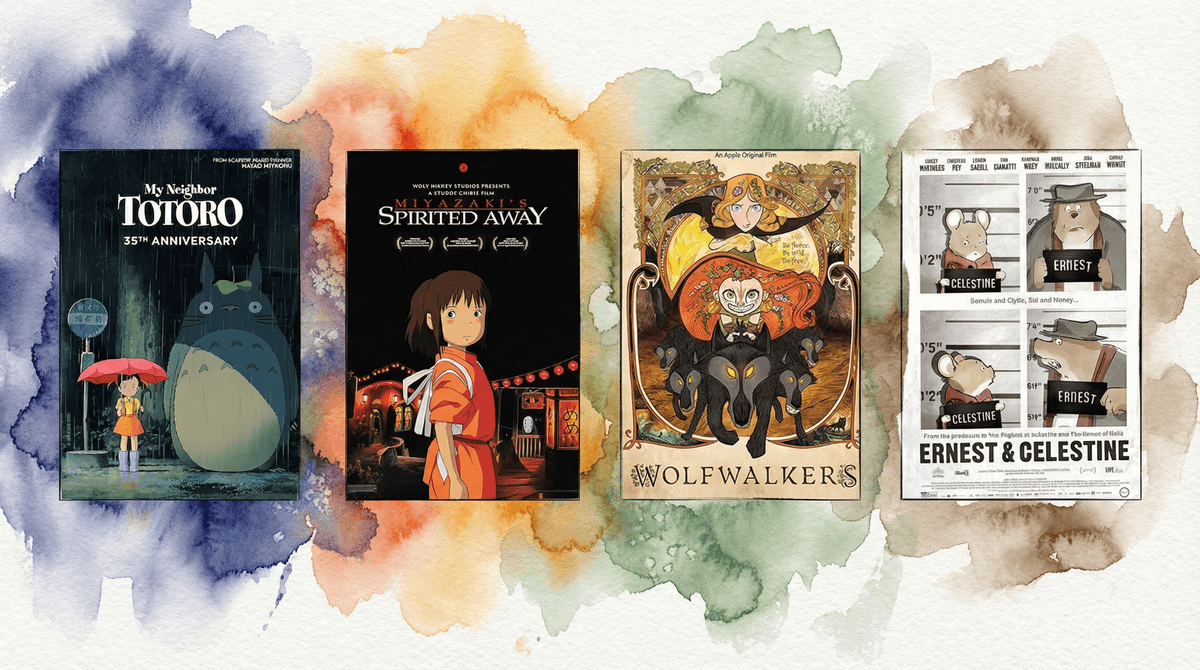
My Neighbor Totoro (Japanese) - This is the gateway drug. Studio Ghibli's gentle masterpiece about two sisters who move to the countryside and encounter forest spirits is so visually rich that even pre-readers can follow along. The pacing is slow by American standards, but that's actually the point—it teaches kids that stories don't always need to be go-go-go.
Ernest & Celestine (French) - A gorgeous hand-drawn film about a mouse and a bear who become unlikely friends. The watercolor animation is stunning, and the story is simple enough for younger kids while being emotionally sophisticated enough that you won't want to claw your eyes out.
Ponyo (Japanese) - Another Ghibli gem. Think "The Little Mermaid" but weirder and more wonderful. The five-year-old protagonist means younger kids see themselves in the story, and the fantastical elements are engaging enough to keep them hooked despite the subtitles.
Ages 8-12: Ready for More Complex Stories
Kiki's Delivery Service (Japanese) - A 13-year-old witch moves to a new city to start her training. It's essentially a coming-of-age story about finding your place in the world, dealing with self-doubt, and starting a small business (entrepreneurship!). The protagonist is just old enough that tweens look up to her.
The Red Turtle (French/Japanese, actually dialogue-free) - This one's a cheat since there's no dialogue at all, but it's worth mentioning. A man stranded on a desert island encounters a mysterious red turtle. It's contemplative and beautiful, and the lack of dialogue means kids focus entirely on the visual storytelling. Best for kids who can handle slower pacing and metaphorical storytelling.
Wolfwalkers (Irish/English, but Irish-produced with distinct cultural perspective) - Okay, this one's in English, but it's Irish animation with a distinctly non-American sensibility. Set in 1650s Ireland, it's about friendship, colonialism (handled age-appropriately), and nature. The animation style alone makes it worth watching.
Spirited Away (Japanese) - The Ghibli film that won an Oscar. A 10-year-old girl must navigate a bathhouse for spirits to save her parents. It's weird, occasionally scary, and absolutely mesmerizing. This is for kids ready for some genuine tension and strangeness. Not for sensitive younger kids, but perfect for 10+ who are ready for something more complex.
Ages 12+: Real Cinema
The Secret of Kells (Irish/English) - Like Wolfwalkers (same studio), this is English-language but Irish in every other way. The story of the Book of Kells is told through stunning, almost psychedelic animation. Great for middle schoolers studying medieval history or just ready for more artistic filmmaking.
A Cat in Paris (French) - A noir-style animated film about a cat who lives a double life. It's stylish, funny, and has actual stakes. The 70-minute runtime is perfect for kids with shorter attention spans.
The Boy and the Heron (Japanese) - Miyazaki's latest. It's darker and more surreal than his earlier work, dealing with grief and loss. This is for teens or mature tweens who can handle emotional complexity and ambiguity. Not everything is explained, and that's okay.
Grave of the Fireflies (Japanese) - Fair warning: this will wreck you and your teen. It's about two siblings trying to survive in Japan during WWII. It's devastating and important, but only for teens who are ready for serious, heavy content about war and death. Watch it together and plan to talk afterward.
Start with dubbed versions if needed. There's no shame in using dubbed audio for younger kids or for a first viewing. Once they're hooked on the story, they might be more willing to try subtitles on a rewatch. Studio Ghibli films, for instance, have excellent English dubs with great voice actors.
Not all foreign animation is "kid-friendly." Just because it's animated doesn't mean it's for children. Japanese anime especially can cover very adult themes. Always check ratings and reviews—Common Sense Media is your friend here.
Use this as a conversation starter. After watching, talk about what was different from American films. What did they notice about how families interact? How problems are solved? What the humor was like? These observations build cultural awareness in ways that feel natural, not forced.
The "I don't want to read" resistance is real. Try this: watch the first 10 minutes together. If they're genuinely struggling or disengaged, shelf it for six months and try again. But often, kids who think they'll hate subtitles forget about them within minutes once they're invested in the story.
Foreign language films aren't about forcing culture onto your kids or proving you're a sophisticated parent. They're about expanding the menu of stories available to your children beyond the same Disney/Pixar/DreamWorks formula.
The best foreign films offer something genuinely different: different pacing, different cultural values, different ways of telling stories. They prove to kids that great storytelling exists everywhere, that reading subtitles is a skill worth having, and that "foreign" just means "from somewhere else"—not "weird" or "boring."
Start with something visually stunning like My Neighbor Totoro or Kiki's Delivery Service. Watch together. See what happens. You might be surprised how quickly they stop noticing the subtitles and start noticing the story.
And honestly? In a media landscape where so much kids' content feels like it was focus-grouped to death, there's something refreshing about films that trust kids to keep up, to feel real emotions, and to encounter stories that weren't designed specifically for the American market.
Next step: Pick one film from the age-appropriate section above and watch it together this weekend. No phones, no distractions—just you, your kid, and a story from somewhere else in the world.