

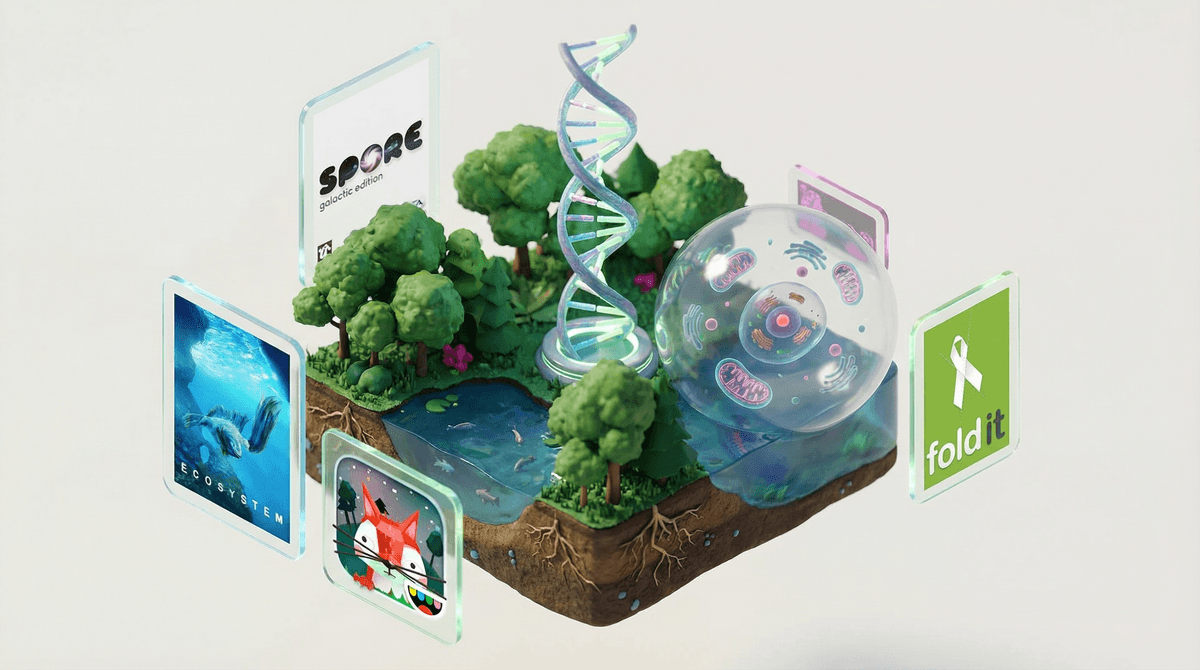
Look, we've all been there—your kid is glued to a screen anyway, so wouldn't it be nice if they were actually learning something about mitochondria instead of watching someone else play Minecraft? Biology learning games are exactly what they sound like: video games, apps, and interactive experiences that teach biological concepts while still being, you know, actually fun.
These aren't the dusty CD-ROM "edutainment" disasters from the 90s. Modern biology games range from full-on simulation experiences where kids build functioning ecosystems to puzzle games that teach protein folding to strategy games about evolution. The best ones don't feel like homework with a controller—they feel like games that happen to teach you why your cells are basically tiny factories run by even tinier machines.
Here's the thing: biology is everywhere, but most kids think it's just memorizing the parts of a cell for a test. These games can change that. They make abstract concepts visual and interactive. Suddenly, photosynthesis isn't just a diagram—it's a process you're actively managing. Genetics isn't just Punnett squares—it's breeding creatures with different traits and seeing what happens.
Plus, biology literacy matters more than ever. We're living through a time when kids need to understand pandemics, climate change, genetic engineering, and how their own bodies work. Games that build genuine interest in biology (not just test prep) are doing real work.
Ages 5-8: Introduction to Life Science
Toca Nature lets young kids create and observe simple ecosystems. Plant trees, watch animals appear, see what they eat. It's gentle, beautiful, and builds foundational understanding of how living things depend on each other. No reading required.
The Cat in the Hat Builds That includes several biology-themed building activities that teach basic concepts about plants, animals, and habitats through the familiar Dr. Seuss characters. It's playful without being chaotic.
Ages 8-12: Diving Deeper
[Incredible Edible Cell](https://screenwiseapp.com/media/incredible-edible-cell-app is a free browser game where kids build a functioning cell by placing organelles and learning what each one does. It's quick, visual, and weirdly satisfying when everything works together.
Ecosystem (the Steam game) lets kids build aquatic ecosystems and watch them succeed or crash based on food chains, population dynamics, and environmental factors. It's essentially SimCity for biology nerds, and it's genuinely challenging.
Ancestors: The Humankind Odyssey is more intense—you're guiding a lineage of primates through evolution over millions of years. Your decisions about diet, mating, and exploration affect survival and evolution. It's rated T for Teen for animal violence (the circle of life is rough), but mature 11-12 year olds who are into evolution will be fascinated. This one deserves a full guide if your kid is interested.
Ages 12+: Real Science
Foldit is the real deal—a puzzle game about protein folding where players have actually contributed to legitimate scientific research. Kids who like spatial puzzles and want to do actual science will love this. It's free and has helped solve real problems in biochemistry.
Plague Inc. is controversial because you're trying to wipe out humanity with a pathogen, but it teaches epidemiology, evolution, transmission dynamics, and public health responses better than most textbooks. The educational mode is explicitly designed for classroom use. Just... maybe don't play it during the next pandemic.
Spore is older (2008) but still beloved. You guide a species from single cell through evolution, tribal stage, civilization, and space exploration. The biology is more creative than accurate, but it builds intuition about adaptation, natural selection, and speciation.
Not all "educational" games are created equal. Some are just drill-and-practice with cartoon characters. The games listed here actually teach biological thinking—systems, cause and effect, adaptation, interdependence.
Play time matters. These aren't quick apps. Games like Ecosystem or Spore require time to see patterns emerge. That's actually the point—biology happens over time, through cycles and generations. If your kid is spending 45 minutes watching their ecosystem stabilize, that's learning, not just screen time.
Some biology is uncomfortable. Death, predation, reproduction, evolution—these are core biological concepts that some games handle directly. Ancestors shows your primates getting eaten by predators. Spore has a creature creator that kids will absolutely use to make inappropriate body parts. Know what you're getting into.
Free doesn't mean worse. Foldit and Incredible Edible Cell are completely free and excellent. Some of the best biology education is happening in browser-based games and free apps.
Biology learning games work best when they're not trying too hard to be "educational." The ones that succeed let kids experiment, fail, observe patterns, and build intuition about how living systems work. They're not replacements for actual biology class, but they can be the spark that makes a kid actually care about what's happening in biology class.
If your kid is already into simulation games like Minecraft or Stardew Valley, they'll probably love ecosystem builders. If they're into puzzles, try Foldit. If they ask endless questions about how things work, Spore or Ancestors might blow their minds.
And honestly? Playing these games with your kid is pretty fun. You might actually learn something about protein folding or why biodiversity matters. Worst case scenario, you'll understand what they're talking about at dinner when they explain why their digital ecosystem collapsed because they forgot about decomposers.
Start with one game based on your kid's age and interests—don't overwhelm them with a whole curriculum of biology games.
Play together initially to see if the game is actually teaching or just claiming to teach. You'll know pretty quickly.
Connect to real life. If they're playing Ecosystem, visit an aquarium. If they're into Foldit, watch a video about how proteins actually work. These games are jumping-off points, not destinations.
Want more science game recommendations beyond biology? Check out our guides on best chemistry games for kids and best physics games for kids.