

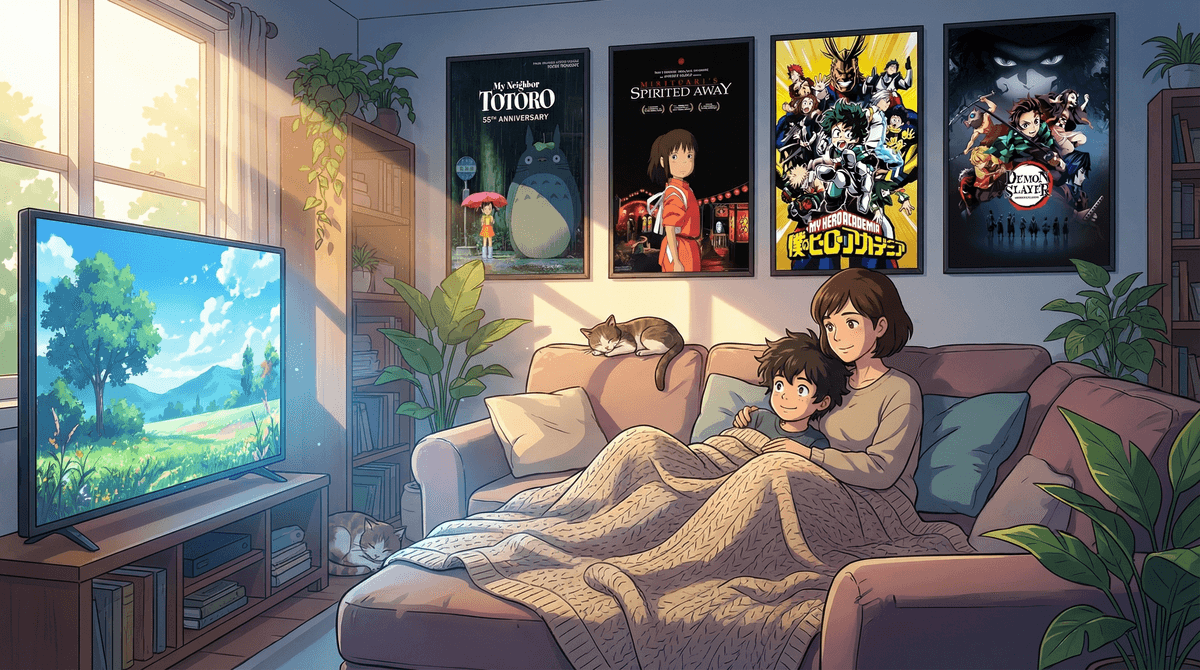
Let's clear something up first: anime isn't a genre—it's an entire medium of animation from Japan. Saying "my kid wants to watch anime" is like saying "my kid wants to watch live-action." It tells you almost nothing about what they're actually going to see.
Anime spans everything from Studio Ghibli films that make you cry in the best way, to shonen battle series where teenagers scream attack names for 200 episodes, to slice-of-life shows about high schoolers eating lunch, to genuinely disturbing horror that no child should ever see. The art style might look similar, but the content range is wild.
And here's the thing: anime has absolutely exploded in mainstream popularity. If your kid hasn't asked about it yet, they probably will. Between streaming services pushing it hard and kids talking about it at school, anime is having a massive cultural moment in the U.S. right now.
The appeal is pretty straightforward once you get it. Anime tells stories differently than most Western animation. Characters actually grow and change over time. Story arcs can span entire seasons. The emotional beats hit harder—characters deal with real loss, failure, and complex relationships. Plus, the action sequences are often legitimately incredible.
For tweens and teens especially, anime offers something American cartoons often don't: protagonists who feel real emotions, face serious challenges, and aren't constantly cracking jokes to undercut genuine moments. It's also just... cool. The art style, the music, the fact that it feels slightly countercultural (even though it's mainstream now).
Here's where it gets tricky: anime ratings don't translate cleanly to American expectations. A show rated TV-14 in the U.S. might have content that would shock you. Fan service (sexualized camera angles, often of female characters), sudden violence, and mature themes pop up in shows marketed to teens all the time.
Also, anime has a lot of episodes. Like, a LOT. One Piece has over 1,000 episodes. Naruto has 720. Even shorter series often run 24-50 episodes. So when your kid gets into a show, understand they're potentially signing up for a serious time commitment.
Elementary (Ages 6-10)
My Neighbor Totoro and other Studio Ghibli films are the gold standard. Beautiful, imaginative, emotionally intelligent. Spirited Away is slightly more intense but still wonderful for this age.
Pokémon is the obvious choice—it's specifically designed for kids and has been a gateway anime for decades. Mild cartoon violence, positive messages about friendship, and your kid probably already knows every character anyway.
Kiki's Delivery Service is perfect for this age—a young witch starting her own delivery business. It's about independence, finding your place, and working hard. Zero concerns.
Middle School (Ages 11-13)
My Hero Academia is superhero school meets coming-of-age. It's the show everyone's talking about. Some violence (it's a superhero battle show), but the themes are solidly positive—working hard, helping others, overcoming limitations. Be aware: there's occasional fan service and some intense moments, but it's generally appropriate for mature tweens. Start with Season 1 and watch a few episodes together.
Haikyuu!! is about high school volleyball and it's shockingly compelling even if you don't care about sports. Positive themes about teamwork, perseverance, and dealing with failure. Basically zero content concerns. This is a great "first anime series" for kids who've only seen Ghibli films.
Demon Slayer is gorgeous and wildly popular, but know what you're getting into: there's real violence (demons get beheaded, people die), and some genuinely scary moments. It's not gratuitous, but it's intense. This is firmly in the "mature 12-13 year old" category, and you should probably watch the first few episodes yourself first.
High School (Ages 14+)
Attack on Titan is absolutely not for younger kids—it's genuinely dark and violent—but for mature teens it's an incredible story about survival, freedom, and the cost of war. The violence is shocking at first but it's not glorified. Still, preview this one before deciding.
Death Note is a psychological thriller about a high schooler who finds a notebook that kills anyone whose name is written in it. Zero fan service, minimal violence, but heavy moral questions. Great for teens who like complex stories, and it actually makes for good family discussions about power and justice.
Fullmetal Alchemist: Brotherhood is often called one of the best anime series ever made. Two brothers use alchemy to try to bring their mother back to life, with devastating consequences. It's epic, emotional, and deals with heavy themes (war, death, human experimentation), but it's also fundamentally about love, sacrifice, and doing the right thing. For mature teens, this is outstanding.
Watch with them, at least at first. Seriously. Anime can pivot from silly to intense in seconds, and you need to know what your kid is actually seeing. Plus, watching together gives you context for all the references they'll be making.
Subtitles vs. dubbed: Most anime is originally in Japanese. Dubbed versions (English voice acting) exist for popular shows, but many fans prefer subtitled versions. Younger kids often need dubbed versions since reading subtitles while following action is hard. Older kids often prefer subs because the voice acting is better and the translation is more accurate.
The "filler episode" problem: Long-running shonen anime (Naruto, One Piece, Bleach) have tons of "filler" episodes—non-canon stories that exist just to let the manga get ahead. You can find "filler lists" online and skip them entirely. This can cut a 200-episode series down to 120 episodes of actual story.
Fan service is everywhere: Anime aimed at teens often includes sexualized content—exaggerated body proportions, suggestive camera angles, "accidental" situations. It's frustrating and unnecessary, but it's part of the medium's culture. You can't avoid it entirely, but you can choose shows that minimize it (Haikyuu!!, Fullmetal Alchemist) over shows that lean into it.
Content ratings are inconsistent: A TV-14 anime might be fine for your 12-year-old or way too intense for your 15-year-old. Don't rely on ratings alone. Use Common Sense Media reviews, watch trailers, and check parent forums.
Anime isn't inherently good or bad—it's just animation from a different culture with different storytelling conventions. The best anime series are genuinely great television that can teach empathy, perseverance, and complex moral thinking. The worst anime is exploitative garbage.
Your job is to figure out which is which for your specific kid at their specific age. Start with the safe bets (Studio Ghibli, Haikyuu!!, My Hero Academia for older kids), watch together, and build from there. And when your kid inevitably gets obsessed with a show and wants to talk about it constantly? That's actually a good sign. Lean in, ask questions, and let them teach you why they love it.
The fact that they're excited about a story with real character development and emotional depth? That's not something to worry about—that's something to encourage.
If your kid is asking about a specific show, search for it on Screenwise or Find out about age-appropriateness. We can help you figure out if it's right for your family.
If you want to explore together, start with a Studio Ghibli movie night or the first season of Haikyuu!!. Both are low-risk, high-reward entry points.
If your teen is already deep into anime, ask them what they're watching and why they love it. Then actually listen. You might be surprised by how thoughtful their answers are—and how much it means that you asked.