

Best Animated Movies to Stream for Kindergarteners: A Parent's Guide
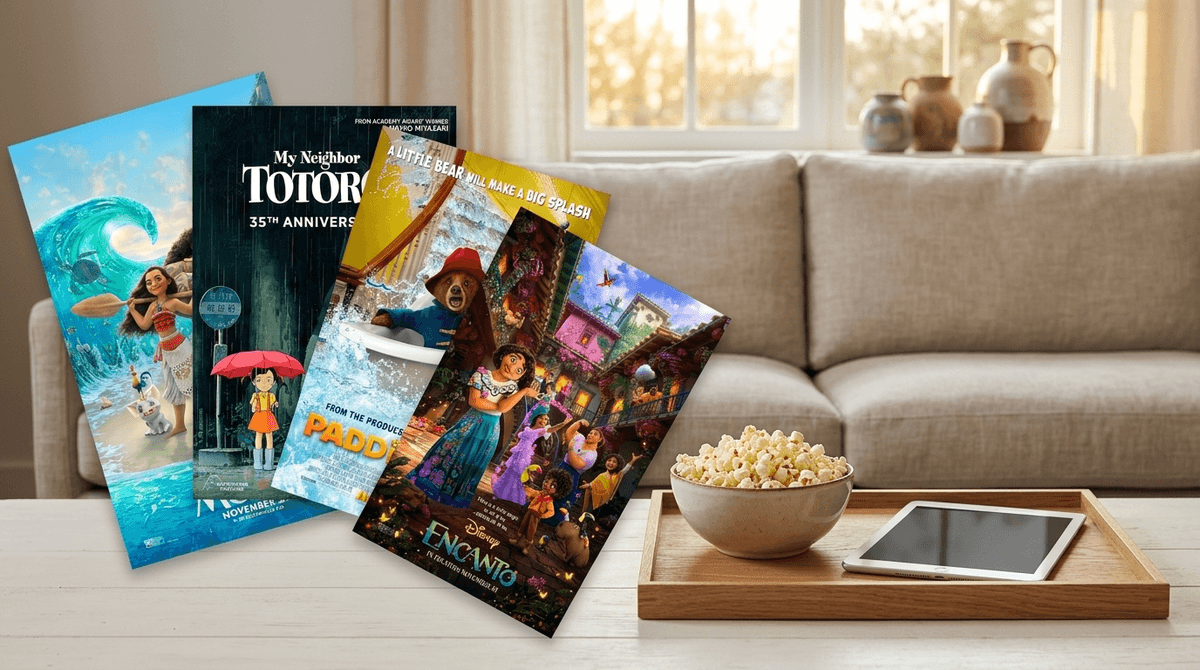
TL;DR: The sweet spot for kindergarteners is 60-90 minute films with clear emotions, gentle conflict, and plenty of visual storytelling. Top picks: Paddington, Moana, The Mitchells vs. The Machines, My Neighbor Totoro, and Encanto. Skip the "educational" Netflix originals that feel like extended toy commercials.
Kindergarteners are in this magical window where they can actually sit through a full movie, but their emotional regulation is still developing. They're learning to read facial expressions, understand cause and effect, and separate fantasy from reality. The right movie can be a genuinely enriching experience. The wrong one can lead to nightmares, overstimulation, or just... boredom.
Here's what actually works, organized by what you're trying to accomplish on any given weekend afternoon.
Paddington (2014) and Paddington 2 (2017)
These might be the most perfect kindergarten movies ever made. Paddington is polite, earnest, and gets into trouble through innocent misunderstandings rather than defiance. The humor works on multiple levels—kids laugh at the physical comedy, adults catch the dry British wit. The "bad guys" are bumbling rather than terrifying, and the emotional beats are clear without being manipulative.
Runtime: 95 minutes each
Where to stream: Check Paddington for current availability
Watch for: The taxidermy museum scene in the first film might need a heads-up for sensitive kids, but it's played for laughs, not scares.
Moana (2016)
Moana hits different at age 5-6 than it does for older kids. Kindergarteners love the ocean as a character, the chicken comedy relief, and the songs (prepare for "How Far I'll Go" on repeat). The emotional core—finding your identity while honoring your family—goes over their heads, which is fine. They're here for the adventure and the crab that sings about being shiny.
Runtime: 107 minutes
Where to stream: Disney+
Watch for: Te Kā (the lava monster) can be intense in the climax, but the resolution is gentle and the scary parts are brief.
This is the movie for kids who are already screen-savvy. It's hyperkinetic, packed with visual gags, and genuinely funny for adults. The family dynamics are realistic (read: messy), but the core message about connection is sweet. Kindergarteners might not track every plot point, but they'll love the robots, the dog, and the sheer energy of it all.
Runtime: 114 minutes
Where to stream: Netflix
Watch for: The pacing is FAST. If your kid gets overwhelmed by quick cuts and constant stimulation, this might not be the one. Also, the robot apocalypse setup could be scary for anxious kids, though it's played for comedy.
My Neighbor Totoro (1988)
Studio Ghibli films are the antidote to the overstimulation problem. Totoro moves slowly, lingers on quiet moments, and trusts kids to be patient. There's no villain, no ticking clock, just two sisters exploring the countryside and encountering friendly forest spirits. It's weird in the best way.
Runtime: 86 minutes
Where to stream: Max
Watch for: The pacing will lose kids who need constant action. This is a "vibe" movie. Also, the scene where Mei gets lost can be genuinely tense for younger kindergarteners.
Encanto (2021)
The songs slap, the animation is stunning, and the message about family pressure is... probably going over their heads. But kindergarteners love the magical house, the animal friends, and Luisa's "Surface Pressure" song. They might not understand generational trauma, but they'll understand that Mirabel feels left out and that's sad.
Runtime: 102 minutes
Where to stream: Disney+
Watch for: The house collapse scene is intense, and some kids find Abuela's strictness genuinely upsetting.
Toy Story (1995)
Still holds up. The animation looks dated, but the storytelling is tight and the emotional beats are clear. Kindergarteners are at peak toy-playing age, so the premise hits hard. Just be ready for questions about whether their toys are alive.
Runtime: 81 minutes
Where to stream: Disney+
Watch for: Sid's toy mutants and the "will they escape the incinerator" climax in Toy Story 3 are genuinely scary. Stick with the first two for this age.
Finding Nemo (2003)
The opening scene is traumatic (Nemo's mom dies), but if you can get past that, it's a solid adventure film with clear stakes and a happy ending. Dory provides comic relief, and the ocean visuals are mesmerizing.
Runtime: 100 minutes
Where to stream: Disney+
Watch for: The opening. Seriously, consider starting after the time jump to Nemo's first day of school.
Zootopia (2016)
The "anyone can be anything" message is perfect for kindergarten. The mystery plot is engaging, and the animal city is packed with visual details kids will catch on repeat viewings. The social commentary about prejudice will go over their heads, which is fine—they'll get more out of it when they're older.
Runtime: 108 minutes
Where to stream: Disney+
Watch for: The "night howler" scene where animals go savage is genuinely frightening for some kids.
Despicable Me (2010)
The Minions are annoying, but kids love them. Gru's redemption arc is sweet, and the girls are charming. It's fine. You'll survive watching it.
Runtime: 95 minutes
Where to stream: Check Despicable Me for current availability
Watch for: Vector is a pretty mild villain, but there's some peril with the rocket ship climax.
The Incredibles (2004)
Technically brilliant, but it's more of a second-grade movie. Kindergarteners will enjoy the superpowers and action sequences, but the mid-life crisis subplot and the body count (yes, really) make it better suited for slightly older kids.
Runtime: 115 minutes
Where to stream: Disney+
Watch for: Syndrome kills people on-screen (off-screen, but still). The plane attack scene is intense.
Jukebox musicals with anthropomorphic animals. The plot is thin, but the songs are catchy and the characters are likable. It's basically American Idol for kids, and there are worse things.
Runtime: 108 minutes (Sing), 110 minutes (Sing 2)
Where to stream: Check availability
Watch for: Some mild peril and criminal activity played for laughs in the first film.
Inside Out (2015)
Brilliant movie. Wrong age. The abstract concepts about memory and emotion are too sophisticated for most kindergarteners, and the emotional weight of Riley's depression is heavy. Save this for 3rd or 4th grade when they can actually process it.
Frozen (2013)
Controversial take: Frozen is better for 7-9 year olds than kindergarteners. The sister relationship dynamics are complex, Elsa's isolation is genuinely sad, and Hans's betrayal requires understanding romantic relationships. Also, you've probably already seen it 47 times anyway.
Most Netflix Originals
Netflix pumps out animated films at an alarming rate, and most of them are... fine? But they often feel like they were designed by algorithm. The Sea Beast is decent, but the violence is intense. Leo has Adam Sandler voicing a lizard, which should tell you everything you need to know. Wish Dragon is basically Aladdin but not as good.
If you're browsing Netflix and see an animated film you've never heard of, there's usually a reason.
G vs. PG ratings are mostly useless. The MPAA doesn't distinguish between "mild peril" that's a cartoon character slipping on a banana peel and "mild peril" that's a child almost drowning. You need to know your kid.
Red flags for kindergarteners:
- Sustained tension without relief: Kids this age can't handle long stretches of anxiety without a break
- Realistic violence: Cartoon violence is fine, but anything that looks like it could happen in real life is harder to process
- Scary faces/body horror: Monsters are fine if they're silly. Monsters that are genuinely designed to be frightening (looking at you, Other Mother from Coraline) are not
- Parent death/abandonment: Bambi, The Lion King, Finding Nemo—all start with dead parents. Some kids handle it fine, others spiral into separation anxiety
Green lights:
- Clear emotional cues: Characters whose faces show exactly what they're feeling
- Predictable structure: Problem → attempt to solve → setback → success
- Comic relief: Regular breaks in tension
- Happy endings: This is not the age for ambiguous or bittersweet conclusions
Runtime matters more than you think. Kindergarteners can technically sit through a 2-hour movie, but should they? Their attention span is developing, and even great films lose them after 90 minutes. If you're doing a longer movie, plan for a bathroom/snack break.
Repeat viewings are developmentally appropriate. Yes, watching Moana for the 15th time is boring for you, but kids this age learn through repetition. They're catching new details, anticipating favorite moments, and building comprehension skills. It's actually good for them (even if it's torture for you).
Co-viewing is underrated. You don't need to helicopter the whole experience, but being in the room means you can gauge their reaction and answer questions. "Is he going to be okay?" is a question that deserves a reassuring answer in the moment, not after they've spent 20 minutes worried.
Post-movie processing helps. A simple "What was your favorite part?" or "How do you think the character felt when X happened?" helps them integrate what they watched. You're building media literacy skills, not just killing time.
The best kindergarten movies are the ones that respect kids' intelligence without overestimating their emotional capacity. They should be visually engaging, emotionally clear, and end with a sense of resolution. Paddington, Moana, and My Neighbor Totoro are the gold standard because they nail this balance.
And look, if your kid wants to watch Bluey episodes instead of a full movie, that's also fine. Three 7-minute episodes might actually be better suited to their attention span than a 90-minute film. There's no award for "got my kindergartener to sit through a feature-length movie."
Not sure if a specific movie is right for your kid? Get age-appropriateness info for specific titles or explore alternatives to popular animated films.
Want to understand how much screen time is typical for kindergarteners in your community? Screenwise helps you see your family's habits in context with other families making similar decisions. Learn more about how Screenwise works.