

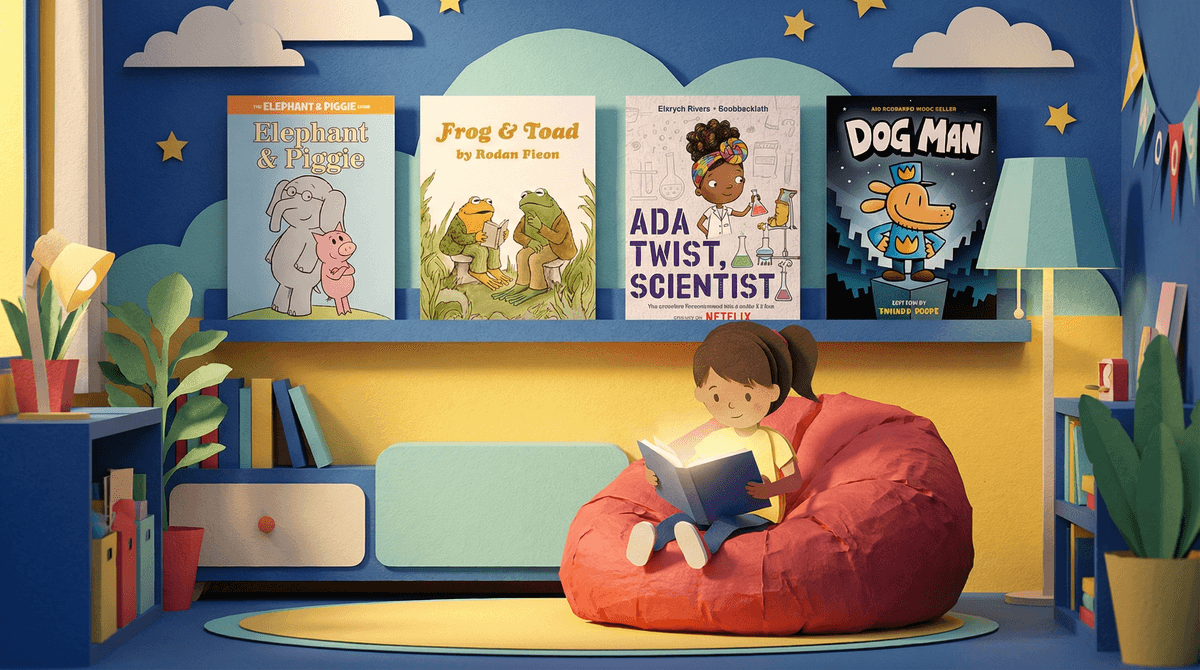
First grade is where the magic happens—where kids transition from learning to read to actually reading. A first grade reading list isn't just about phonics practice and sight words (though those matter). It's about finding books that make kids want to read, that make them excited to pick up a book instead of begging for more iPad time.
The sweet spot? Books with simple vocabulary and sentence structure that still have actual plots, humor, and characters kids care about. We're talking 200-500 words, lots of pictures, repetitive phrases that build confidence, and stories that don't feel like homework.
Here's the thing: first grade is when reading habits get cemented. Kids who enjoy reading in first grade tend to become readers for life. Kids who find it tedious often develop a "reading is boring" mindset that's hard to shake.
And let's be real—in 2026, we're competing with Roblox, YouTube, and whatever the current viral TikTok trend is. Books need to be genuinely engaging, not just educational.
The research is clear: kids who read for pleasure perform better academically across ALL subjects, not just English. But the key word there is pleasure. Forcing a kid through boring readers is like making them eat vegetables they hate—technically nutritious, but it's creating negative associations.
Reading level isn't everything. Yes, you want books at the right Lexile level (roughly 200-400 for first grade), but you also need:
- Actual humor - Fart jokes, silly situations, absurd premises. First graders think bodily functions are hilarious. Lean into it.
- Relatable characters - Kids dealing with friendship drama, sibling rivalry, starting school, losing teeth
- Series potential - Once a kid loves a character, they'll devour every book in that series
- Visual appeal - Illustrations that support the text without making it a picture book
- Emotional resonance - Stories about feelings, fears, and victories that mirror their world
Early First Grade (Still Building Confidence)
Elephant & Piggie series by Mo Willems - These are genuinely funny. Like, adults-will-laugh-too funny. Simple dialogue, expressive illustrations, and real friendship dynamics. Start with "There Is a Bird on Your Head!" or "I Am Invited to a Party!"
Biscuit series by Alyssa Satin Capucilli - A sweet puppy getting into gentle mischief. Repetitive phrases build confidence. Not groundbreaking, but kids love dogs.
Fly Guy series by Tedd Arnold - A boy and his pet fly. Gross enough to appeal to the potty humor crowd, simple enough for early readers. "Hi, Fly Guy!" is the perfect starter.
Pete the Cat series by James Dean - The chill cat with the positive attitude. "Pete the Cat: I Love My White Shoes" is a classic. Some kids find Pete too mellow, but others love his vibe.
Mid-First Grade (Building Stamina)
Frog and Toad series by Arnold Lobel - These have been around forever for a reason. Real friendship, genuine emotion, beautiful illustrations. "Frog and Toad Are Friends" is the place to start.
Henry and Mudge series by Cynthia Rylant - A boy and his huge dog. Warm, gentle stories about everyday life. Kids who love dogs will devour these.
Mercy Watson series by Kate DiCamillo - A pig who loves toast and butter. Absurd, hilarious, with vocabulary that stretches kids without overwhelming them. "Mercy Watson to the Rescue" is chef's kiss.
Branches series (various authors) - Scholastic's Branches line is specifically designed for this transition period. "Owl Diaries," "Dragon Masters," "Notebook of Doom"—they're formulaic but effective. Kids love the episodic structure.
Late First Grade (Ready for More)
Ivy + Bean series by Annie Barrows - Two very different girls become best friends. Real kid problems, actual humor, diverse characters. This series has staying power through third grade.
Nate the Great series by Marjorie Weinman Sharmat - Kid detective solves mysteries. Engaging plots, problem-solving, and a protagonist who takes himself very seriously (which is funny).
Magic Tree House series by Mary Pope Osborne - These are technically early second grade, but strong first grade readers can handle them. Time travel adventures that sneak in history and science. Kids either love these or find them dated—there's no middle ground.
Dog Man series by Dav Pilkey - Graphic novel format, which some parents worry "doesn't count" as real reading. But here's the truth: graphic novels require complex visual literacy skills. Dog Man is hilarious, has actual themes about friendship and redemption, and gets reluctant readers excited. Don't be a snob about this one.
First grade is when kids are forming their understanding of whose stories matter. A good reading list should include:
- Ada Twist, Scientist by Andrea Beaty - Black girl scientist asking questions. Part of the "Questioneers" series.
- Julian series by Ann Cameron - Black family, warm relationships, real kid experiences
- Juana & Lucas series by Juana Medina - Colombian-American girl, bilingual elements, graphic novel format
- Yasmin series by Saadia Faruqi - Pakistani-American girl, problem-solver, relatable situations
Not every classic ages well. Some books that were first grade staples are now just... not great:
- Amelia Bedelia - The "taking things literally" joke gets old fast, and honestly, it's confusing for kids still learning idioms
- Berenstain Bears - Preachy, dated gender roles, and Papa Bear is incompetent to the point of being annoying
- Most "learn to read" branded series - If it's marketed primarily as educational rather than entertaining, kids can smell it a mile away
Look, we're Screenwise—we're not anti-screen. But if you're trying to build reading habits, here's what actually works:
Don't position books as "instead of screens." That makes screens the desirable thing and books the punishment. Instead, make reading time cozy and special. Snuggle on the couch, use a reading light, make it a ritual.
But also: Epic! is a digital library app that's actually pretty great for first graders. Unlimited access to thousands of books, read-to-me options for when they're tired, and it tracks reading time. Is it screen time? Yes. Is it reading? Also yes. Don't overthink it.
Audiobooks count. Listening to stories builds vocabulary and comprehension . If your kid will listen to Dog Man on Audible during car rides, that's a win.
Don't buy 20 books at once. Hit the library. First graders are fickle—a book they love today might bore them next week. Libraries are free and have no commitment.
Let them choose. Even if they pick something that seems too easy or too hard. Autonomy matters more than optimal reading level.
Read together, then transition. Start by reading aloud together, then try alternating pages, then let them read to you. The goal is independence, but scaffolding helps.
Series are your friend. Once a kid loves Fly Guy or Ivy + Bean, they'll read every single book. That's 10+ books of practice with familiar characters and structure.
Graphic novels count. Yes, even Dog Man. Yes, even Bad Guys. Visual literacy is literacy.
The best first grade reading list is the one your kid actually reads. Not the one that looks impressive on the bookshelf, not the one that's "appropriately challenging," but the one that makes them excited to read.
Some kids will devour Magic Tree House and be reading chapter books by winter break. Others will still be working through Elephant & Piggie in June. Both are fine. Reading development isn't linear, and comparison is the thief of joy.
The goal isn't to create a first grader who can read at a third grade level. The goal is to create a first grader who wants to read. Everything else follows from that.
Start with 3-5 books from this list based on your kid's interests. Dogs? Try Biscuit or Henry and Mudge. Humor? Go with Fly Guy or Mercy Watson. Friendship? Frog and Toad or Ivy + Bean.
Make it a routine. 15-20 minutes before bed, no screens, just books. Consistency matters more than duration.
And if they're still resistant? Get strategies for reluctant readers—because forcing it never works, but there are ways to make it appealing.