

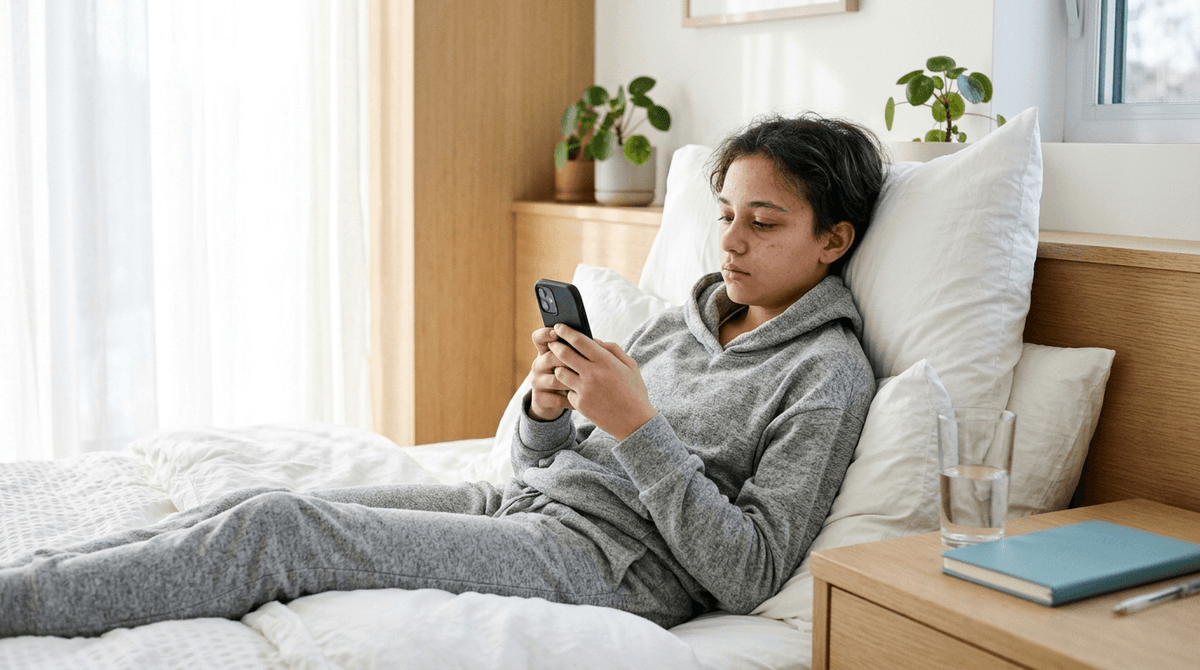

Late-night phone scrolling more than triples the odds of clinical insomnia for breast cancer patients, turning a bedtime coping habit into a serious barrier to physical healing. Even an extra 30 minutes of presleep screen time raises the risk of severe sleep disruption by 41%.
Using a smartphone in bed significantly worsens sleep disruption during cancer care, tripling the odds of clinical insomnia when presleep screen time exceeds 30 minutes.
Parenting through a serious medical diagnosis demands every ounce of physical stamina and emotional resilience, making restorative sleep essential for recovery. When pain, anxiety, or medication side effects keep a parent awake at night, reaching for a phone feels like an easy, comforting distraction.
Instead, late-night screen exposure actively sabotages recovery by keeping the brain stimulated and disrupting melatonin production. Setting a firm boundary on devices before sleep is a zero-cost, immediately actionable safeguard for immune health and daytime function.
Sleep disruption affects the majority of cancer patients, yet standard clinical advice rarely accounts for the pervasive role of smartphones in bed. Researchers wanted to measure how both total daily screen time and bedtime phone habits directly correlate with DSM-5 clinical insomnia diagnoses during oncology care.
Late-night screen use shows a direct, compounding link to clinical sleep disorders:
- Patients who used screens for more than 30 minutes before bed had over three times the odds of being diagnosed with clinical insomnia compared to those who put devices away earlier.
- Every additional 30 minutes of presleep screen time increased insomnia risk by 41%.
- Total daily screen time mattered as well, with each additional half hour of daily use raising insomnia odds by 14%.
- The median patient spent 5.5 hours a day on a phone, with 30 minutes occurring immediately before sleep.
- Researchers checked whether the social stigma of cancer compounded screen-induced insomnia, but found no statistical link—the direct physical and cognitive stimulation from the device was the primary driver.
Phones become a deceptive "sleep trap" during illness. When nighttime discomfort or racing thoughts strike, scrolling provides immediate psychological comfort, but the blue light and interactive feeds trick the nervous system into staying awake. For patients whose immune systems and cellular repair depend on deep sleep cycles, midnight scrolling extracts a heavy physical toll.
This study was cross-sectional, which means it tracks associations rather than proving causation. Patients who suffer from worse pain or severe anxiety may naturally turn to their phones because they are already awake, rather than the phone causing the sleeplessness. Additionally, objective tracking data was available for only about a third of the 712 participants, leaving bedtime habits dependent on self-reported estimates.
- If you or your partner are navigating cancer treatment: Charge smartphones outside the bedroom so nighttime wakefulness does not turn into an hour of scrolling.
- If physical discomfort or anxiety disrupts sleep: Swap phone screens for audio-only alternatives like spoken podcasts, guided relaxation, or soft music that avoid bright light.
- If you routinely check devices right before turning out the lights: Establish a strict 30-minute digital curfew before sleep to cut the risk of triggering clinical insomnia.
Protecting the 30-minute window before bed from screen exposure is an essential, controllable part of managing recovery and family resilience during cancer care. Treat your sleep environment as an active part of your treatment plan by leaving the phone out of reach.
Liu L, Yang M, Ye M et al. (2026). Association Between Screen Exposure and Insomnia Among Patients With Breast Cancer: Cross-Sectional Study. Journal of medical Internet research. doi:10.2196/85837 — pubmed.ncbi.nlm.nih.gov