

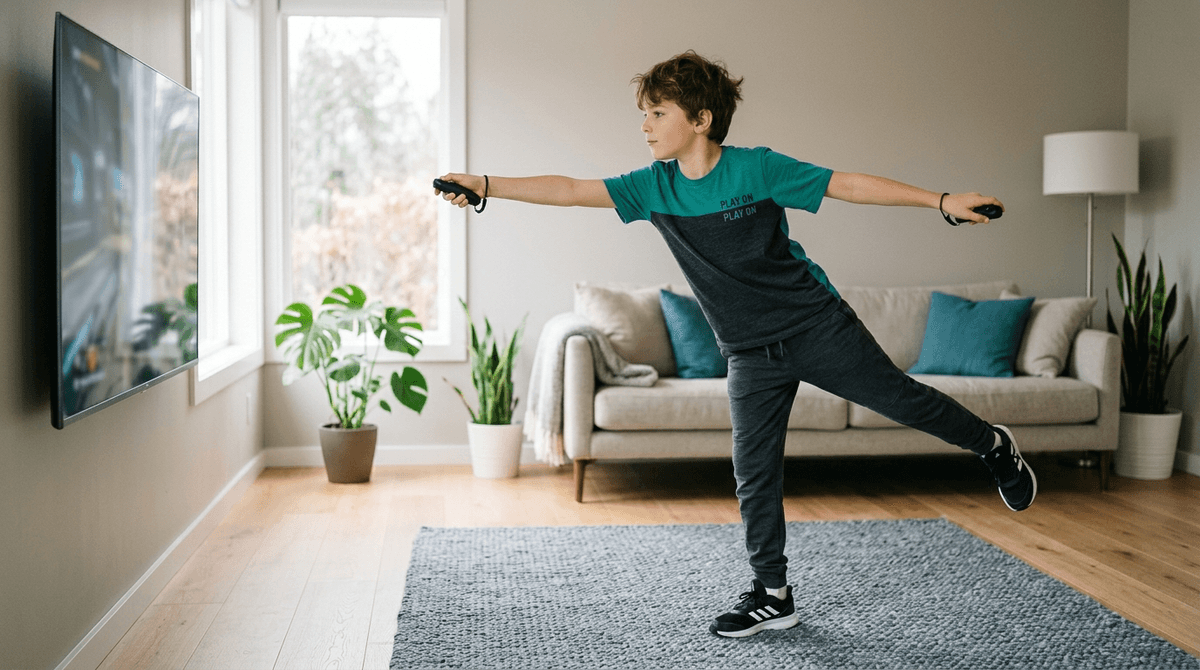

Active video games like Wii Fit and Xbox Kinect can meaningfully sharpen balance, coordination, and focus in autistic kids. But treat them as a fun physical booster, not a substitute for occupational therapy or a fix for social communication.
Active virtual reality games improve motor coordination and working memory in autistic children, but they work best alongside traditional therapies rather than in place of them.
Signing an autistic child up for traditional sports or busy gym classes often triggers sensory overload or social anxiety. Active video games offer a low-stakes living room alternative that keeps them moving without the social pressure or chaotic environment of a team sport.
If you feel guilty letting your kid use motion-tracking video games instead of outdoor athletics, stop worrying. The movement counts, and it directly builds the balance and executive control skills they need every day.
Autistic children frequently face challenges with balance, motor planning, and focus, yet traditional athletic settings often present overwhelming social hurdles. Researchers analyzed 15 clinical trials covering 439 young people ages 6 to 18 to measure whether motion-sensing games and immersive VR provide measurable physical and cognitive therapy.
Screen-based workouts deliver real motor and cognitive gains, but their benefits have clear boundaries.
- Coordination took the biggest leap. Across the trials, motor skills like balance and agility saw large improvements compared to standard care or sedentary routines.
- Focus and memory improved noticeably. The meta-analysis found a moderate, reliable boost in executive functions—the mental skills children need for task-switching, working memory, and impulse control.
- Social and behavioral traits stayed flat. Virtual exercise had little to no measurable impact on core autism traits like social communication or repetitive behaviors.
The games work precisely because they remove the human element. In a standard gym or soccer field, a child has to decode changing facial expressions, peer volume, and unpredictable movement all at once. An active video game provides predictable rules, instant visual feedback, and zero peer judgment—letting their nervous system isolate and practice physical balance without running on sensory overdrive.
The total data pool is modest: 439 participants across 15 trials, with most studies focusing exclusively on children with mild-to-moderate symptoms. We do not know if these benefits apply to children with higher support needs.
The quality of individual studies also varied widely, and researchers noted high inconsistency among the motor results—meaning some game types worked far better than others. Finally, none of the studies tracked kids long-term, so there is no proof these balance and attention gains stick around once the console is turned off.
- If your child refuses community sports due to sensory overload… swap the soccer field for active motion games like Just Dance, Ring Fit Adventure, or motion-sensor sports games without feeling like you are taking the easy way out.
- If your child is currently working through occupational or physical therapy… ask their therapist about incorporating active video gaming into their home exercise plan as an engaging warm-up or skill booster.
- If you are hoping active games will help with social interaction or repetitive behaviors… keep your expectations grounded, because physical gaming targets motor control and focus, not social communication.
Active video games are a legitimate, low-stress tool to help autistic kids build balance, coordination, and focus on their own terms. Use them as an empowering physical supplement in your home routine, but do not expect them to replace therapy or reshape social behaviors.
Jia Y, Qi K, Cai K et al. (2026). Effects of Virtual Reality-Based Physical Exercise Interventions on Behavioral, Executive Function, and Motor Outcomes in Children and Adolescents With Autism Spectrum Disorder: Systematic Review and Meta-Analysis. Journal of medical Internet research. doi:10.2196/98579 — pubmed.ncbi.nlm.nih.gov