

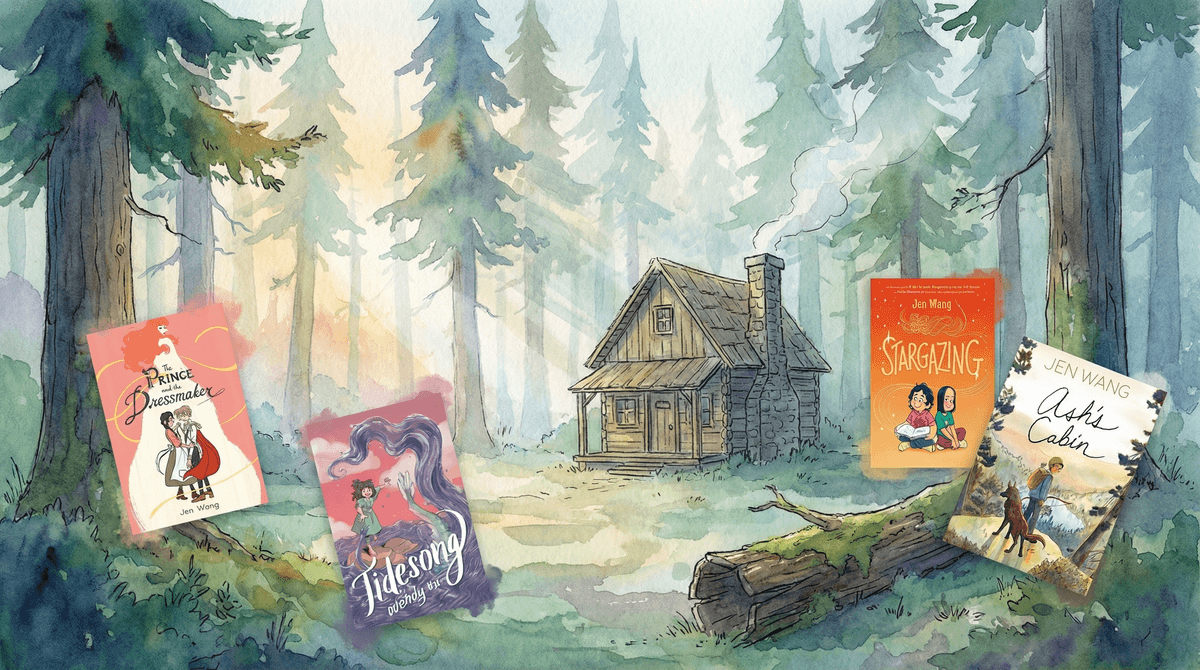
Ash's Cabin by Jen Wang is a middle-grade graphic novel that's been making the rounds in elementary and middle school circles since its release in 2024. If your kid has been glued to a book with a moody forest cover, this is probably it.
The story follows Ash, a Chinese American teen dealing with family grief and cultural expectations, who discovers a mysterious cabin in the woods that seems to exist outside of time. It's part contemporary realistic fiction, part magical realism, with gorgeous illustrations that make it feel like stepping into a Studio Ghibli film.
Author Jen Wang (who also wrote The Prince and the Dressmaker and Stargazing) has a talent for weaving complex emotional themes into accessible, visually stunning stories. This one tackles grief, identity, family pressure, and finding your place in the world—all wrapped up in a compelling mystery.
It's a graphic novel. Let's be real—the visual format is a huge draw. Kids who might resist a traditional chapter book will devour a 200-page graphic novel in an afternoon. The art style is beautiful and expressive, making it easy to get lost in the story.
The themes hit different. Middle schoolers are in that sweet spot where they're starting to grapple with bigger questions about identity, family expectations, and who they want to become. Ash's struggle with honoring her family's wishes while figuring out her own path resonates deeply with this age group.
It's got that "safe spooky" vibe. The mysterious cabin and time-bending elements give it just enough intrigue to feel exciting without being actually scary. Think Gravity Falls or Hilda—mysterious and atmospheric, but ultimately hopeful.
BookTok and BookTube are amplifying it. Young readers are discovering it through social media recommendations, particularly on TikTok and YouTube, where creators are praising its representation and emotional depth.
Ages 9-14 is the sweet spot for this book. The publisher recommends ages 8-12, but honestly, younger middle schoolers (13-14) will get even more out of the deeper themes.
Younger readers (8-9) can absolutely enjoy the story and artwork, but might not fully grasp the nuances around cultural identity and family grief. That's totally fine—they'll still get a good story.
Content considerations: There's nothing objectionable here in terms of language or mature content. The main emotional weight comes from themes of death and grief (Ash is processing the loss of a family member), which some younger or more sensitive kids might find heavy. The book handles it thoughtfully and age-appropriately, but it's worth knowing if your child has recently experienced loss.
This is "good for them" reading that kids actually want to read. You know how sometimes you have to cajole kids into reading something educational or meaningful? This isn't that. Kids are genuinely drawn to this story while also getting exposure to themes around cultural identity, mental health, and processing grief.
The representation matters. Ash is Chinese American, and the story weaves in elements of cultural expectations and family dynamics that feel authentic. For Asian American kids, seeing themselves reflected in a mainstream middle-grade book is meaningful. For kids from other backgrounds, it's a window into experiences different from their own.
It's a conversation starter. The book naturally opens up discussions about family expectations, grief, and finding your own path. If your kid is dealing with any of these issues—or you want to help them develop empathy around them—this can be a gentle entry point. Get conversation starters about family expectations with tweens .
.
It's part of a larger graphic novel trend. If your kid loves this, they're probably ready for more sophisticated graphic novels. Authors like Raina Telgemeier, Jerry Craft, and Gene Luen Yang offer similar quality storytelling.
Ash's Cabin is exactly the kind of book you want your middle schooler reading—engaging enough to pull them away from screens, substantive enough to spark real conversations, and beautiful enough to remind them that books can be works of art.
If your kid brings this home from the school library or asks for it at the bookstore, that's a win. It's not "brain rot," it's not going to give them nightmares, and it might actually help them process some big feelings they're having about growing up.
If they loved it: Check out Jen Wang's other work, or try Tidesong by Wendy Xu and Suzanne Walker, Sheets by Brenna Thummler, or The Okay Witch by Emma Steinkellner.
Want to read it together? Graphic novels make great read-alouds, even with older kids. The visual component gives you both something to look at and discuss.
Concerned about the grief themes? Learn more about how to talk with kids about death and loss in age-appropriate ways. The book handles it gently, but it's okay to check in with your kid about how they're feeling.