

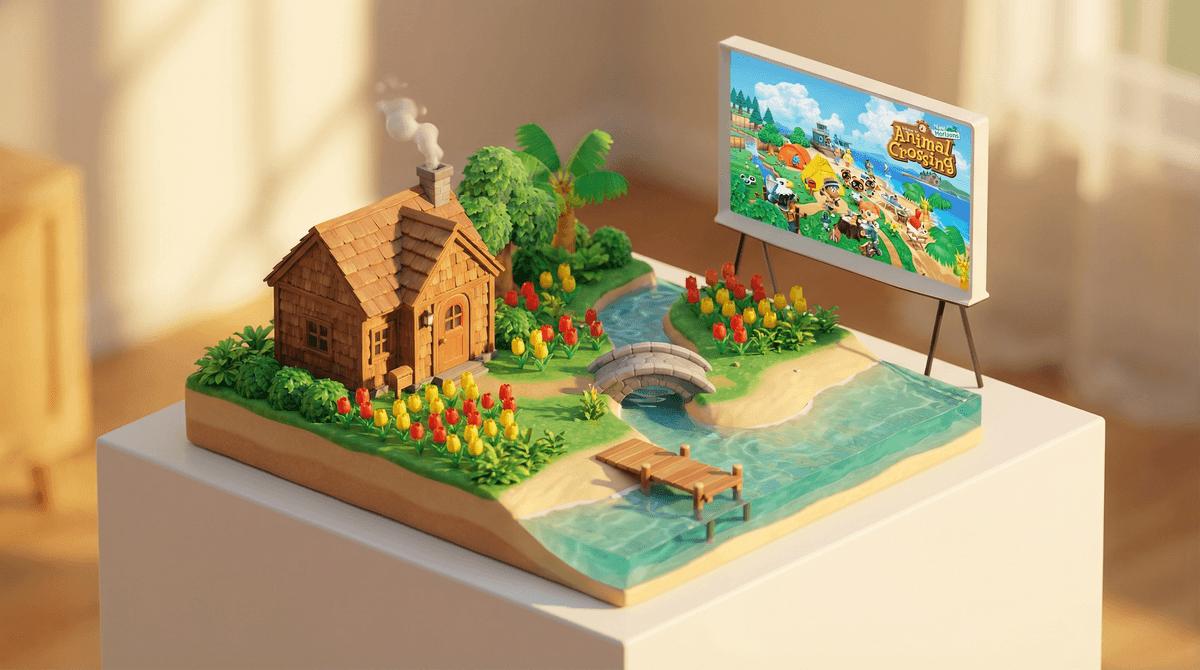
Animal Crossing: New Horizons – The Cozy Game That's Actually Teaching Life Skills
Animal Crossing: New Horizons is the rare game that's genuinely wholesome without being boring. Released in March 2020 (perfect timing, right?), it became a cultural phenomenon because it offered exactly what everyone needed: a low-stakes island paradise where the biggest crisis is deciding where to put your tulip garden. Ages 6+ can play independently, though younger kids might need help with the reading-heavy interface.
What makes it special: No violence, no timers, no fail states. Just fishing, decorating, fossil hunting, and befriending adorable animal villagers who speak in delightful gibberish. It's teaching resource management, planning, delayed gratification, and basic economics—all while feeling like a vacation.
The catch: It's designed around real-time play, which means some parents love the built-in pacing (you literally can't binge it) while others find it frustrating when kids want to "time travel" by changing the console's clock.
It's a life simulation game for Nintendo Switch where you're dropped on a deserted island and gradually transform it into a thriving community. There's no "winning"—you just exist in this world, catching bugs, planting flowers, designing your home, and chatting with your animal neighbors.
Think of it as The Sims meets Stardew Valley meets a very chill vacation where nobody's asking you to do anything you don't want to do. The game runs in real-time synced to your console's clock, so when it's 7pm in your living room, it's 7pm on your island. Seasons change, special events happen on actual holidays, and your island genuinely feels like a living place.
About 55% of families in the Screenwise community report having gaming consoles in their homes, and for those households, Animal Crossing consistently ranks as one of the most parent-approved games. It's the game you can actually watch your kid play without cringing.
The March 2020 release date was accidentally genius—or maybe Nintendo has a crystal ball. Either way, this game launched exactly when the world went into lockdown, and suddenly millions of people had an island escape when they couldn't leave their houses.
But beyond the pandemic timing, the game taps into something genuinely appealing:
It's creative without being overwhelming. Unlike Minecraft, which can feel like homework with its survival mechanics and infinite possibilities, Animal Crossing gives you gentle structure. Here's your island. Here are some tools. Go make it yours. The constraints actually make it more accessible—you're decorating and designing within a cozy framework rather than staring at a blank canvas.
The social element feels real. Kids can visit each other's islands (with parental controls—more on that below), trade items, leave messages, and show off their designs. During lockdown, this became legitimately meaningful. Birthday parties happened on Animal Crossing islands. Graduations. Museum dates. It sounds absurd until you realize it was often the only way kids could "hang out" with friends.
There's always something new, but never urgency. A new fossil to dig up. A rare fish that only appears in certain months. Seasonal events and updates. But nothing is punishing you for not playing. Your island doesn't die if you take a week off. Your villagers might mention they missed you, but they're not guilt-tripping you.
This isn't one of those "educational game" situations where someone slapped math problems onto a racing game. The learning in Animal Crossing is embedded in the actual gameplay:
Resource management and economics: You earn "Bells" (the in-game currency) by selling fish, fruit, bugs, and crafted items. Kids quickly learn that some resources are worth more than others, that there's value in waiting for the right buyer (the game has a "stalk market" for turnips that's literally teaching supply and demand), and that saving up for big purchases requires planning.
Delayed gratification: Want to expand your house? That'll be 548,000 Bells. Want that rare furniture item? Better save up. The game doesn't let you buy everything instantly, and there's no real-money shortcut. Kids learn to prioritize, save, and work toward goals over days or weeks.
Pattern recognition and collection: The museum aspect—collecting fish, bugs, fossils, and art—teaches categorization and completionism in a satisfying way. There's genuine excitement when you finally catch that elusive coelacanth or complete a fossil set.
Design thinking: Decorating your island and home isn't just aesthetic—it's problem-solving. How do you create a functional space that also looks good? How do you use limited resources creatively? Kids are learning basic design principles without realizing it.
Social skills (sort of): The villager interactions are simple but surprisingly nuanced. Your animal neighbors have personalities, preferences, and moods. Kids learn to notice when someone's feeling down, give gifts that match interests, and maintain relationships over time. It's low-stakes emotional intelligence practice.
Ages 6-8: Can play with minimal help once they get the hang of the controls. The reading level is manageable for emerging readers, though you might need to help with some of the wordier dialogue. The game is completely non-violent and has zero scary content—even the "dangerous" tarantulas just make you faint and wake up at home.
Ages 9-12: This is the sweet spot. Kids this age can fully engage with all the systems, participate in the online trading community (with supervision), and really sink into the creative aspects. Many develop elaborate island themes and take genuine pride in their designs.
Teens: Don't be surprised if your teenager gets genuinely invested. The design possibilities are sophisticated enough to stay engaging, and the social aspects become more meaningful. Plus, the game became such a cultural phenomenon that there's a whole community of teen and adult players sharing designs, hosting events, and creating island tours.
Here's where you need to pay attention: Animal Crossing has online features, but they're more controlled than most games.
Local play: Kids can play together on the same island if they're using the same Switch console, or visit each other's islands if they're on the same WiFi network. This is the safest option and works great for siblings or friends who are physically together.
Online play: With a Nintendo Switch Online subscription (required for internet multiplayer), kids can visit islands of people on their friend list or open their island to "anyone." This is where parental controls become essential.
What you need to know:
- Players can only communicate through preset phrases or typing on a keyboard (no voice chat in-game)
- You can restrict online play entirely through Nintendo's parental control app
- The community is generally wholesome, but like any online space, you should monitor who your kid is connecting with
- Many families create a "friends only" rule—kids can only visit islands of people they know in real life
The game also has a "Dodo Code" system where you generate a temporary code to let specific people visit. This is actually pretty smart—it's not a permanent friend connection, just a one-time visit pass.
This is the thing that divides the Animal Crossing parent community: the game is designed to be played in real-time, but you can "time travel" by changing your Switch's internal clock.
Why kids want to do it: Certain fish only appear in specific months. Buildings take a real day to construct. They want to speed things up or access content that's not currently available.
Why some parents hate it: It feels like cheating and undermines the game's intentional pacing. Part of the appeal is that you can't binge it—there's natural built-in moderation.
Why some parents allow it: It's a single-player game that doesn't affect anyone else. If your kid wants to skip ahead to see cherry blossoms or access a Halloween event, who cares? It's not like they're gaining an unfair advantage over other players.
There's no right answer here. Some families make it a rule that you play in real-time. Others let kids time travel freely. Some compromise with "you can skip ahead but not backward" or "only for special events." Figure out what aligns with your family's values around delayed gratification and gaming.
The game requires reading. There's a lot of text, and while much of it is skippable, kids who aren't comfortable readers will miss a lot of the charm and might need help understanding tasks.
It's not a quick play game. Sessions tend to run 30-60 minutes because the gameplay loop is about wandering, gathering, and gradually making progress. This isn't a "play for 10 minutes before dinner" situation.
The social pressure is real. Kids will see friends' elaborate islands and feel like theirs isn't good enough. There's a whole culture of "island tours" and social media sharing that can create unexpected comparison and competition. Worth discussing with kids who might be sensitive to this.
Storage and updates matter. The game has received substantial free updates since launch, adding new features and seasonal content. Make sure you have enough storage space on your Switch and that the game stays updated.
One island per console. This is the biggest gotcha: even if you have multiple Switch profiles, there's only ONE island per console. If you have multiple kids sharing a Switch, they'll be sharing an island, which means one kid is the "island representative" (basically the admin) and others have limited permissions. This has caused actual sibling warfare in many households. If you have multiple kids who each want their own island, they'll need their own Switch consoles.
If your kid loves Animal Crossing, they might also enjoy:
- Stardew Valley – More farming-focused with light combat, but similar cozy vibes (Ages 10+)
- Disney Dreamlight Valley – Like Animal Crossing but with Disney characters (Ages 8+)
- Minecraft in Creative Mode – If they love the building aspect without the survival pressure
- Cozy Grove – Similar real-time gameplay on a haunted island (Ages 8+)
For more options, check out our guide to cozy games for kids.
Animal Crossing: New Horizons is that rare thing: a game that's genuinely appropriate for kids, engaging enough to hold their attention, and actually teaching valuable skills without feeling like homework. It's creative, social, and remarkably non-toxic compared to most online gaming spaces.
The real-time pacing means it has natural built-in moderation—your kid literally can't play for 8 hours straight because there's only so much to do in a day. Whether you see this as a feature or a bug depends on your family's approach to gaming.
Is it going to teach your kid to code or solve complex math problems? No. But it might teach them to plan, save, design, and find joy in small daily accomplishments. In a gaming landscape full of battle royales and endless grinding, that's genuinely refreshing.
Next Steps:
- Set up Nintendo Switch parental controls before your kid starts playing
- Decide your family's stance on time travel and communicate it clearly
- If you have multiple kids sharing a Switch, have a conversation about the one-island limitation before someone starts playing
- Consider playing alongside your kid for the first few sessions—it's actually pretty relaxing, and you'll understand what they're talking about when they excitedly tell you about their new octopus villager
Need help figuring out if this is right for your family's gaming setup? See if Animal Crossing is right for your family to get personalized guidance based on your kids' ages and interests.