

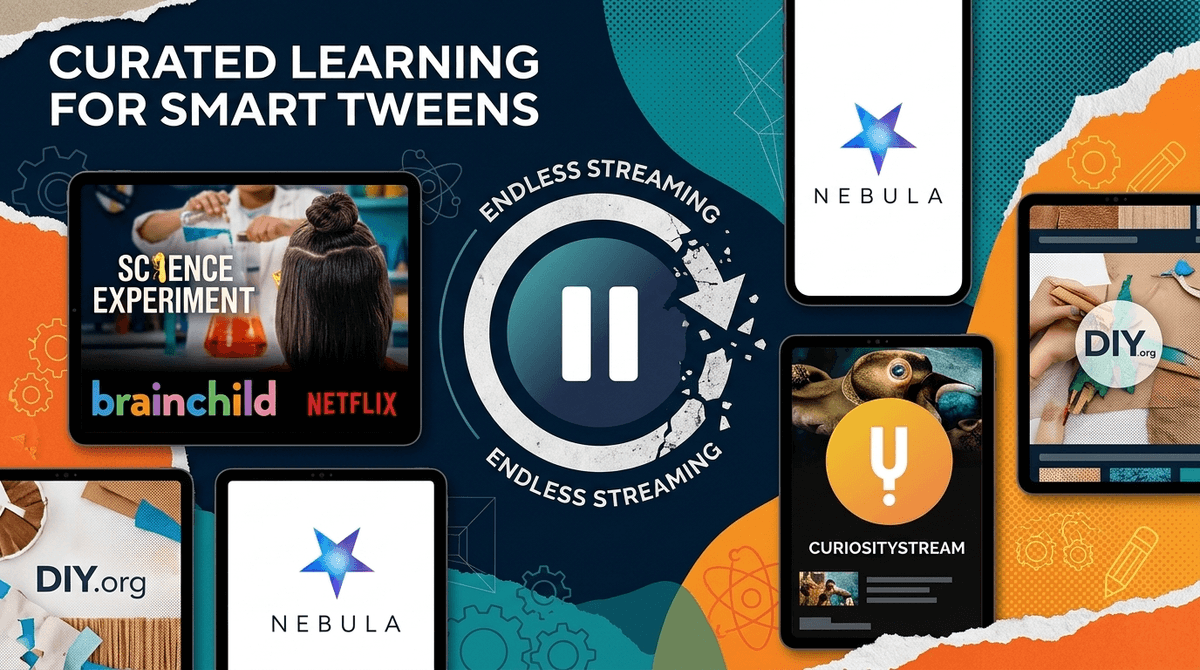
TL;DR: The Best YouTube Alternatives for Tweens
If you’re tired of the YouTube "zombie stare" or the constant stream of Skibidi Toilet memes, here are the top platforms to pivot to:
- Best for Creator Fans: Nebula – Think of it as the "smart" version of YouTube with zero ads and no toxic algorithm.
- Best for Science & History Junkies: CuriosityStream – High-quality documentaries that actually keep them engaged.
- Best for the Creative/Builder Kid: DIY.org – Hands-on projects and a safe community for sharing videos of what they’ve made.
- Best Free Library Options: Kanopy Kids and Hoopla – High-quality films and shows you can access with a library card.
- Best for Learning Skills: MasterClass or Skillshare – For the tween who wants to actually learn how to edit video, cook, or design games.
See how to set healthy boundaries for video streaming
We’ve all been there. You look over your kid's shoulder and they’re watching a video of a guy screaming while playing Roblox, or worse, some bizarre "brain rot" compilation that makes absolutely no sense to anyone born before 2010.
The problem isn’t necessarily that YouTube is "evil." The problem is that the algorithm is designed for one thing: retention. It doesn't care if your kid is learning or if their brain is turning into mush—it just wants them to keep clicking.
For the "tween" age group (roughly 9-12), YouTube Kids feels like an insult. It’s full of Bluey and nursery rhymes. Tweens want to feel grown-up. They want creators, they want "real" content, and they want to be in the loop.
But the jump from the padded walls of YouTube Kids to the unrestricted wild west of main YouTube is massive. That’s where these alternatives come in. They offer the "cool" factor without the unrestricted rabbit holes.
Before we swap the apps, we have to understand the appeal. Tweens love YouTube because:
- It’s personality-driven. They feel a connection to creators.
- It’s bite-sized. They can consume it in the 15 minutes between homework and dinner.
- It’s niche. Whether they love Minecraft, squishy makeovers, or obscure history, there’s a channel for it.
The goal isn't to take away the format they love, but to upgrade the quality of the content and the safety of the environment.
If you do one thing today, check out Nebula. It was literally built by creators who were tired of the YouTube algorithm. It features many of the best educational YouTubers—like Mark Rober or Veritasium—but without the ads, the comments section vitriol, or the "suggested" videos that lead to weird places. It feels premium, it’s creator-focused, and it’s very tween-appropriate.
Think of this as the "Netflix of Documentaries." It’s incredibly cheap (often under $20 for a full year) and covers everything from nature and space to tech and history. For a kid who is aging out of National Geographic Kids but still loves facts, this is the gold standard.
This is essentially "YouTube for Makers." It’s a subscription platform where kids can take courses on everything from photography to drawing to building LEGO machines. What makes it special is the social component: kids can upload videos of their own projects to a moderated gallery. It’s a safe way to scratch that "I want to be a creator" itch.
If you have a library card, you probably have access to Kanopy. The "Kids" section is surprisingly robust. It’s not just educational stuff; they have high-quality movies and series that aren’t just the standard Netflix filler. It’s a great place to find "meaningful" screen time that doesn't feel like a chore.
This is for the older tween who has a specific passion. If your kid is obsessed with cooking, why watch a random YouTuber when they can watch Gordon Ramsay teach it? The production value is insane, and it treats the viewer like an adult, which tweens absolutely love.
Sometimes the "alternative" isn't a new platform, but a better choice on the platforms you already have. These shows have that fast-paced, creator-led energy that tweens crave:
- The Toys That Made Us (Netflix): It’s fast, funny, and full of pop culture history. It feels exactly like a high-end YouTube video essay.
- MythBusters (Discovery+): The OG of "don't try this at home" science. It’s the blueprint for half the stuff MrBeast does, but with more actual science.
- Emily's Wonder Lab (Netflix): Great for younger tweens who love experiments.
- Brainchild (Netflix): Produced by Pharrell Williams, this show tackles science and social issues in a way that is very "Gen Alpha" friendly without being cringey.
Check out our guide on the best Netflix shows for tweens
The biggest issue with YouTube isn't just "bad words." It's three specific things:
- The Sidebar of Doom: Your kid starts watching a video on how to solve a Rubik's Cube. Three clicks later, they’re watching a "Prank" video where someone is being genuinely cruel, or a "Storytime" video that is way too mature for an 11-year-old.
- Data Privacy: YouTube is an advertising machine. Paid platforms like Nebula or DIY.org don't track your kid's every move to sell them sneakers later.
- The Comments: YouTube comments are a cesspool. Even on "clean" channels, the comment section can be a place of bullying, bots, and weird links.
Moving to a curated or paid platform eliminates these three stressors instantly.
You can’t just delete the YouTube app and expect a tween to thank you. They will stage a protest. Here is how to handle the transition:
Don't Ban, Pivot
Instead of saying "No YouTube," try "We’re trying this new thing called Nebula because it has the same creators but better quality." If they see their favorite creator like Mark Rober is on there, they’ll be much more likely to give it a shot.
Use the "Library Card" Hack
Show them Hoopla or Kanopy and tell them it’s like a "secret" streaming service they get for free. Tweens love a hack.
Focus on "Doing" over "Watching"
If they’re spending 3 hours a day watching people play Minecraft, try pivoting them to Scratch where they can actually build their own games. It’s the same "vibe," but they’re in the driver’s seat.
Learn more about transitioning your kid from consumer to creator
YouTube is the default because it’s easy and free, but it’s rarely the "best" option for a tween’s developing brain. By introducing platforms like Nebula, CuriosityStream, or even utilizing high-quality series on Netflix, you’re giving them the creator-led content they want without the "Ohio" brain rot they don't need.
The goal isn't to live in a tech-free bubble—it's to curate a digital environment that fuels their curiosity rather than just draining their time.
- Audit the "Watch" list: Sit with your tween and look at their YouTube history. Ask them why they like certain creators.
- Trial one alternative: Pick one from the list above—Nebula is usually the easiest win—and do a one-month trial.
- Set "Quality" quotas: Maybe they can watch YouTube on weekends, but weeknight screen time is reserved for "High WISE Score" apps like DIY.org or MasterClass.