

TL;DR
If you’re in a rush before the bell rings, here’s the 2026 cheat sheet. Streaming platforms have gotten "smarter," but they’ve also gotten noisier.
- Best for Preschoolers: Disney+ (for Bluey alone) and PBS Kids.
- Best for Quality "Big Kid" Shows: Apple TV+ and Max (Studio Ghibli access).
- The "Brainrot" Danger Zone: YouTube and Netflix (if you don't curate the "Kids" profile).
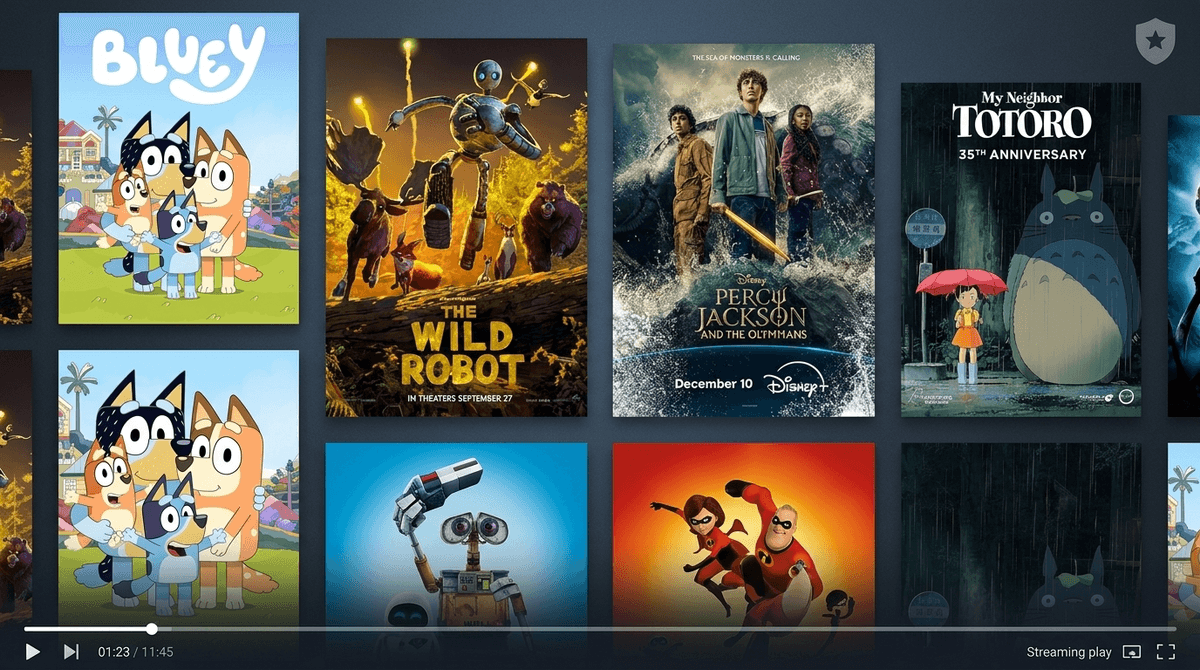
- Top 2026 Recs: The Wild Robot, Percy Jackson and the Olympians, and Bluey.
Get a streaming watchlist based on your kid's age
We’ve all been there: you hand over the remote so you can finish a single hot cup of coffee, and twenty minutes later you walk back in to find your seven-year-old hypnotized by a singing toilet or some hyper-edited "challenge" video that feels like a fever dream.
In 2026, the streaming landscape is more fragmented than ever. We’ve moved past the "Netflix is for everything" era. Now, every platform has its own flavor of "brainrot"—that low-effort, high-stimulation content that makes kids act like they’ve been "sent to Ohio" (which, in middle-school speak, just means everything is weird, cringe, or generally "down bad").
Here is the real talk on where to point your kids and how to actually lock down these platforms so you aren't constantly policing the living room.
Netflix is the king of the "infinite scroll." Their algorithm is designed to keep kids watching, which often leads them away from high-quality storytelling and toward "zombie content."
The Good: They have incredible originals like The Dragon Prince and Jurassic World: Chaos Theory. Their parental controls are actually the best in the business—you can PIN-protect individual profiles and even "block" specific titles from ever appearing.
The Bad: The "Kids" profile is still a gateway to CoComelon and various "toy unboxing" style shows that have been repackaged from YouTube. This is the primary source of "Netflix Brainrot."
Pro-Tip: Use the "Profile and Parental Controls" settings on a web browser to delete shows from their viewing history if you want the algorithm to stop recommending junk.
Disney+ is still the safest bet for families, but it’s getting more complicated now that Hulu content is fully integrated.
The Good: It is the exclusive home of Bluey, which remains the gold standard for "non-annoying" children's television. It’s also the place for Star Wars and Marvel fans.
The Bad: As they’ve added more mature content (R-rated movies like Deadpool), the "default" settings might be too open for younger kids. If you haven't checked your content ratings lately, your 10-year-old might have access to stuff you’d rather they didn't see.
The 2026 Vibe: Disney is leaning heavily into "comfort viewing." If your kid is stressed, putting on Moana or Encanto for the 50th time is a low-risk win.
This is where the "Skibidi Toilet" phenomenon lives. If you aren't familiar, it’s a series of surreal videos involving heads coming out of toilets. It’s the definition of modern brainrot: nonsensical, loud, and incredibly addictive.
The Reality: YouTube Kids is better than "Main" YouTube, but it’s not a fortress. Weird, AI-generated content still slips through.
The Strategy: For kids under 10, stick to Approved Content Only mode. This allows you to hand-pick specific channels like Mark Rober for science or Storyline Online for reading.
Max (formerly HBO Max) is often overlooked by parents, but it’s a secret weapon for high-quality content.
The Highlights: It hosts the entire Studio Ghibli library (think My Neighbor Totoro), which is the perfect antidote to brainrot. It’s also where you’ll find the best of Cartoon Network.
Age Guidance: Max is great for the 8-12 age range. It feels more "grown-up" than Disney+ but carries less "junk" than Netflix.
Apple TV+ has the smallest library, but the highest "batting average." Almost everything they produce for kids is thoughtful, visually beautiful, and slow-paced.
Recommendations: Frog and Toad and Snoopy in Space. If you want to avoid the "overstimulated toddler" meltdown, this is your best friend.
You’ll hear kids use terms like "Skibidi," "Rizz," and "Ohio" constantly. Most of it is harmless slang, but the content associated with it is designed for the "attention economy."
Brainrot content (like YouTube Shorts or TikTok reposts on Netflix) is characterized by:
- Rapid Pacing: Cuts every 1.5 seconds.
- Sensory Overload: Loud noises, bright colors, and multiple things happening at once.
- Low Substance: No plot, no character development, just "vibes."
Research suggests that high doses of this type of media can make it harder for kids to focus on "slower" tasks—like reading a Percy Jackson book or even playing a board game like Catan.
Ages 2-5: The "Slow Media" Phase
Stick to PBS Kids and Apple TV+. Avoid the YouTube algorithm entirely. At this age, their brains are literal sponges; you want them soaking up Daniel Tiger's Neighborhood, not unboxing videos.
Ages 6-9: The "Discovery" Phase
This is when they start hearing about Roblox and Minecraft from friends. They’ll want to watch "Let's Play" videos on YouTube. The Move: Transition them to curated YouTube channels or high-quality series like The Bad Guys.
Ages 10-12: The "Social" Phase
They want what’s trending. This is the hardest stage because "cringe" is a social currency. The Move: Use Max or Amazon Prime Video to find "co-viewing" shows—things you can actually stand to watch together, like The Legend of Vox Machina (for older kids) or classic movies.
When you see your kid watching something that looks like pure brainrot, don't just ban it. That makes it "forbidden fruit" (and very "Ohio" of you).
Instead, ask questions:
- "What’s actually happening in this video?"
- "Why do you think the person made this so loud?"
- "How do you feel after watching 10 of these in a row? Do you feel energized or kind of 'blah'?"
Helping them recognize the "zombie feeling" is a much better long-term strategy than just hiding the remote.
In 2026, default settings are not your friend. Every streaming platform is businesses trying to sell your child's attention to the highest bidder (or the stickiest algorithm).
Spend 10 minutes tonight going into the settings of your most-used app. Set up the PINs, filter the ratings, and maybe—just maybe—delete CoComelon from the history. Your future self (and your kid's attention span) will thank you.
- Audit your profiles: Check the "Content Rating" on every user profile in your house.
- Pick a "Slow" Show: Commit to one night a week of watching something high-quality together, like a Studio Ghibli film.
- Talk Slang: Ask them to explain a "Skibidi" meme to you. You’ll feel old, they’ll feel like experts, and you’ll get a window into what they’re seeing.