

TL;DR: The Quick List
Reading isn't just about "reading levels" anymore; it’s about navigating a digital culture that moves faster than a librarian can reshelve. Here are the top takeaways:
- The "Cover Trap": Don't trust an illustrated cover. Many adult romance novels (with heavy "spice") look exactly like middle-grade fiction.
- BookTok is the New Gatekeeper: If your kid is asking for a specific book, they probably saw it on TikTok. Check the "spice level" before you buy.
- Paper vs. Digital: Use tablets for convenience, but stick to physical books or E-ink readers for deep focus and bedtime.
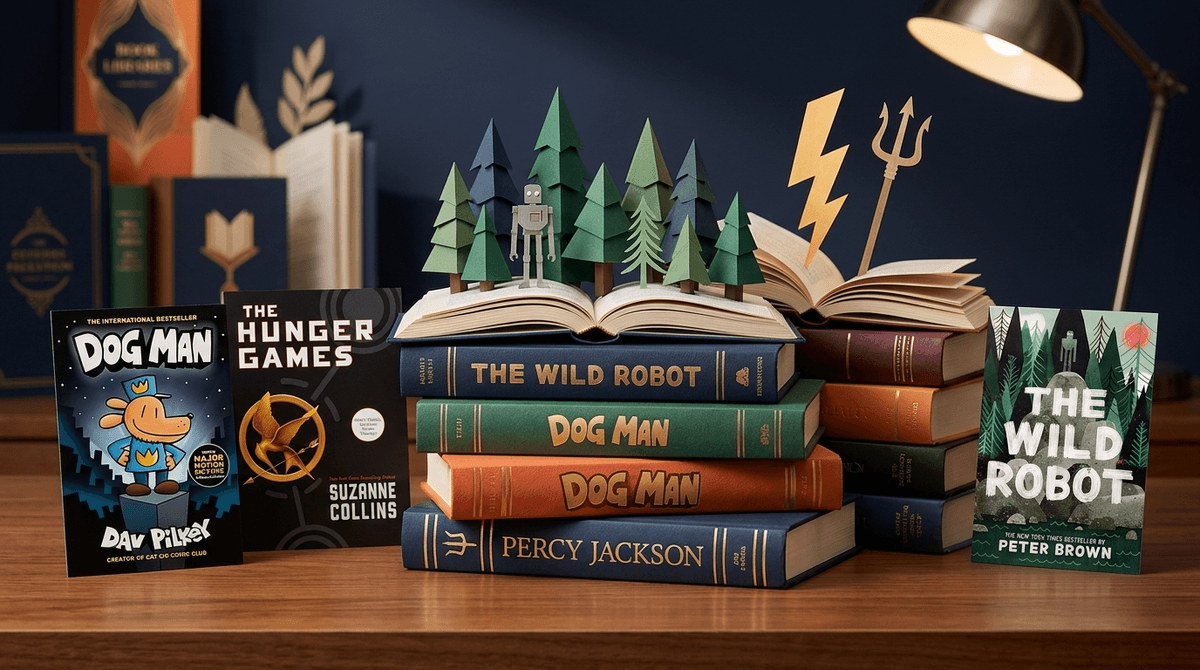
- Top Safe Bets: The Wild Robot by Peter Brown, Wings of Fire, and Percy Jackson.
We used to just look at the back of a book for an age range and call it a day. But in 2026, the lines between "Middle Grade," "Young Adult," and "Adult Fiction" have blurred into a messy slurry.
Between the rise of BookTok, the explosion of graphic novels, and the fact that every 10-year-old wants to read what the 16-year-olds are reading to avoid being "Ohio" (weird/cringe), parents are stuck playing detective. We want our kids to read—honestly, we’d take a book over Roblox any day—but we also don't want them accidentally stumbling into a graphic "enemies-to-lovers" subplot while they’re still losing baby teeth.
Get a reading list based on your child's interests
If you have a tween or teen, you’ve heard of BookTok. It’s the corner of TikTok where books become viral sensations overnight. While it’s amazing that social media is making reading "cool" again, it’s also created a massive content-rating gap.
The biggest culprit? The "New Adult" (NA) genre. It’s marketed to 18–25-year-olds, but because the covers are bright, "cartoony," and aesthetic, they end up in the hands of 12-year-olds.
Take A Court of Thorns and Roses (often called ACOTAR). It’s a fantasy series. It has fairies and magic. It also has incredibly explicit sexual content. On TikTok, it’s often grouped with The Hunger Games, which can lead parents to think it’s just another YA dystopian vibe. It’s not.
Publishers have realized that "cute" sells. Books like It Ends With Us by Colleen Hoover or various rom-coms often feature bubbly fonts and pastel illustrations. To a parent glancing at a nightstand, it looks like a modern-day The Baby-Sitters Club. In reality, the themes can include domestic violence, graphic language, and adult situations.
Pro-tip: If the book has a "cartoon" person on the cover but is shelved in the Adult section at the bookstore, it’s probably not for your middle-schooler.
Is a Kindle "brain rot"? No. But is it the same as a paper book? Also no.
Our community data shows that while 65% of parents prefer their kids to read physical books, about 40% of kids in grades 4-8 are doing at least some of their reading on a device like an iPad or via Epic!.
The Case for Paper
- Focus: No notifications. No temptation to quickly switch over to YouTube.
- Retention: Studies consistently show that we retain information better when we read it on a physical page. The tactile experience helps the brain map the story.
- Sleep: No blue light. If your kid is reading to wind down, paper is the MVP.
The Case for Digital
- Accessibility: If your kid has dyslexia or visual impairments, being able to change the font (like the OpenDyslexic font) and increase text size is a game-changer.
- Portability: Carrying 50 books on a family road trip is a lot easier on a Kindle Paperwhite than in a suitcase.
The Screenwise Stance: If they’re reading on a tablet, use "Guided Access" or "Focus Mode" to lock them into the reading app. Otherwise, that "reading time" often turns into "stealth Minecraft time."
Here are some solid, age-appropriate picks that won't make you cringe, organized by the "vibes" kids are actually looking for.
For the "Graphic Novel Only" Kid
Many parents worry that graphic novels are "cheating." They aren't. They build visual literacy and keep reluctant readers engaged.
-
It’s silly, it’s a bit irreverent, but it gets kids addicted to turning pages.
Dog Man by Dav Pilkey (Ages 6-9)
-
High-stakes dragon drama. It's the "Game of Thrones" for the elementary set, minus the HBO-level trauma.
Wings of Fire (Graphic Novels) (Ages 8-12)
-
A very sweet, wholesome graphic novel series about teen identity and romance. It’s the gold standard for "gentle" YA.
Heartstopper by Alice Oseman (Ages 12+)
For the Fantasy & Adventure Junkie
-
This book is a masterpiece. It explores nature vs. technology in a way that’s profound but accessible.
The Wild Robot by Peter Brown (Ages 7-11)
-
Rick Riordan is the king of middle-grade for a reason. It’s fast-paced, funny, and actually teaches them something about mythology.
Percy Jackson and the Olympians (Ages 9-13)
-
If your kid has already finished Harry Potter and needs that "magic school" itch scratched, this is the one.
Amari and the Night Brothers (Ages 8-12)
For the "I'm Too Old For This" Teen
-
Still the reigning champ of YA dystopian. It deals with heavy themes (war, media manipulation) that are more relevant now than when it was written.
The Hunger Games (Ages 12+)
-
A fascinating look at a world where death has been "cured." It’s smart, ethical, and keeps them thinking.
Scythe by Neal Shusterman (Ages 13+)
Check out our full guide on graphic novels vs. traditional books
You don't have time to read every book your kid brings home. Here’s the "cheat sheet" for vetting:
- Check the "Common Sense" Score: Use Common Sense Media or our own Screenwise WISE scores to see what other parents are saying about specific content triggers.
- Look at the Publisher's Imprint: If the book is published by "Dutton Books for Young Readers," you're usually safe. If it's "Berkley" or "Avon," those are adult imprints—proceed with caution.
- The "Flip Test": Flip to a random page in the middle of the book. Read three paragraphs. You’ll catch the "vibe" (and the language level) pretty quickly.
- Search the "Spice Level": Literally search "[Book Title] spice level" on Google. There are entire websites dedicated to telling you exactly how much "romance" is in a book.
We’re living in a time of heavy book challenges in schools. Regardless of where you stand on that, it’s important to remember that reading is a safe place for kids to explore scary ideas.
A book about a kid dealing with loss, or a character facing discrimination, or a dystopian world where everything has gone wrong, isn't "harming" your child. It's building empathy. The goal isn't to shield them from every difficult topic, but to ensure they have the emotional maturity to process what they're reading.
If your 10-year-old wants to read a book about a heavy topic, read it with them. Or, better yet, listen to the audiobook together on Audible during soccer carpools. It opens the door for conversations you might not know how to start otherwise.
Reading is one of the few "analog" wins we have left in a digital world. If your kid is reading anything—even if it’s a manual for Minecraft—it’s a win for their brain.
The goal isn't to be the "Book Police," but to be a curator. Help them find the stuff that challenges them without overwhelming them, and keep an eye on those "cute" covers that might be hiding a bit more than a PG-rated story.
- Do a "Bookshelf Audit": Take 10 minutes to look at what's currently on your kid's nightstand.
- Set a "Device-Free" Reading Hour: Ideally right before bed.
- Check the Stats: Take the Screenwise Survey to see how your family’s reading habits stack up against your community.