

TL;DR
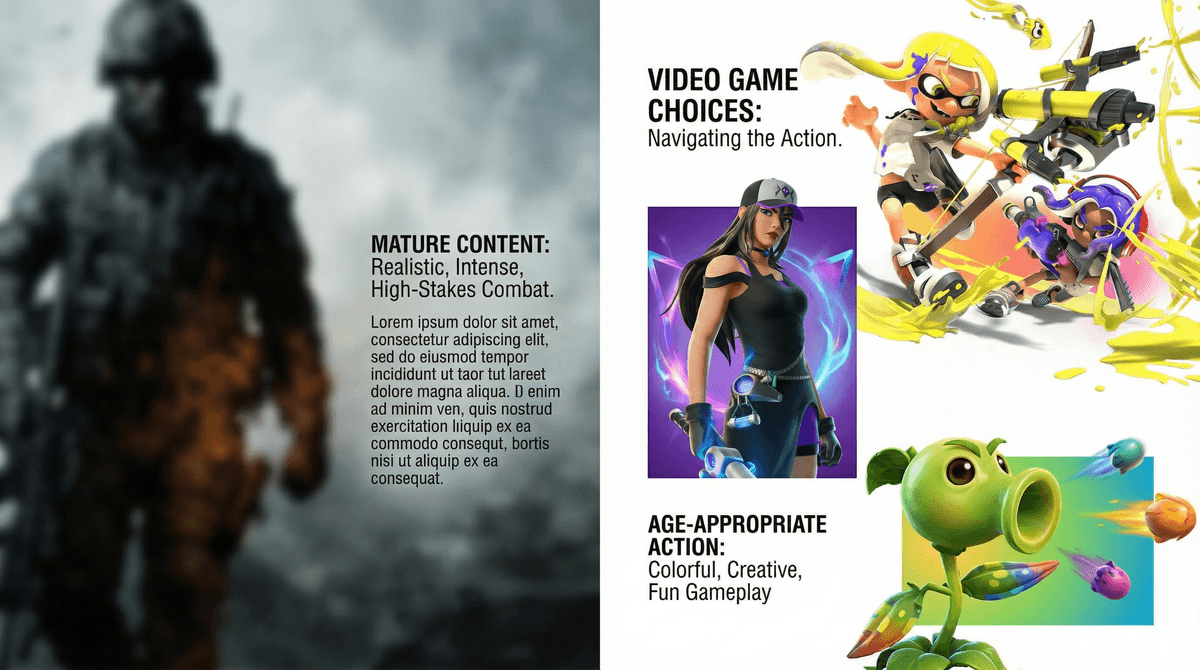
Your kid wants Battlefield but you're not ready for realistic military violence? Smart call. These alternatives deliver the action, strategy, and teamwork kids crave without the mature content:
Best Overall: Splatoon 3 (Nintendo Switch) Best Free Option: Fortnite (all platforms) Best for Strategy: Plants vs. Zombies: Battle for Neighborville (all platforms) Best Retro Vibe: Team Fortress 2 (PC, still going strong)
Let's be real about what's happening here. Your 10-year-old isn't asking for Battlefield because they're interested in military history or want to learn about World War II. They want it because:
- Their friends are talking about it (or playing it, or watching it on YouTube)
- It looks incredibly cool with realistic graphics and explosive action
- The teamwork and strategy appeal is genuinely compelling
- It feels "grown-up" and mature
All valid reasons! The problem is that Battlefield is rated M for Mature (17+) for good reasons: realistic military violence, blood, strong language, and intense combat scenarios designed to simulate actual warfare. The difference between Battlefield and kid-friendly shooters isn't just aesthetics—it's the whole vibe of simulating real human-on-human combat.
Before we dive into specific games, here's what we're looking for in age-appropriate alternatives:
Team-based gameplay - The social and strategic elements that make Battlefield compelling Skill progression - Unlockables, customization, and getting better over time Fast-paced action - Nobody wants slow and boring Fantasy violence - Paintballs, ink, lasers, zombies—anything but realistic human combat Active communities - Games kids can actually play with friends
Platform: Nintendo Switch | Age Rating: E10+ | Cost: $60
This is the gold standard for kid-friendly competitive shooters, and honestly? It's better designed than most M-rated shooters. Instead of bullets, you're shooting ink. Instead of eliminating opponents, you're covering territory in your team's color. You play as squid-kid hybrids called Inklings who can transform to swim through their own ink.
Why it works: Splatoon 3 has everything kids love about team shooters—customization, ranked modes, special weapons, map control, team coordination—without a drop of blood. The aesthetic is pure Nintendo: colorful, weird, and fun. The skill ceiling is surprisingly high, so competitive kids won't get bored.
The catch: Requires a Nintendo Switch (obviously) and Nintendo Switch Online subscription ($20/year) for online play. But if you have the hardware, this is the answer.
Platform: Everything | Age Rating: T for Teen | Cost: Free
Yes, Fortnite. I know what you're thinking—isn't that the game with all the microtransactions and the dances and the chaos? Yes. But it's also legitimately a great alternative to Battlefield for this age group.
Why it works: Fortnite delivers team-based action, building mechanics that add strategy, constant updates, and cross-platform play so kids can play with friends regardless of console. The violence is cartoonish—players get "eliminated" and respawn in the lobby. No blood, no gore, just colorful chaos.
The catch: The monetization is aggressive. Kids will want V-Bucks for skins. The building mechanics can be overwhelming for new players (though there's now a "Zero Build" mode). And yes, voice chat with strangers is a thing you'll need to manage carefully.
Real talk: Fortnite gets a bad rap from parents, but it's genuinely creative, social, and less violent than what your kid is asking for. The bigger concerns are screen time management and spending, not content.
Platform: PlayStation, Xbox, PC | Age Rating: E10+ | Cost: $40 (often on sale)
This is the most underrated option on this list. It's a third-person shooter where you play as either plants or zombies in a colorful, ridiculous battle. Think Team Fortress 2 meets a Saturday morning cartoon.
Why it works: Class-based gameplay with distinct characters (Peashooter, Sunflower, Chomper for plants; Soldier, Engineer, All-Star for zombies), team objectives, and genuinely funny writing. The combat is strategic without being stressful, and the tone is pure silly fun.
The catch: The player base is smaller than Fortnite or Splatoon, so matchmaking can take longer. But there's also a robust single-player/co-op mode, so it's not just about online play.
Platform: Everything | Age Rating: T for Teen | Cost: Free
This is walking the line a bit—it's rated T for Teen, not E10+—but it's worth discussing because it's what many kids in this age range are actually playing.
Why it works: Hero-based shooter with distinct characters (tanks, damage dealers, supports), team objectives, and stylized violence that's more sci-fi than realistic. The emphasis is on team composition and strategy, not just shooting accuracy.
The catch: The violence is more intense than Splatoon or Plants vs. Zombies. Characters use guns (even if they're futuristic), and while there's no blood or gore, it's definitely combat. The community can be toxic—competitive team games bring out the worst in people. Voice chat needs to be managed.
Real talk: If your kid is mature for their age and you're comfortable with the T rating, this is closer to the Battlefield experience than other options. But if you're looking for something definitively age-appropriate for a 10-year-old, stick with the E10+ options.
Platform: PC (Steam) | Age Rating: M for Mature (but hear me out) | Cost: Free
This one's rated M, but it's worth mentioning because the content is actually pretty tame by today's standards. It's a cartoony, stylized team shooter from 2007 that's still going strong.
Why it works: Class-based gameplay (nine distinct classes), team objectives, and a art style that's more Pixar than Call of Duty. The violence is slapstick—characters explode into cartoonish gibs, but it's clearly not realistic.
The catch: It's rated M for "blood and gore, intense violence" but that rating is from 2007 standards. The real concerns are: it's PC-only, the community is older, and there's no real moderation of voice/text chat. This is better for 12-year-olds with gaming PC experience than 10-year-olds on their first shooter.
Roblox has dozens of shooter games—Phantom Forces, Arsenal, Bad Business—that range from pretty good to terrible. Some are legitimately fun and age-appropriate.
The upside: Free, accessible, and your kid probably already plays Roblox. Games like Arsenal are fast-paced and cartoonish.
The downside: Quality varies wildly, moderation is inconsistent, and you're dealing with all the usual Roblox concerns around chat, scams, and inappropriate content.
If your kid is already deep in the Roblox ecosystem, games like Phantom Forces can scratch the Battlefield itch. Just make sure you've got parental controls locked down.
Platform: Everything | Age Rating: E10+ | Cost: $30
Wait, Minecraft isn't a shooter! True. But if what your kid actually wants is the team-based, strategic, objective-focused gameplay of Battlefield, Minecraft's multiplayer modes deliver that in spades.
Why it works: Minecraft's PvP servers and mini-games (Bed Wars, Sky Wars, Hunger Games modes) offer team-based combat, strategy, and competition. The combat is simple but skill-based. And you're already comfortable with Minecraft.
The catch: It's not a shooter. If your kid specifically wants the adrenaline of fast-paced shooting action, this won't satisfy. But if they want the teamwork and strategy, this is worth suggesting.
Ages 10-11: Stick with Splatoon 3, Plants vs. Zombies: Battle for Neighborville, or Fortnite with parental controls enabled. These are designed for this age group.
Age 12+: Overwatch 2 becomes reasonable for mature 12-year-olds. The T rating exists for a reason, but the content isn't shocking—just more intense than E10+ games.
The maturity question: Some 12-year-olds are ready for T-rated content, some aren't. You know your kid. The key questions: How do they handle competition and losing? How do they respond to trash talk? Do they understand the difference between game violence and real violence?
Voice chat is the real concern: In most of these games, the violence isn't the problem—it's the unmoderated voice chat with strangers. Kids will hear profanity, insults, and occasionally worse. Every game listed here has options to disable or restrict voice chat. Use them. Learn how to set up these controls.
"But all my friends play Battlefield": Maybe they do, maybe they don't. Kids exaggerate peer pressure. But even if true, you're not all their friends' parents. If you're not comfortable with M-rated content for your 10-year-old, that's completely reasonable. These alternatives are legitimately fun—your kid won't be missing out.
The YouTube factor: Your kid has probably watched Battlefield gameplay on YouTube. That's different from playing it themselves. Watching someone play a horror movie game is different from playing it in the dark with headphones on. Same principle applies here.
Progression systems matter: One reason kids love games like Battlefield is the unlock progression—new weapons, attachments, cosmetics. All the games recommended here have similar systems. Your kid won't feel like they're playing a "baby game."
Your instinct to find alternatives to Battlefield for your 10-12 year old is spot-on. The games recommended here aren't compromises—they're legitimately great games that deliver the action, teamwork, and competition kids crave without the realistic military violence.
Start with Splatoon 3 if you have a Switch. It's the perfect blend of kid-friendly content and competitive depth.
Try Fortnite if you want free and accessible. Yes, manage the spending and voice chat, but don't write it off because of its reputation.
Consider Plants vs. Zombies: Battle for Neighborville for the best balance of age-appropriate content and Battlefield-like gameplay.
And remember: in a year or two, your kid will probably be ready for T-rated content, and eventually M-rated games. You're not saying "never"—you're saying "not yet." That's good parenting, not helicopter parenting.
-
Ask your kid what specifically appeals to them about Battlefield—is it the teamwork? The customization? The realistic graphics? Understanding the appeal helps you find the right alternative.
-
Try free options first—Fortnite and Overwatch 2 cost nothing to test out. See what clicks.
-
Set up parental controls before they start playing—voice chat restrictions, spending limits, and time limits. Do it from day one, not after problems emerge.
-
Play with them (or at least watch them play) for the first few sessions. You'll learn the game, understand what they're experiencing, and have natural opportunities to talk about online behavior and sportsmanship.
-
Check out our guides on managing online gaming for kids and teaching good sportsmanship in competitive games.
You've got this. Your kid will have fun, learn teamwork and strategy, and you'll sleep better knowing they're not simulating realistic military combat at age 10. Win-win.