

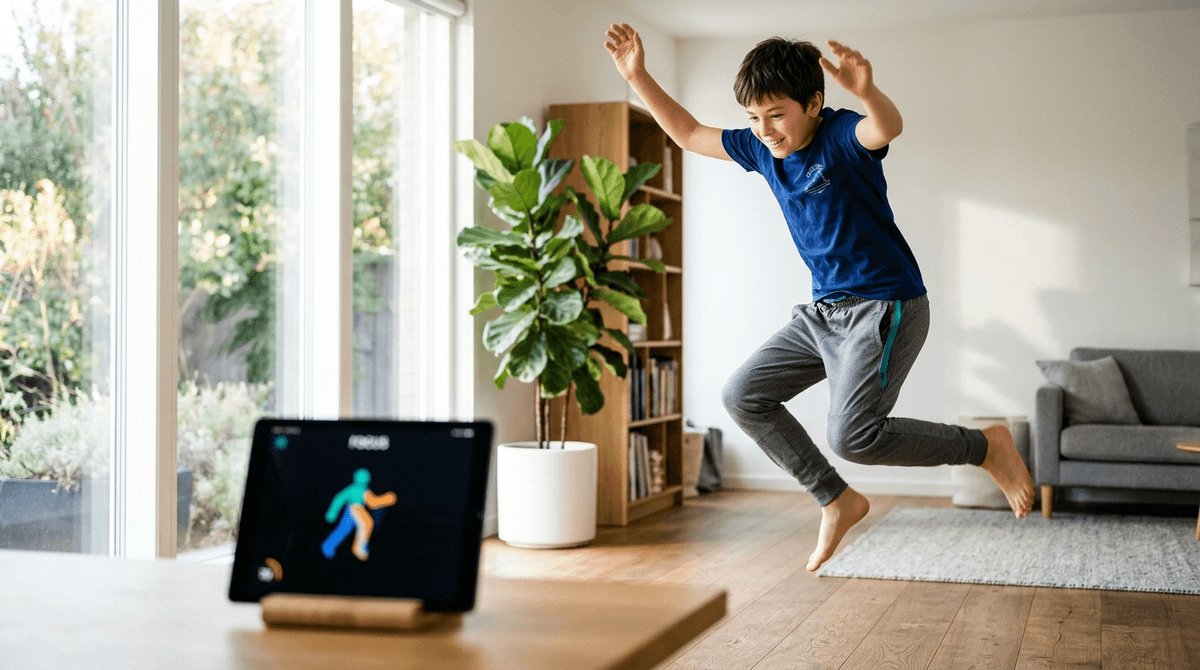

Screens do not have to be the enemy of physical health. Digital tools can turn sedentary screen time into genuine movement for children with obesity—provided the program is tailored, supervised, and built to last beyond the initial novelty.
Digital health tools can successfully convert screen time into consistent physical activity, but their clinical value hinges on long-term habit formation rather than short-lived bursts of enthusiasm.
Telling a child who struggles with their weight to simply "go outside and play" often backfires. Traditional youth sports frequently trigger self-consciousness, social anxiety, and feelings of physical inadequacy, which causes kids to retreat right back to the couch.
Repurposing the screen into an active coaching tool meets kids directly where they already spend their attention. Instead of waging an exhausting daily battle to confiscate devices, parents can use guided digital platforms to create a judgment-free on-ramp to daily exercise.
Pediatric obesity rates continue to climb alongside recreational screen use. Traditional clinical approaches that demand strict, total screen bans routinely fail because screens are deeply embedded in daily childhood routines. Researchers are now testing whether the screen itself can deliver the intervention rather than merely take the blame.
Making digital movement stick requires thoughtful design, not just handing a child a generic motion-tracking video game:
- Repurposing beats restriction: Digital interventions successfully convert sedentary sitting hours into active physical exertion.
- Sustainability is the real metric: The clinical payoff comes from sustained adherence over months, not how many calories a child burns during an intense first week.
- Personalization is mandatory: Tailored programs matched to an individual child's baseline fitness significantly outperform generic, one-size-fits-all exercise apps.
- Supervision bridges psychological hurdles: Programs that include oversight or coaching give children a safe environment to build coordination and stamina without the social scrutiny of gym class.
Most gamified fitness products rely on shiny novelty that wears off within three weeks. When an active app stops feeling like a game and starts feeling like exercise homework, kids abandon it.
To keep a child engaged over the long haul, a digital tool needs either adaptive difficulty that grows with them or human accountability—like an encouraging virtual coach, a parent tracking milestones alongside them, or a structured check-in system. Without that backbone, digital exercise kits become expensive closet clutter.
This paper is an expert clinical perspective and conceptual review, not a new randomized controlled trial. The authors did not track a specific group of children, report raw statistical effect sizes, or define exactly how many months an intervention must last to qualify as clinically "sustainable."
- If your child avoids team sports due to social anxiety or low stamina: Use active gaming or gamified home workout apps as a private training ground to build basic motor competence and physical confidence away from peers.
- If you are evaluating an active app or digital fitness tool: Skip generic workout video libraries and select platforms that offer personalized adjustments, skill progression, or direct oversight from a real coach.
- If your child launches into an active video game with intense energy: Ignore how hard they push during the first week and focus entirely on helping them establish a predictable, repeatable routine that survives into month three.
Stop treating every screen as an obstacle to your child's physical health. When tailored to their abilities and backed by real accountability, a digital tool can build the exact movement habits that traditional sports failed to ignite.
Oggionni G, Lucini D (2026). Transforming screen time into active time: digital health interventions for childhood obesity. Pediatric research. doi:10.1038/s41390-026-05313-9 — pubmed.ncbi.nlm.nih.gov