The "Golden Age" of the App Store
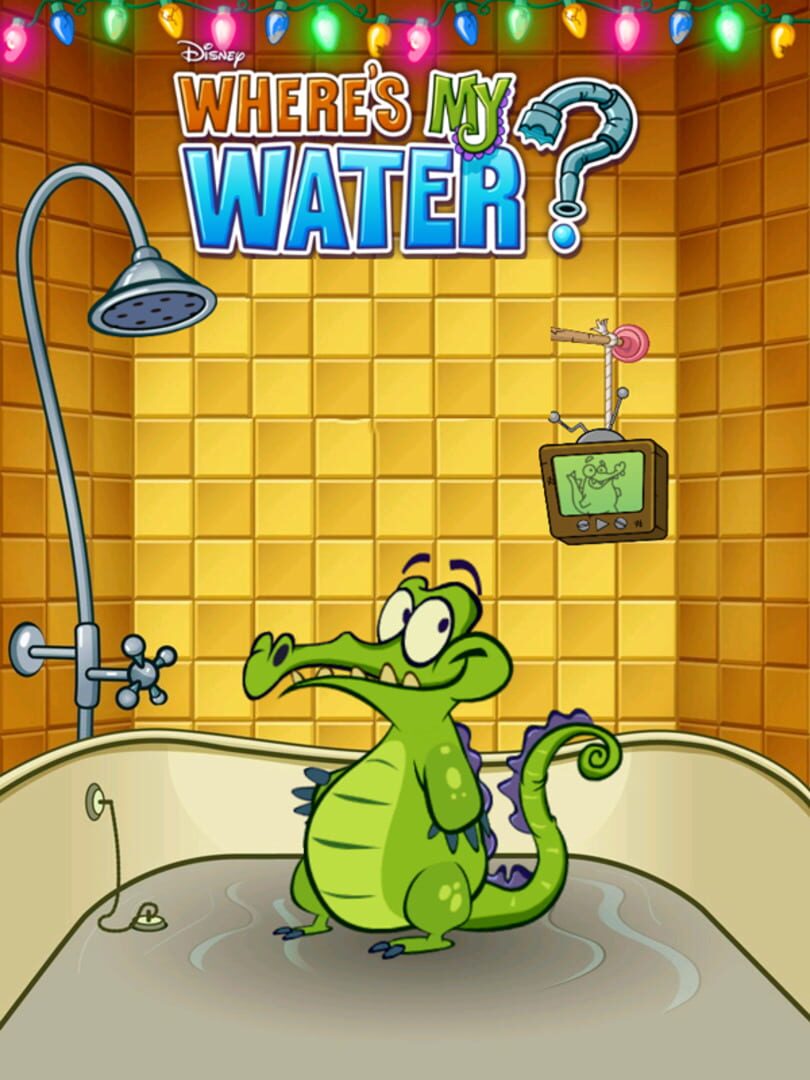
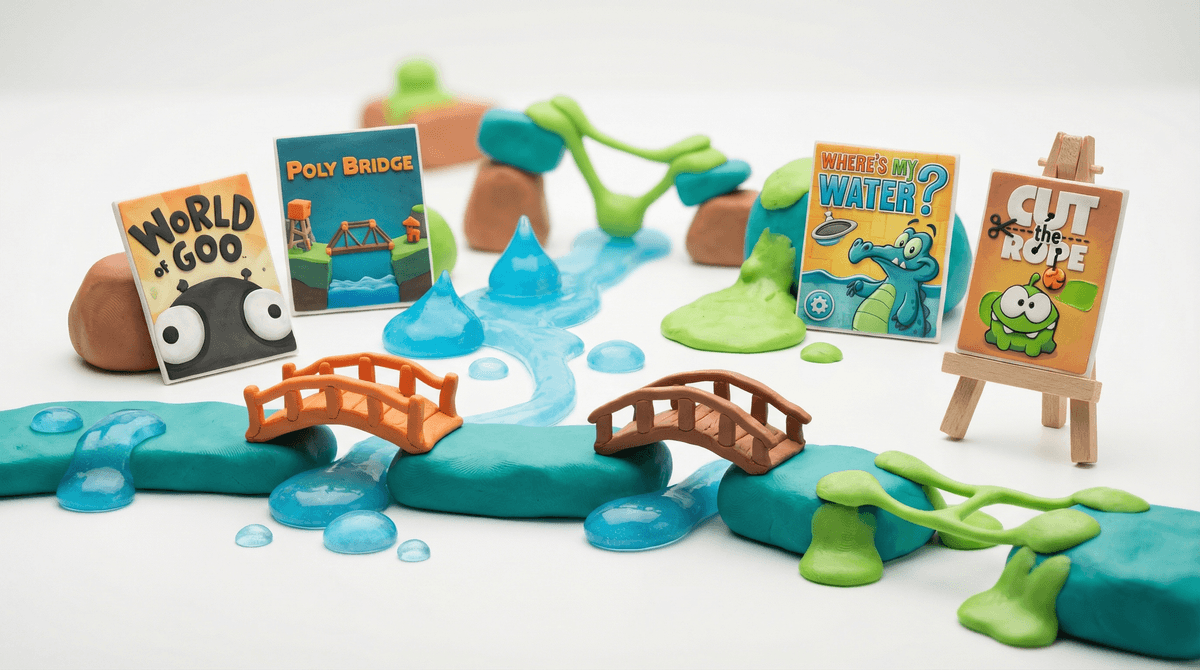
If you feel like every mobile game your kid touches lately is a neon-soaked casino of loot boxes and "watch this ad to continue" prompts, Where's My Water? is the antidote. Released in 2011, it hails from a brief window in tech history where developers were focused on making physics feel magical on a touchscreen rather than figuring out how to drain your bank account.
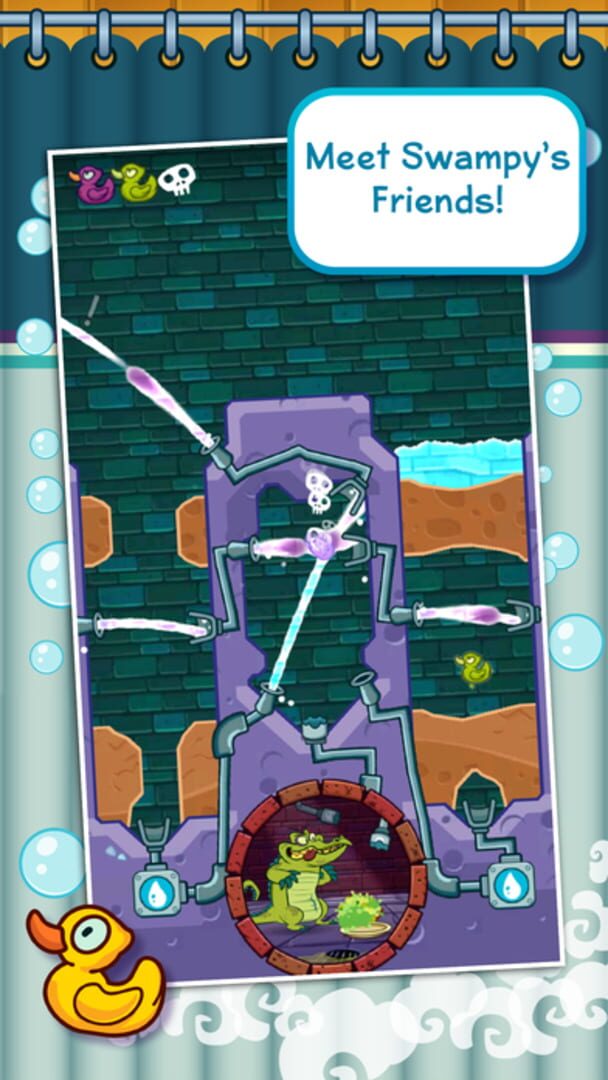
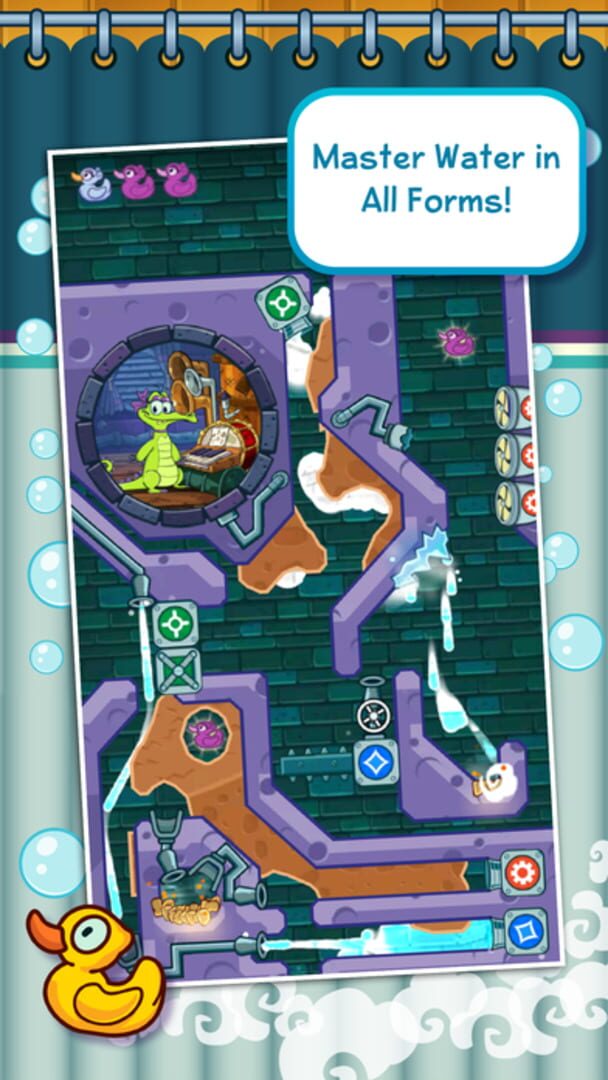
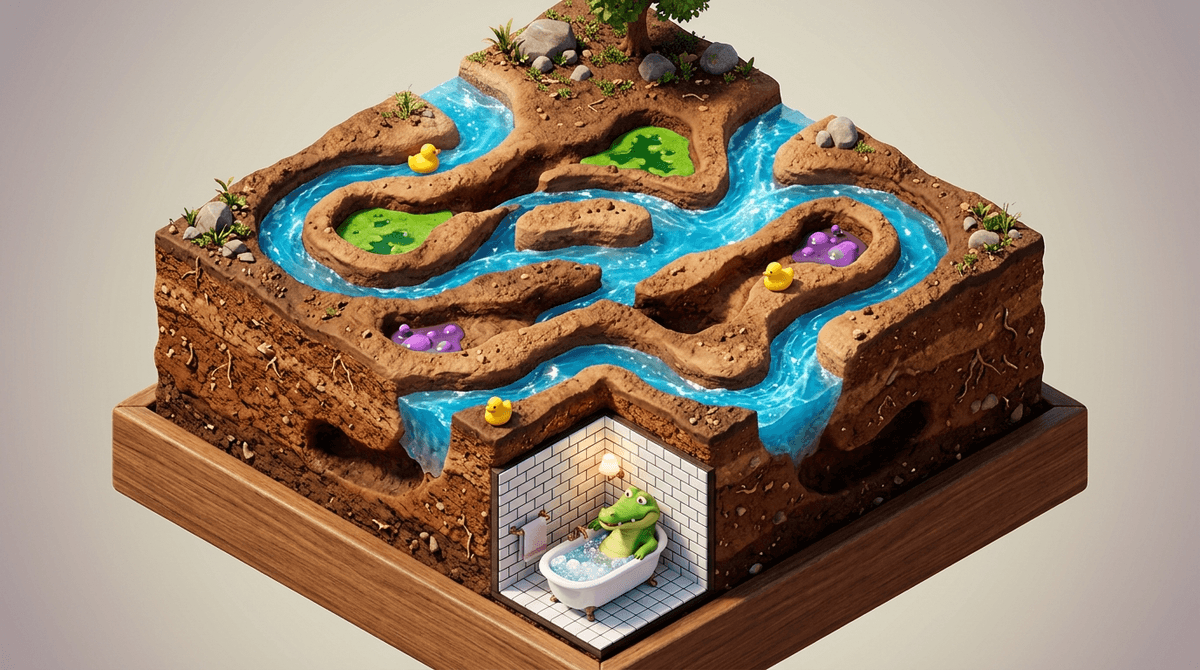
The core loop is simple: Swampy the alligator wants a shower, but the pipes are broken. You use your finger to carve paths through dirt, guiding a finite pool of water toward his tub while avoiding toxic ooze or steam. It sounds basic, but the water physics are still some of the most satisfying in the genre. There is a weight and fluid "slosh" to the mechanics that makes even a failed level feel like a fun experiment.
Why it beats modern "educational" apps
Most apps marketed as "STEM" are about as fun as a digital worksheet. This game succeeds because it doesn't try to teach; it just lets kids break things. When a child realizes they can't get the water over a hump without building up momentum, they are learning fluid dynamics through trial and error.
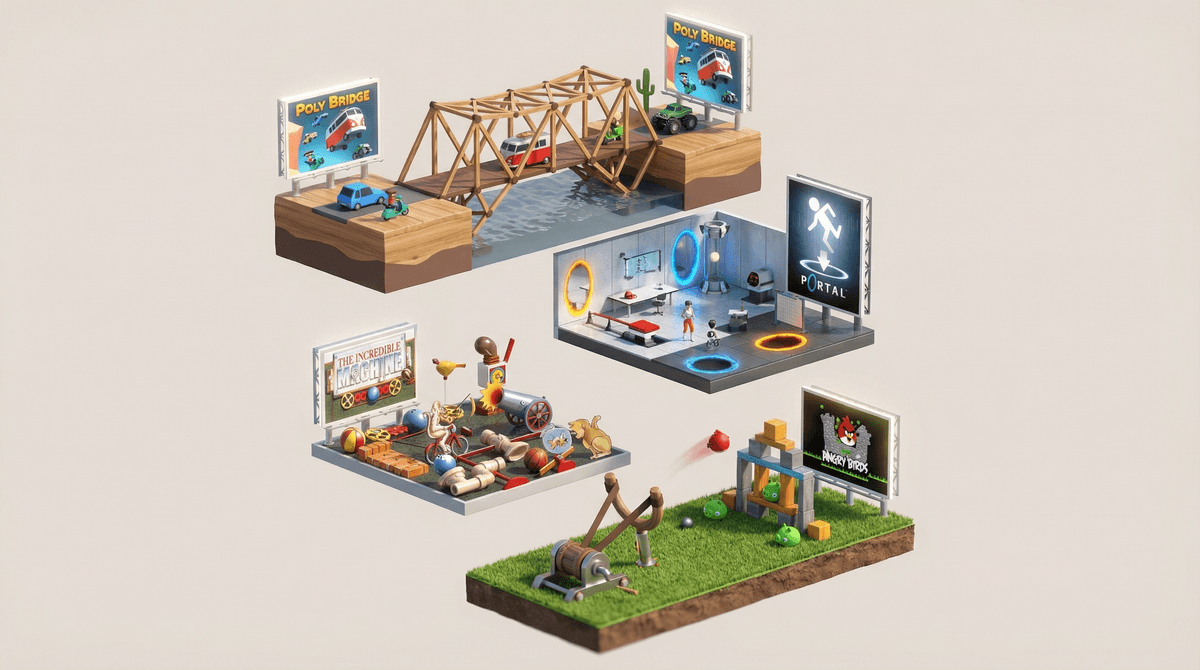
If your household is already rotating through physics games for kids, you'll notice this hits a specific sweet spot. It’s more intentional than the chaotic destruction of Angry Birds, but less punishing than a hardcore engineering sim. It’s about spatial reasoning. You have to look at the whole screen, identify the "traps," and plan your route before you make the first swipe.
The co-play sweet spot
This is one of the rare mobile titles that works better as a collaborative experience than a solo distraction. Because there are no timers (in this original 2011 version), you can sit with a five-year-old and treat it like a digital puzzle box.
Don't jump in to solve it for them. Instead, ask what they think will happen if you dig a hole on the left versus the right. Parents often find themselves taking the phone over after the kid goes to bed to finish the "tri-duck" challenges on the later, more devious levels. It’s genuinely clever design that doesn't talk down to the player.
Know your versions
The biggest hurdle in 2026 isn't the gameplay; it's the clutter in the app stores. Disney eventually followed the industry trend and released a sequel that added the exact "energy" mechanics and timers we usually try to avoid.
If you're looking for games like Angry Birds that offer a "buy it once and own it" experience, stick strictly to this 2011 original. It might look a little grainy on a modern iPad Pro, and the UI lacks the sleekness of a 2026 release, but the underlying logic is timeless. It’s a complete, thoughtful piece of software that respects the player’s intelligence.