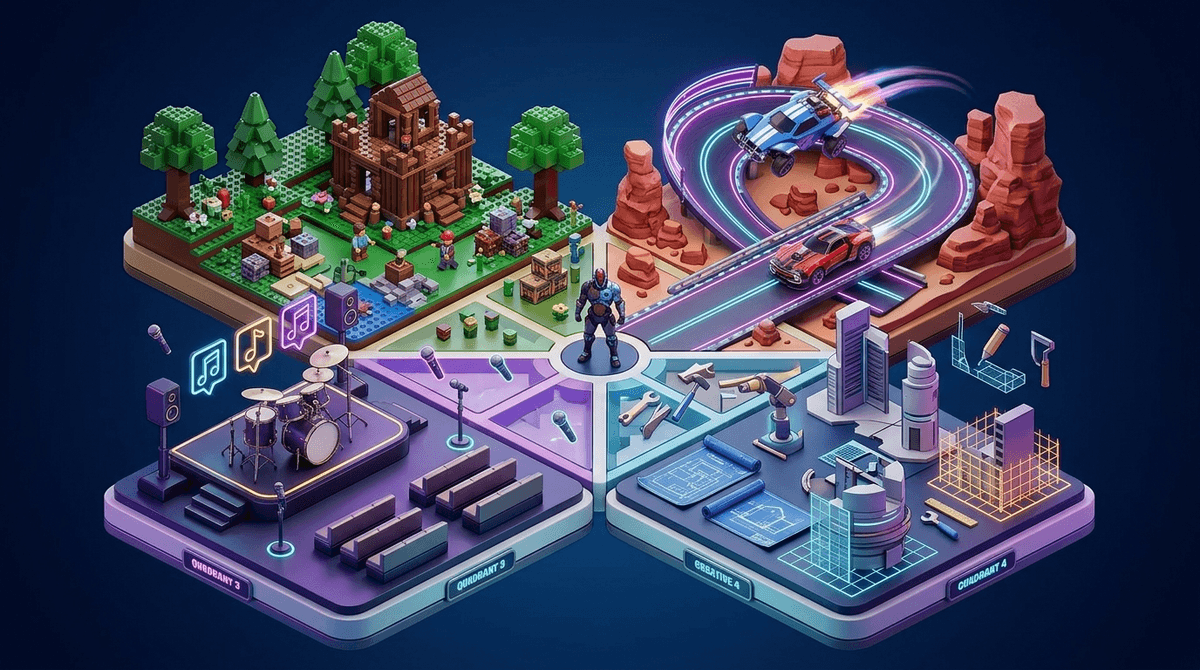
The shift from player to architect
Most gaming platforms keep kids locked into the consumer seat. You play their levels, buy their digital skins, and log off. UEFN does something rare by blowing open the same development engine the professionals use and plugging it directly into Fortnite's massive player base.
Kids who outgrow sandbox builders usually run into a wall: switching to Unity or standard Unreal Engine feels sterile because building a game from scratch means coding character controllers, networking, and multiplayer lobbies from zero. UEFN solves that cold-start problem. The avatar physics, multiplayer networking, and basic game loops are already there. The creator gets to focus immediately on level design, lighting, custom game rules, and scripting.
Verse vs. visual scripting
Unlike Scratch or basic Roblox development, UEFN pushes users toward Verse, a functional, strongly-typed programming language built by Epic. Verse does not use drag-and-drop code blocks. Teens write actual syntax to trigger events, track player scores, and control custom devices. That syntax forces them to grasp concepts like concurrency, error handling, and data structures. It is genuine computer science disguised as a map maker.
The creator payout dynamic
Parents should understand Epic's Creator Economy 2.0. Creators over 18 (or teens working with a parent's tax account) can earn real money based on player retention on their published islands. While that incentive can light a fire under a teenager's work ethic, it can also drag them into chasing algorithmic trends, churning out low-effort meme maps, or obsessing over analytics. If your teen wants to publish, keep the focus on craft and mechanics before you ever talk about payouts.