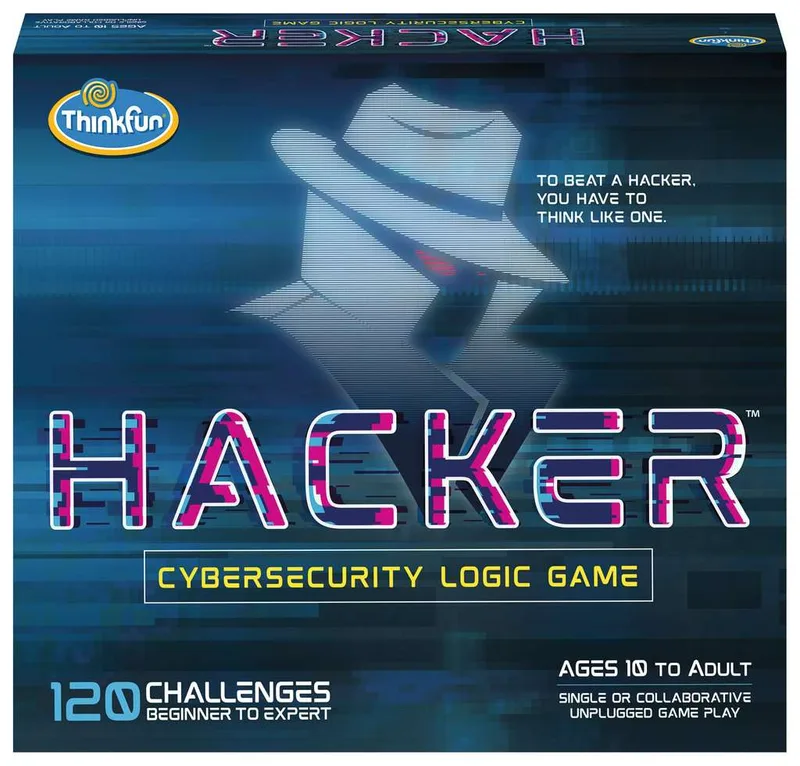
The brilliance of this game isn't just the 'coding'—there are plenty of games that do movement-based programming. The real value is the Hacking and Security layer. Most kids' coding toys focus on 'getting the robot to the finish line.' Hacker forces you to finish the program, then look at the board and realize, 'Wait, a virus could just follow this path instead.'
That shift from 'maker' to 'adversary' is exactly what real cybersecurity looks like. You aren't just building; you're defending.
The Logic Loop
The game uses a multi-step process for each challenge:
- Code: Use the tokens to plan your path.
- Hack: Rotate the board platforms to see if a virus can bypass your logic.
- Fix: Add 'security' tokens to block the holes you just found.
It's a fantastic way to introduce computational thinking—decomposition, pattern recognition, and algorithms—without the frustration of syntax errors or a compiler. If your kid is obsessed with Minecraft Redstone or constantly asks how websites get 'hacked,' this provides a safe, physical sandbox to explore those ideas.
Compare this to something like Robot Turtles (which is for much younger kids) or Circuit Maze. Hacker is the 'grown-up' version that bridges the gap between toy and tool. It’s also one of the few ThinkFun games that feels genuinely satisfying for adults to tackle on the expert levels.