

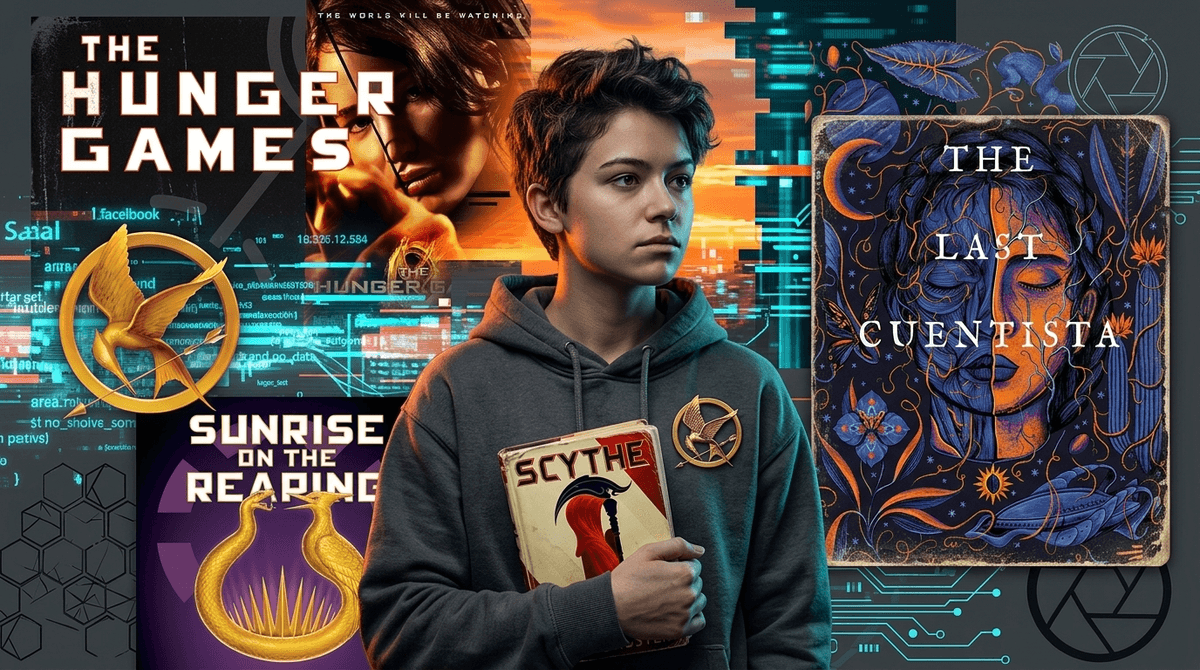
TL;DR: Dystopian fiction is having a massive second wave, fueled by the launch of the new Hunger Games prequel, Sunrise on the Reaping. While these stories can feel dark, they’re actually a "safe space" for kids to process very real anxieties about AI, climate change, and the "surveillance state" of social media.
Quick Picks:
- Best for Middle Schoolers: The City of Ember or The Last Cuentista.
- The "Gold Standard": The Hunger Games (Ages 12+).
- The Philosophical Choice: Scythe by Neal Shusterman (Ages 13+).
- Skip This: The Uglies movie (Netflix)—it’s a dated, CGI-heavy mess that misses the point of the book.
If your kid has suddenly started talking about "The Second Quarter Quell" or asking why Haymitch Abernathy is so grumpy, don't worry—you haven't missed a secret history lesson. We are officially in the middle of a Dystopian Renaissance.
With Suzanne Collins dropping Sunrise on the Reaping (and a movie adaptation already on the horizon for 2026), Panem is back in the zeitgeist. But it’s not just about archery and "Team Peeta" anymore. Today’s kids are looking at these stories through a very different lens than we did in 2012.
It feels counterintuitive, right? The real world feels heavy, so why would our kids want to read about children fighting for survival in a post-apocalyptic wasteland?
Here’s the thing: Dystopia provides a logical framework for chaos.
For a Gen Alpha kid who sees AI-generated deepfakes on TikTok and hears "the world is ending" in every climate change news cycle, the world can feel confusing and out of control. Dystopian fiction takes those abstract fears and turns them into a villain you can actually fight. It tells them that even in a broken system, a single person’s choices—a single "Main Character"—can make a difference.

The original The Hunger Games was largely about the spectacle of reality TV. In 2026, that message hits differently. Our kids aren't just watching a spectacle; they are living inside one. Every time they post a video or use a filter, they are engaging with the "Capitol" side of Panem—the part that values image, performance, and public approval above all else.
The new prequel, Sunrise on the Reaping, focuses on Haymitch (the 50th Games) and leans heavily into the idea of propaganda and misinformation. It’s basically a masterclass in media literacy. It shows how the Capitol "edits" reality to keep the districts in line. If you want to talk to your teen about how algorithms manipulate what they see, this book is your best opening.
Not all dystopias are created equal. Some are profound; some are just "misery porn" with better hair.
Ages 13+ If your kid is asking questions about AI taking over the world, this is the series. In this world, a "perfect" AI has solved every problem—even death. To keep the population in check, humans called "Scythes" must "glean" (kill) people. It’s a brilliant, high-stakes look at ethics and what happens when we give too much power to the "Cloud."
Ages 10-14 This won the Newbery Medal for a reason. It’s sci-fi dystopia at its best. A girl wakes up from cryogenic sleep to find that a "Collective" has erased everyone’s memories to create a "perfect" society. It’s a beautiful story about why our history and our stories (even the messy ones) matter.
Ages 12+ Think of this as a "fast-paced action movie" in book form. It’s great for kids who might find The Hunger Games a bit too slow or political. It deals with class divides and government secrets but keeps the pace moving.
The "No-BS" Review Honestly? Skip it. While the Uglies book by Scott Westerfeld is a classic look at beauty standards and body dysmorphia, the 2024 Netflix movie is just... not good. It’s full of "Yassified" CGI and feels like it was made ten years too late. If your kid is interested in the "Pretty vs. Ugly" theme, hand them the book instead. The movie is just 100 minutes of your life you won't get back.
Check out our guide on better alternatives to the Uglies movie
Dystopian fiction is, by definition, dark. Here is how to gauge if your kid is ready:
- Middle Grade (Ages 8-12): Stick to "light" dystopia where the focus is on mystery and adventure rather than graphic violence. The City of Ember is perfect here.
- Young Adult (Ages 13+): This is where the "death games" and political rebellion live. The Hunger Games and Divergent are the entry points.
- Mature Teens (Ages 16+): If they’ve finished all of the above, they might be ready for things like The Handmaid's Tale or 1984, but be prepared for some heavy conversations about bodily autonomy and surveillance.
You don't need a PhD in political science to talk to your kid about Panem. Just ask a few "What if?" questions:
- On Media Spectacle: "Why do you think the Capitol makes the Hunger Games look like a glamorous TV show instead of just a punishment? Does that remind you of anything on TikTok or YouTube?"
- On AI and Control: (After reading Scythe) "Would you rather live in a world where an AI makes all the big decisions so things are 'fair,' or a messy world where humans make mistakes?"
- On "Main Character Energy": "Katniss didn't want to be a leader; she just wanted to save her sister. Do you think real heroes are usually people who want to be famous, or people who are just doing the right thing?"
Learn more about how to talk to your kids about media literacy
Dystopian fiction isn't about teaching kids to be afraid of the future; it’s about giving them the vocabulary to talk about the things they're already afraid of.
When they read The Hunger Games, they aren't just reading about a girl with a bow. They’re learning that systems can be questioned, that truth is often manipulated, and that empathy is a rebellious act.
In a world that feels increasingly like a "spectacle," those are the most important skills we can give them.
- Check the Wise Score: Before you let them dive into Sunrise on the Reaping, check our full media page to see if the violence level (it’s a Quarter Quell, so it’s double the tributes) is right for your specific kid.
- The "Book First" Rule: Dystopia is almost always better on the page than on the screen. The books allow kids to process the violence at their own pace rather than having it blasted at them in 4K.
- Take the Survey: Curious how your family's media diet compares to other intentional parents? Take our Screenwise survey to get your personalized digital wellness roadmap.