

So your kid devoured The Hunger Games trilogy and now they're asking "what should I read next?" This is actually one of the best problems to have as a parent—a kid who loved a book so much they want more like it.
The Hunger Games hit a sweet spot: fast-paced action, a competent protagonist who isn't waiting around to be saved, life-or-death stakes, and some genuinely thought-provoking questions about power, media manipulation, and what people will do to survive. It also doesn't talk down to young readers or shy away from hard topics.
The good news? There's a whole universe of dystopian and action-packed YA fiction out there. The less good news? Not all of it lives up to the standard Suzanne Collins set. Some of these books are genuinely great. Others are... well, let's just say the genre got flooded with knockoffs after Hunger Games became a phenomenon.
Let's be real about what makes these dystopian reads so appealing to middle and high schoolers:
They take young people seriously. In these books, teens aren't side characters—they're making life-and-death decisions, leading revolutions, and outsmarting adults. For kids who feel like they have zero control over their own lives (school, schedules, rules), these stories are empowering.
The stakes are clear. There's no ambiguity about what matters. Survive. Protect your family. Fight injustice. It's refreshing compared to the complicated social dynamics of actual middle school.
They validate real feelings. That sense that the world is unfair? That adults are making terrible decisions? That systems are rigged? These books say "yes, and here's what happens when you fight back."
They're page-turners. Most of these books are genuinely hard to put down. Kids who "don't like reading" will stay up past bedtime with these.
Here's the thing: I'm not going to recommend every dystopian YA book that came out between 2010-2015. Some of them are genuinely bad. Instead, here are the ones actually worth your kid's time:
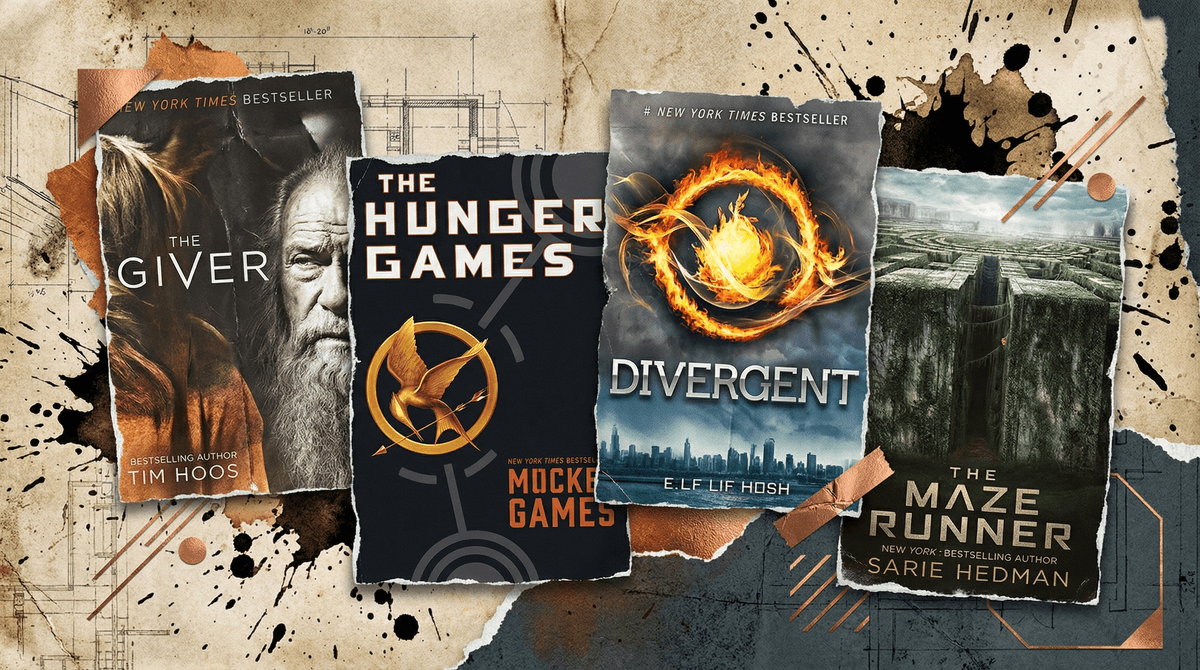
Divergent by Veronica Roth (Ages 12+)
The first book is legitimately good—fast-paced, interesting premise (society divided into factions based on virtues), and Tris is a solid protagonist. The sequels get progressively messier, but book one stands on its own. Similar intensity to Hunger Games but less focused on survival and more on identity and choice.
Content heads up: Violence, some romance, characters die (sometimes brutally). The fear simulations can be intense.
The Maze Runner by James Dashner (Ages 12+)
If your kid loved the arena aspect of Hunger Games, this delivers. Kids trapped in a maze with their memories wiped, trying to escape. It's a genuine mystery with great pacing. The sequels are more hit-or-miss, but the first book is a solid thriller.
Content heads up: More violence than Hunger Games, some body horror elements, characters die in disturbing ways. The memory loss aspect can be unsettling.
Legend by Marie Lu (Ages 12+)
This one's underrated. Dystopian future, two POV characters from opposite sides of society, both brilliant in different ways. Day is from the slums, June is a prodigy from the elite. The worldbuilding is excellent and the plot moves. If your kid liked Katniss's strategic thinking, they'll like these protagonists.
Content heads up: Violence, plague themes, government corruption, some torture scenes (not graphic but present).
Red Rising by Pierce Brown (Ages 14+)
This is Hunger Games meets Roman gladiators meets space opera. Fair warning: it's more intense and violent than Hunger Games. The protagonist goes undercover in the elite class to bring down the system from within. It's brilliant but darker. Better for older teens who can handle more graphic content.
Content heads up: Significantly more violence and darker themes than Hunger Games. Sexual assault is referenced (not graphic). Characters are brutal to each other. This is not for sensitive 12-year-olds.
Scythe by Neal Shusterman (Ages 13+)
Completely different vibe but scratches a similar itch. In a future where humanity has conquered death, "scythes" are chosen to kill people to control population. It's philosophical, asks hard questions about mortality and power, and the writing is excellent. Less action-packed than Hunger Games but more thought-provoking.
Content heads up: The entire premise is about killing people, but it's handled thoughtfully. Some deaths are disturbing. Mature themes about mortality.
The Giver by Lois Lowry (Ages 10+)
If your kid is on the younger side or you want something less violent, start here. It's the book that basically invented YA dystopia. Slower-paced than Hunger Games but incredibly powerful. A seemingly perfect society where everything is controlled—including emotions and memories.
Content heads up: Minimal violence, but themes of euthanasia and infanticide (handled carefully). Some kids find the colorless world concept unsettling.
Let me save you some time. These books get recommended a lot but have issues:
Matched by Ally Condie - The premise is interesting (society controls who you marry) but it's painfully slow. If your kid wants action, they'll be bored.
Delirium by Lauren Oliver - Love is considered a disease. Sounds cool, but it's mostly romance with dystopia window dressing. Not bad, just not what most Hunger Games fans are looking for.
The Selection by Kiera Cass - This is basically The Bachelor in a dystopian setting. If your kid wants The Hunger Games, this will disappoint. If they want a guilty pleasure romance, it's fine.
These books deal with heavy themes. Government oppression, violence, death, rebellion, corruption—these aren't light reads. That's not necessarily bad, but you should know what your kid is processing. Most of these books are great conversation starters about justice, power, and resistance.
The violence varies widely. The Hunger Games has violence but it's purposeful—Collins is making a point about war and spectacle. Some knockoff dystopians have violence just for shock value. Red Rising is genuinely brutal. The Giver has almost none. Know what your kid can handle.
The romance is usually present but not the point. Most of these have romantic subplots. Some are well-done (Legend), some are cringey (later Divergent books), but they're rarely the main story. If your kid hated the Katniss/Peeta/Gale triangle, they'll probably tolerate the romance in these books.
Reading level vs. content maturity. Most of these are easy to read (short chapters, fast pacing) but deal with mature themes. A 10-year-old might have the reading skills for Red Rising but definitely shouldn't read it. A 15-year-old who struggles with reading can handle most of these without feeling talked down to.
If your kid loved Hunger Games but you want to branch out from dystopia:
-
Six of Crows - Heist story with a found family crew. Fantastic characters, great plotting, diverse cast. Fantasy setting but similar energy to Hunger Games.
-
Ender's Game - Military sci-fi with a brilliant kid protagonist. Similar themes about children being used by adults for war. (Note: Author's personal views are controversial, but the book itself is excellent.)
-
The Hate U Give - Contemporary realistic fiction about a teen who witnesses police brutality. Not dystopian, but similar themes about fighting unjust systems. Incredibly powerful.
The Hunger Games set a high bar, and most books that tried to copy it fell short. But there are genuinely great reads out there for kids who want more stories about young people fighting corrupt systems, making impossible choices, and refusing to accept the world as it is.
The best next book depends on what specifically your kid loved. Was it the survival aspect? The political intrigue? Katniss as a character? The action? Talk to them about what grabbed them, and you can narrow down the list.
And honestly? If they want to reread The Hunger Games, that's fine too. Sometimes the best book like The Hunger Games is just... The Hunger Games again.
Not sure which book to start with? Get age-appropriate dystopian reads based on your kid's specific age and interests. Or check out our guide to building a reading habit if getting your kid to actually pick up a book is the challenge.