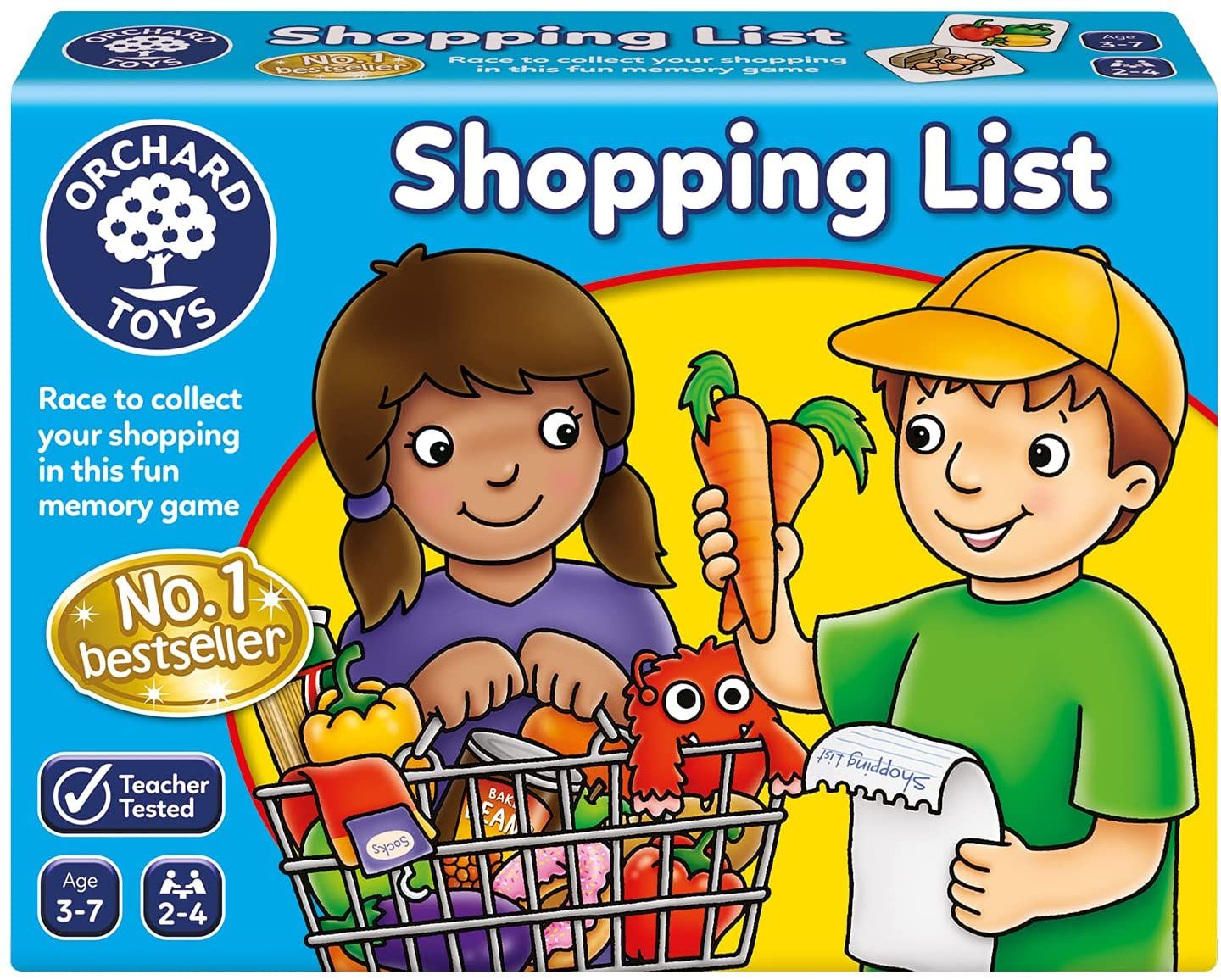
The Gateway Drug of Board Games
If you have a preschooler, you likely already own this or have seen it at a playgroup. There’s a reason it’s been a bestseller for decades. Most 'educational' games for this age group are either too flimsy or too patronizing. Shopping List hits the sweet spot by using a mechanic kids are naturally good at—visual memory—and wrapping it in a relatable theme.
Why It Works
In most games, adults have to 'dumb down' their play to let the kid win. In Shopping List, you’ll find yourself genuinely struggling to remember if the tomato soup was in the top left or the bottom right, while your five-year-old snaps it up without a second thought. That organic sense of competence is huge for a kid’s confidence.
Durability and Design
The tiles are thick, 'toddler-proof' cardboard. You can wipe them down when they inevitably get juice on them. The illustrations are dated in a charming, 90s-British-supermarket way that hasn't really gone out of style because, well, milk still looks like milk.
The Verdict for 2026
Even in a world of tablet apps and high-fidelity digital toys, this remains a must-own. It teaches the 'social contract' of gaming—waiting your turn, handling the disappointment of someone else getting your item, and the clean-up ritual—without any of the overstimulation of a screen. It’s the baseline intentional choice for a family starting their analog game collection.