The Art of the 'Oops'
Most kids' books about mistakes involve a small spill or a lost toy. Rechenka's Eggs raises the stakes. Babushka spends all year painting these eggs for the festival in Moskva. They are her passion and her pride. When Rechenka—the goose she rescued and healed—flaps her wings and smashes the entire year's work, it’s a genuine 'oh no' moment for a child reader.
Polacco uses this moment to model something rare: a parent-figure (Babushka) who feels the loss but chooses the relationship over the resentment. She doesn't yell; she just sighs and moves on. That emotional core is why this book stays on library shelves decades later.
Visual Literacy
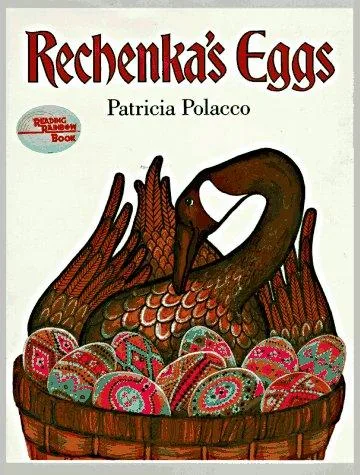
The illustrations are a masterclass in contrast. Most of the page is rendered in soft, muted pencil tones, making the characters feel humble and real. But the eggs themselves are explosive—saturated with deep reds, golds, and blacks. It’s a brilliant way to draw a child’s eye to the 'magic' of the tradition. For kids who are used to the flat, bright colors of modern digital animation, this hand-drawn depth is a necessary palate cleanser.
More Than Just an Easter Book
While it’s often pulled out in the spring, the themes of stewardship and animal care make it a year-round staple. It’s a great 'window' book for kids who haven't seen much of Eastern European culture. It treats the tradition of pysanky with immense respect, explaining the process of wax and dye without turning into a textbook. If your kid likes animals or art, this belongs in the permanent rotation.