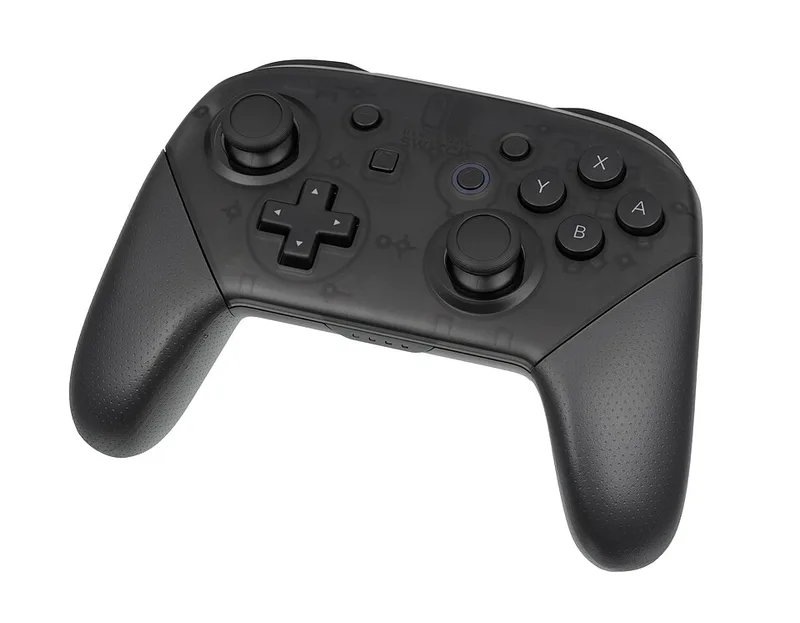
Why the standard Joy-Cons fall short
The Switch ships as a hybrid machine, which forced Nintendo to make severe physical compromises on the controllers included in the box. Joy-Cons need to slide onto the tablet rails, split into two separate mini-pads for spontaneous multiplayer, and fit into small travel cases. The result is tiny analog sticks with limited throw, flat buttons, and zero palm support.
For a seven-year-old playing Mario Kart 8 Deluxe on the couch, that translates into sloppy steering inputs and rapid thumb fatigue. For parents jumping into local co-op, it means instant hand cramps.
The build and the trade-offs
The Pro Controller solves the physical problem by functioning as a traditional, hefty console gamepad. The balance is centered, the triggers have a satisfying resistance, and the battery life runs circles around both the PlayStation DualSense and Xbox Wireless Controller. You can realistically go weeks between plug-ins on typical family play schedules.
The trade-off is scale and cost. At standard retail pricing, equipping a four-player household with first-party Pro Controllers gets expensive fast. Furthermore, children with smaller hands (generally under kindergarten age) cannot comfortably rest their index fingers on the shoulder buttons while steering with the left stick. For that demographic, keeping the Joy-Cons inside the plastic comfort grip that came with the system remains the sensible move until their hands grow into the full chassis.