The "Truck Guy" vs. "House Guy" personality test
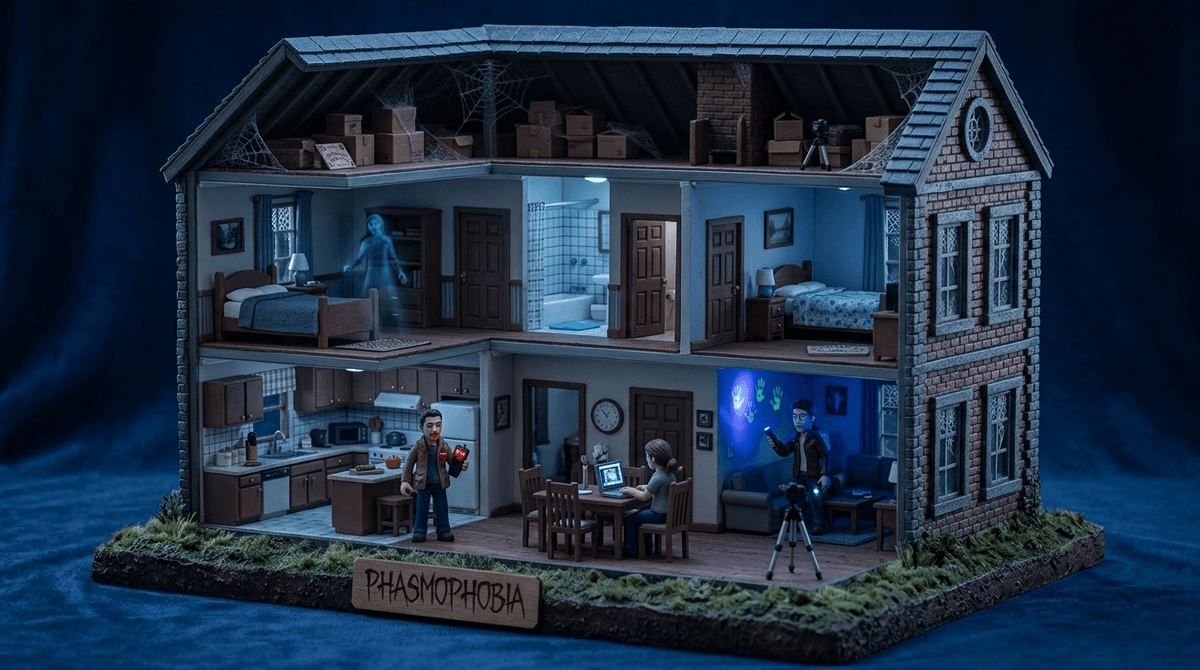
The most fascinating thing about this game isn’t the ghosts; it’s how your kid handles the pressure. Because Phasmophobia divides tasks so cleanly, it functions as a high-stakes personality test. You have the "Truck Guys" who stay in the van, monitoring cameras and tracking sanity levels, and the "House Guys" who walk into the dark with a flashlight and a prayer.
If you see your kid taking the lead inside the house, they’re likely developing some serious composure. If they prefer the truck, they’re leaning into data management and support. It’s a great way to see what your kid's gaming habits reveal about their personality. The game doesn't just ask you to be brave; it asks you to be useful while you’re terrified.
Why they are talking to the walls
If you walk past your kid’s room and hear them asking, "How old are you?" or "Are you here?" to a silent room, don't worry—they haven't lost it. The game uses voice recognition as a core mechanic. You have to talk to the ghost to get evidence, and the ghost is literally listening.
This creates a unique social dynamic. In most shooters, kids are yelling at each other. In Phasmophobia, they’re often whispering, trying to coordinate without triggering a "hunt" (the phase where the ghost actually tries to kill them). It’s an exercise in vocal control and quiet collaboration. This is why it’s often grouped with mature games kids are playing at school—it has a viral, "did you see what happened?" quality that makes it a constant playground topic.
The Horror 2.0 factor
With the recent 2026 updates, the game has moved past its "indie jank" phase. The ghosts are smarter, the environments are more reactive, and the "Horror 2.0" overhaul makes the scares feel less like scripted events and more like unpredictable AI behavior.
If your teen is asking to play this, they are likely looking for that specific "water cooler" horror moment. It’s less about the gore—though there is some blood—and more about the dread of a door closing behind you. If they’ve already cycled through the "not too scary" phase of gaming and are looking for something that actually bites, this is the logical next step. You can find more context on this transition in our guide on why your kid is talking to ghosts in the living room.
A tactical approach to teamwork
Most parents see "horror" and think "slasher movie," but Phasmophobia is actually a logic puzzle. To "win," you have to check off specific boxes: Fingerprints? Check. Freezing temperatures? Check. It’s a process of elimination that rewards a clinical, scientific mindset even when things are going sideways.
This makes it one of the better games that promote teamwork. You cannot succeed alone; one person needs the EMF reader, another needs the camera, and everyone needs to be talking. If they’re playing with a consistent group of friends, they’re practicing delegation and crisis management. Just keep an eye on the VR aspect—playing this on a screen is a spooky puzzle, but playing it in a headset is a visceral experience that can be too much for even some adults.