

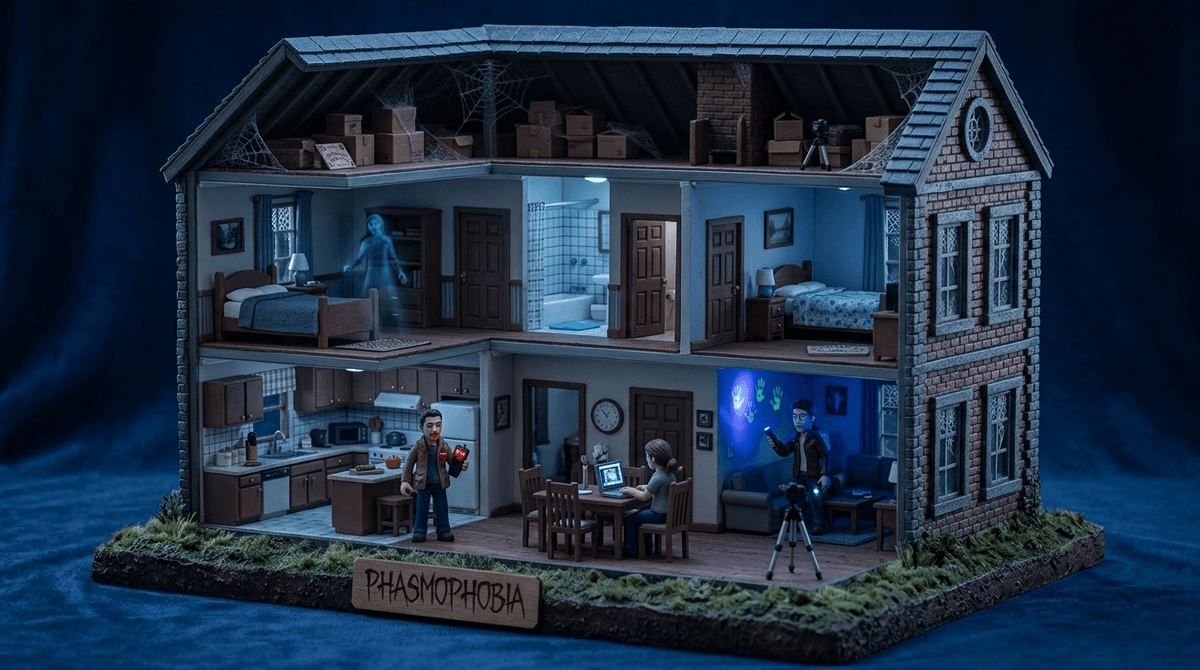
Phasmophobia is a spooky, high-tension cooperative ghost-hunting game that is generally great for kids aged 12 and up, provided they can handle jump scares and a "creepy" atmosphere without losing sleep. While it’s technically a horror game, it’s much more of a logic-based detective sim than a mindless slasher, making it a surprisingly solid choice for building teamwork and deductive reasoning skills.
TL;DR: Phasmophobia is a 4-player co-op investigation game where players use tools like EMF readers and spirit boxes to identify ghosts. With the 2026 'Horror 2.0' update, the game has become more immersive and atmospheric, but it remains focused on strategy rather than gore. Screenwise recommends it for ages 12+ because of the intensity and the necessity of voice chat, but it's a fantastic alternative to more violent shooters.
If you’ve heard your kid shouting "Give us a sign!" or "Are you friendly?" at their computer screen, they aren't trying to summon a demon in your living room—they’re playing Phasmophobia.
Originally a viral hit in the early 2020s, the game has finally exited early access in 2026 with a massive "Horror 2.0" overhaul. The premise is simple: you and up to three friends are paranormal investigators sent into haunted houses, hospitals, and campsites. Unlike Ghostbusters, you aren't there to catch the ghost. You’re there to gather evidence (fingerprints, freezing temperatures, ghostly writing) to figure out what it is and then get out before it "hunts" you.
The 2026 update introduced "procedural haunting," meaning the ghosts are smarter and the jump scares aren't scripted. It also added several new maps, including a terrifyingly detailed abandoned shopping mall that makes the old "Ohio" memes feel like a walk in the park.
It’s not just about the scares; it’s about the "vibe." In a world of "brain rot" content and repetitive battle royales like Fortnite, Phasmophobia offers something genuinely different:
- The Social Element: You cannot win this game alone (well, you can, but it’s terrifying and difficult). It requires constant communication. Kids have to coordinate who is holding the flashlight, who is watching the video cameras in the van, and who is brave enough to walk into the basement with the Spirit Box.
- The Detective Work: It’s essentially a high-stakes logic puzzle. You have a journal of 20+ ghost types, and you have to cross-reference your findings to narrow down the culprit. It’s "edutainment" in the sneakiest way possible—teaching deductive reasoning under pressure.
- The "Scary Fun" Factor: It’s the digital equivalent of telling ghost stories around a campfire. It’s that controlled rush of adrenaline that middle schoolers and teens crave.
While Phasmophobia is a "horror" game, it’s important to distinguish it from games like Resident Evil or Dead by Daylight.
1. The Gore Factor (or lack thereof)
There is very little blood and almost no "combat." You don't shoot the ghosts. If a ghost catches you, the screen usually goes dark, or you see ghostly hands wrap around your face. It’s startling, but it’s not gruesome. The 2026 update did add more "death animations," but they remain more "spooky" than "slasher."
2. The Voice Chat Requirement
This is the big one. The game uses "voice recognition," meaning the ghost actually responds to the things players say. To play effectively, kids need to use a microphone.
- The Risk: If your kid is playing in "Public Lobbies," they are talking to strangers.
- The Screenwise Advice: We strongly recommend that kids only play in "Private Lobbies" with friends they know in real life. The community can be great, but like any online space, it has its share of "edge lords" and inappropriate talk.
3. Psychological Intensity
The game is designed to be stressful. The lights flicker, the ghost whispers in your ear, and the heartbeat sound effect ramps up during a hunt. If your child is prone to anxiety or has trouble distinguishing game-stress from real-life stress, this might be a "wait until they're older" title.

If your 8-year-old wants to play because they saw a YouTuber doing it, but you know they’ll be in your bed at 2 AM after one round, consider these "spooky-lite" options:
- Luigi's Mansion 3: The gold standard for "horror" for the younger set. It's charming, funny, and still involves ghost hunting.
- Roblox: Doors: A very popular horror game within Roblox. It has jump scares but is much more stylized and less "realistic" than Phasmophobia.
- Among Us: If they like the "detective/deduction" part of Phasmophobia but don't need the ghosts, this is the classic choice.
Instead of just asking "Is that game too scary?", try engaging with the mechanics of the game. It shows you're paying attention to the skill involved, not just the genre.
- "What kind of ghost was it this time?" (This gets them talking about the different types like Banshees, Wraiths, or the new 2026 'Stalker' class).
- "Who is the 'Van Person' in your group?" (Usually the kid who is too scared to go inside, which is a funny dynamic to discuss).
- "How do you guys decide who goes in first?" (A great way to talk about leadership and teamwork).
Q: Is Phasmophobia okay for a 10-year-old?
It depends on the child’s maturity, but generally, Screenwise suggests waiting until 12. While the content isn't "bad" (no drugs, sex, or heavy gore), the psychological tension and the reliance on voice chat with others make it better suited for middle schoolers and up.
Q: Does Phasmophobia have jump scares?
Yes, frequently. The game relies on "hunts" where the ghost suddenly appears and chases players, accompanied by loud noises and visual distortions. The 2026 'Horror 2.0' update specifically enhanced these scares to be less predictable.
Q: Can you play Phasmophobia without a microphone?
Technically yes, using a text-to-speech UI, but it significantly hampers the experience. The game is built around the "Spirit Box" mechanic where you verbally ask the ghost questions; playing without a mic is like playing soccer with one leg.
Q: Are there in-app purchases in Phasmophobia?
No. As of 2026, Phasmophobia remains a "buy-to-play" game. Once you own it, all the ghosts, maps, and equipment are earned through in-game currency by completing missions. There are no predatory loot boxes or "battle passes."
Phasmophobia is a rare breed of "viral game" that actually has some meat on its bones. It rewards patience, logic, and cooperation. If your teen is playing it, they’re likely engaging in some of the most complex social teamwork they’ll do all week. Just make sure they’re sticking to private lobbies with their actual friends, and maybe keep the hallway light on for them after they finish a late-night session.