The "Paper and Puppet" Aesthetic
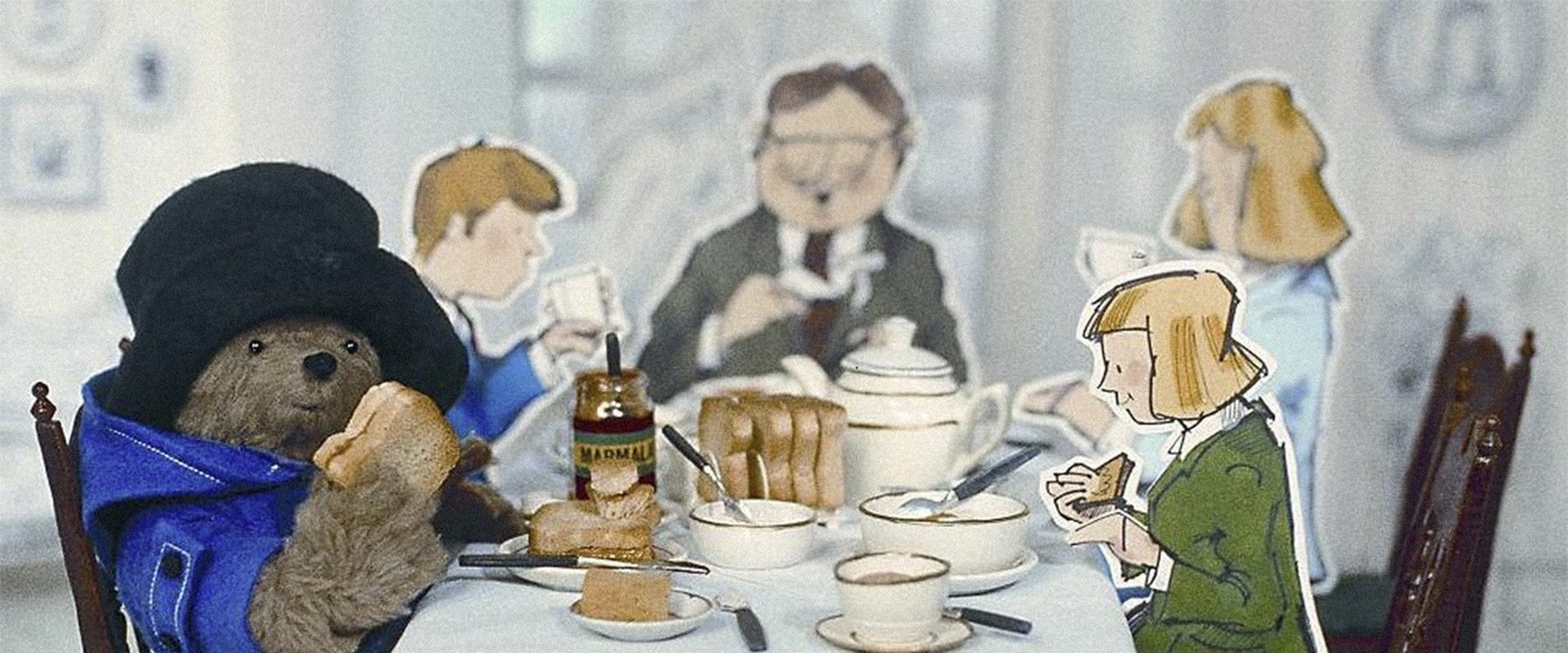
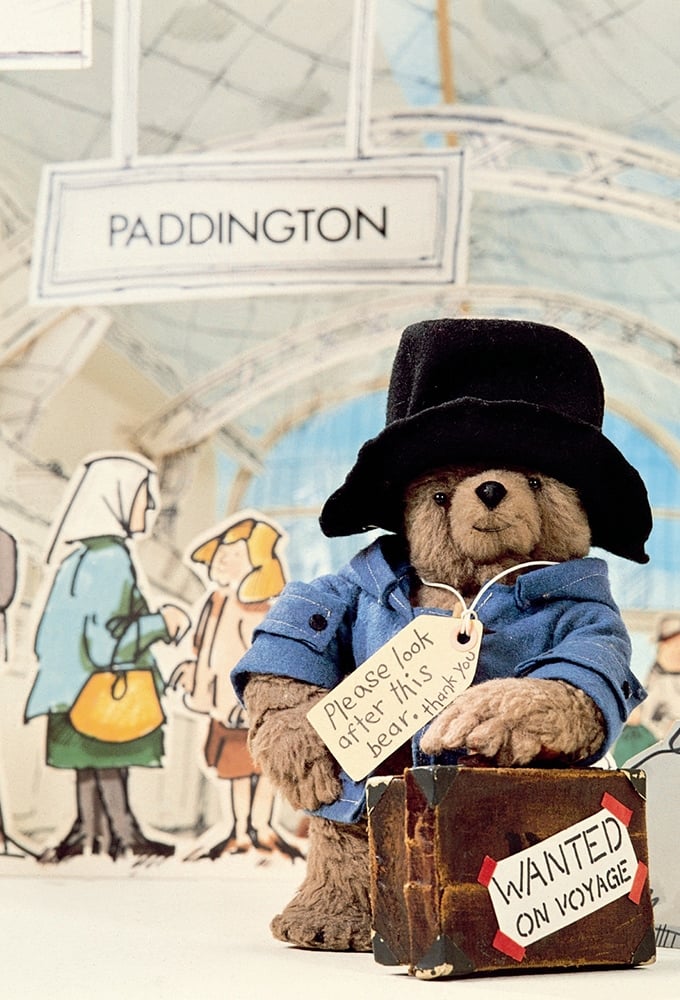
The most striking thing about the 1976 series is its visual weirdness. While modern animation strives for seamless immersion, this show leans into its own artificiality. Paddington is a physical, stop-motion puppet with real fur and a tactile coat, but he moves through a world made of flat, 2D line drawings.
This isn't just a budget constraint; it creates a specific psychological effect. Paddington looks and feels like an outsider because he literally exists in a different dimension than the Brown family and the streets of London. It perfectly mirrors the character’s status as an immigrant trying to find his footing in a strange land. For a young child, this visual distinction makes Paddington easy to track and identify with. He is the only "real" thing in a world of sketches.
A One-Man Performance
Unlike modern cartoons that feature sprawling voice casts and celebrity cameos, this entire production rests on the shoulders of Michael Hordern. He provides the narration and every single character voice. The result feels less like a typical TV show and more like a high-end audiobook that happens to have pictures.
Hordern’s delivery is dry, British, and impeccably paced. He doesn't talk down to the audience or use the frantic, high-pitched energy common in today’s toddler programming. Because the dialogue isn't lip-synced to the 2D characters, the show relies heavily on the quality of the language. It’s an excellent choice for parents who want to expose their kids to sophisticated vocabulary and rhythmic storytelling without the sensory overload of a musical or an action-heavy series.
Managing the Movie Gap
If your kid is coming to this after seeing the 2014 Paddington film or its sequel, you need to manage expectations. Those movies are high-stakes comedies with CGI spectacles and genuine villains. This 1976 series is ambient. There are no chase scenes or life-or-death stakes. The "conflicts" usually involve things like Paddington getting stuck in a deck chair or trying to use a vacuum cleaner for the first time.
If your child enjoys the character of Paddington—his politeness, his literal-mindedness, and his penchant for marmalade—they will find plenty to love here. But if they are looking for the "thrills" of the modern franchise, this will feel like a museum piece. Think of this as the wind-down version of the character. It’s the show you put on when you want to signal that the day is ending and it’s time to lower the collective household heart rate.
The Five-Minute Utility
The runtime is the secret weapon of this series. At roughly five minutes per episode, it functions as a perfect transition tool. It is exactly long enough to satisfy the "just one more show" request without actually derailing a schedule.
Because the episodes are self-contained and narratively simple, you can use them as a timer for mundane tasks. "You can watch two Paddingtons while I finish the dishes" is a concrete, manageable window of time. The show’s low-key energy ensures that when the screen goes black, there isn't a massive dopamine crash or a tantrum. It’s the rare piece of media that leaves a child calmer than when they started.