The "Perfect Family" Friction
If you’ve ever felt like an outsider in a room where everyone else seems to know the secret handshake, you’ll get why Carley Connors is so prickly. When she’s dropped into the Murphy household, she doesn't see a safety net; she sees a threat. To a kid who has survived by being tough and cynical, the Murphys’ brand of organized, middle-class stability feels like a foreign language she has no interest in learning.
This is where the book succeeds where others fail. It would have been easy for Lynda Mullaly Hunt to make the Murphys a collection of cardboard cutouts, but they function as a mirror for Carley’s own trauma. Her resistance to their kindness isn't just "teen angst"—it’s a survival mechanism. Watching her slowly realize that she’s allowed to be a child is the real heart of the story. If your kid is currently navigating their own "alien" phase at school or in a new social circle, Carley’s internal monologue will feel incredibly resonant.
Why the Ending Hits Different
Most middle-grade novels about kids in "the system" follow a predictable arc toward a permanent, tidy resolution. One for the Murphys refuses to take the easy way out. The choice Carley eventually has to make between her biological mother and the life she’s built with the Murphys is brutal. It’s the kind of narrative tension that leads to the best late-night "but what would you do?" conversations with your kid.
Because it deals so heavily with the idea of "chosen family" versus biological ties, it’s a natural companion to our guide on Books About Adoption. While foster care and adoption are different journeys, the underlying questions about where a person truly belongs are the same. This book doesn't give a "right" answer, which is exactly why it stays with you long after the final chapter.
The Hunt Connection
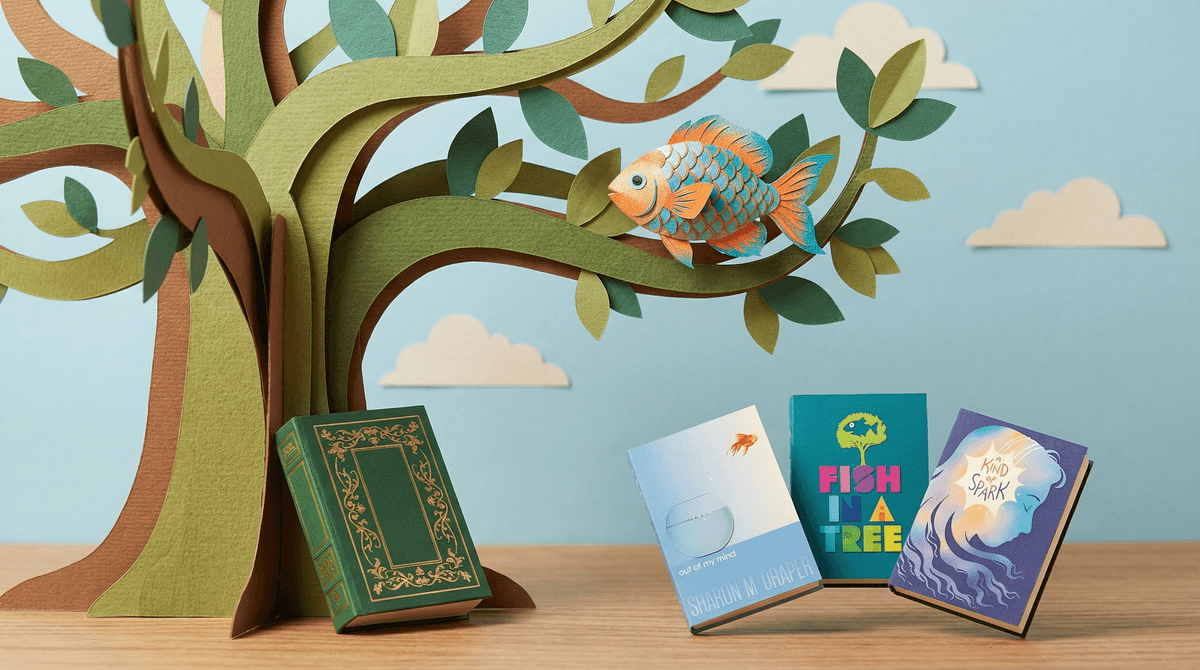
If your kid has already read Fish in a Tree, they’ll recognize the author’s talent for writing characters who feel like they’re being misunderstood by the entire world. Both books specialize in that specific brand of middle-grade empathy. However, One for the Murphys is the heavier sibling. If you’re trying to decide if they’re ready to level up from the classroom drama of Ally Nickerson to the higher stakes of Carley Connors, check out our Fish in a Tree Parents Guide to compare the emotional weight.
How to Handle the "Heavy"
This isn't a book you just hand to a ten-year-old and walk away. The backstory involves a violent altercation that is referenced enough to be a presence throughout the book. It’s handled with care, but the emotional scars are visible. For parents, the move here is to treat it as a bridge. It’s a way to talk about the fact that some kids are dealing with things that aren't visible on the surface.
If you want a deeper look at the specific resilience-building themes here, our guide to One for the Murphys: Navigating Trauma, Healing, and the True Meaning of Family breaks down the big emotions chapter-by-chapter. This is a "tissue box" book, but it’s also a "growth" book. It’s for the kid who is starting to realize that the world is complicated and that sometimes the most courageous thing you can do is let someone be nice to you.