Two movies stitched together, and one of them is great
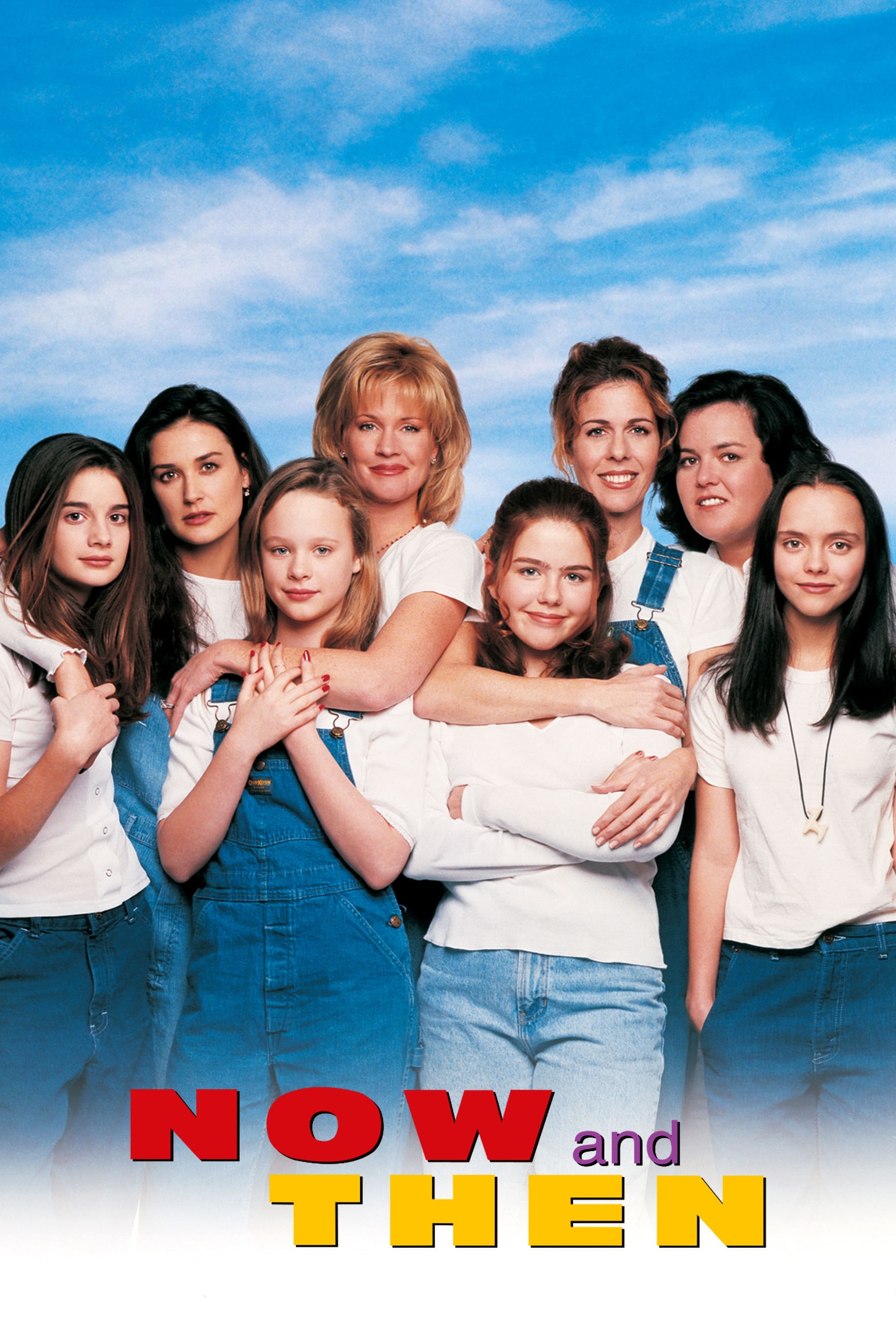
Now and Then has a structural problem you'll notice in the first ten minutes: whenever Demi Moore, Rosie O'Donnell, Melanie Griffith, and Rita Wilson are on screen in 1991, the movie stalls out. They sit around in oversized 90s sweaters, smoke cigarettes, and explain the themes of the movie out loud.
The moment the camera flashes back to the summer of 1970 in Shelby, Indiana, the energy completely changes. The four younger actresses play off each other with zero Disney-Channel polish.
- Roberta (Christina Ricci) is a tough tomboy grieving the car-crash death of her mother four years earlier, furious that her body is changing and ruining her neighborhood basketball games.
- Samantha (Gaby Hoffmann) is the obsessive storyteller using the supernatural—tarot cards, seances, a dead boy's grave—to distract herself from her parents splitting up.
- Teeny (Thora Birch) is boy-crazy, obsessed with becoming a movie star, and hiding how lonely she is with country-club parents who barely look at her.
- Chrissy (Ashleigh Aston Moore) is the sheltered peacemaker whose hyper-domestic mother tells her sex is a horrible duty women just have to endure.
The Stand by Me comparison
Film critics in 1995 couldn't review this movie without comparing it unfavorably to Rob Reiner's Stand by Me. Both are set in a golden-hour mid-century summer, both feature four 12-year-olds biking along train tracks, and both revolve around a fixation with death.
Where Stand by Me is about boys testing their bravery against a hostile world, Now and Then is about girls trying to figure out what adulthood is going to cost them. Every adult woman they meet in town is a different cautionary tale: Samantha's bitter, newly single mom; Chrissy's repressed housewife mother; Cloris Leachman's imperious grandmother; and Janeane Garofalo's quick cameo as Wiladene, the snarky local psychic. Even the mystery of "Dear Johnny" ends up turning on a moment of empathy with Crazy Pete (Hank Azaria), the terrifying neighborhood loner who turns out to be Johnny's grieving father.
How it lands with kids in 2026
For a kid growing up in 2026, 1970 and 1995 might as well be the same century. What holds their attention isn't the period detail—it's the autonomy. Watching four 12-year-olds ride their Schwinn bikes into the next town over to visit a library microfiche machine without a single parent knowing where they are feels like science fiction to modern middle-schoolers.
If your kid likes the graphic novels of Raina Telgemeier or movies like Are You There God? It's Me, Margaret., this sits in the exact same lane.