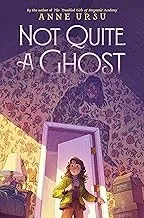
The Horror of Being Unseen
Anne Ursu has a habit of taking classic fairy tale or horror skeletons and draping them in very modern, very real anxieties. In Not Quite a Ghost, she takes the bones of Charlotte Perkins Gilman’s The Yellow Wallpaper and updates it for a generation of kids who lived through a pandemic and the rise of 'invisible' illnesses like Long COVID or ME/CFS.
Violet is a great protagonist because her struggle isn't just with the creepy thing in the attic—it's with the fact that her body has stopped cooperating. Ursu captures the sensory details of chronic fatigue with painful accuracy: the way light hurts, the way a flight of stairs feels like a mountain, and the devastating realization that your friends are moving on without you because you’re too tired to keep up.
More Than Just a Spookfest
While the marketing leans into the Victorian ghost house vibes, the book spends just as much time in doctors' offices and middle school hallways. The horror elements are effectively creepy—the vine pattern on the wall that seems to pulse and move—but they serve as a physical manifestation of Violet’s internal state.
Parents should know that the book is deeply critical of the medical establishment and the way it often fails young girls. This isn't 'anti-science,' but rather a very honest look at how kids can be traumatized when their lived experience is dismissed as 'anxiety' or 'attention-seeking.' It’s a heavy theme, but handled with the kind of grace that makes it a great bridge for parents and kids to talk about bodily autonomy and trust.