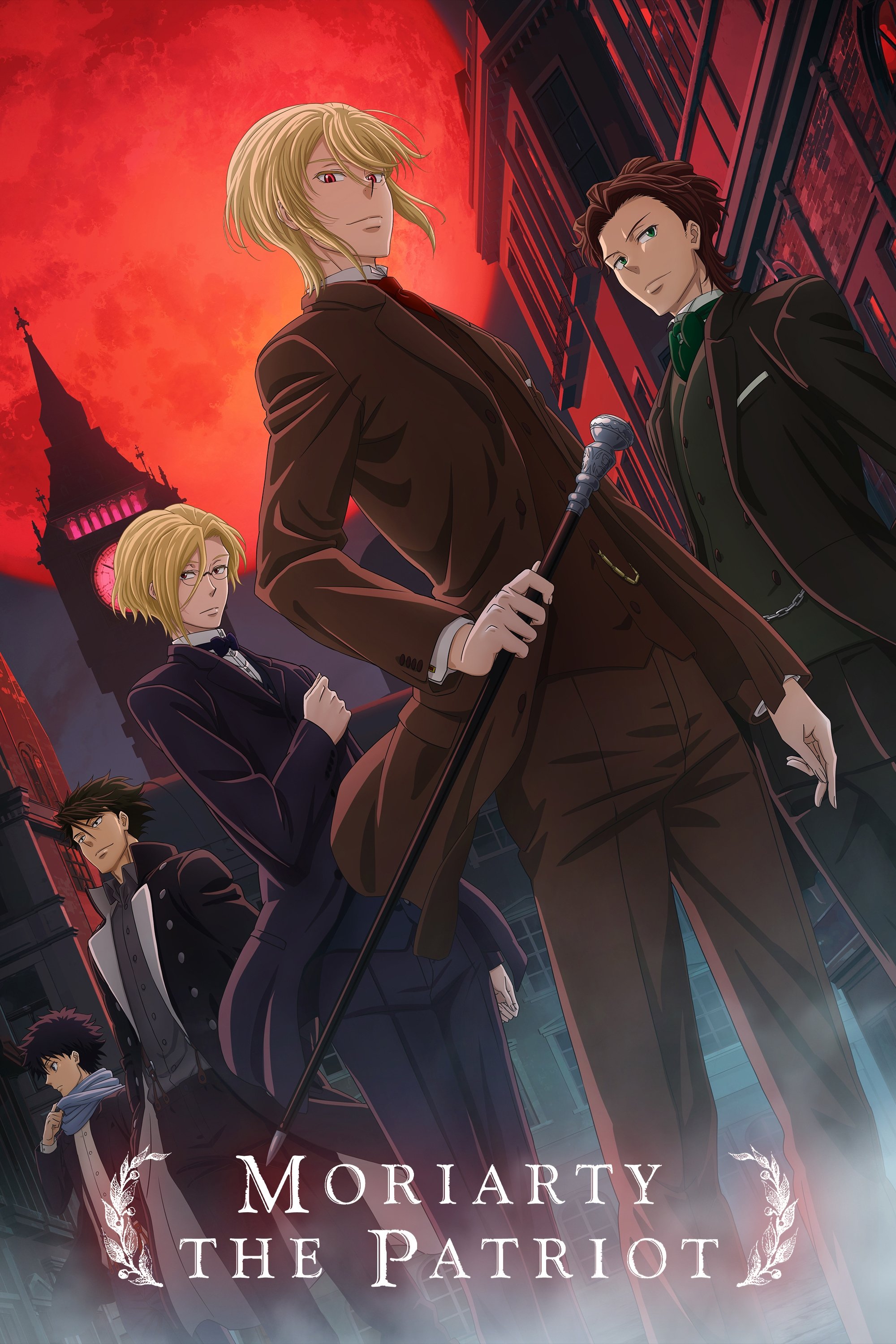
Victorian class war meets Death Note
Most Sherlock Holmes adaptations treat Professor Moriarty as a mustache-twirling sociopath. Moriarty the Patriot takes a different angle: what if Moriarty was the hero of the working class, and Sherlock was the unwitting pawn preserving an exploitative status quo?
The show leans heavily into Victorian political theory. The Moriarty brothers—adopted into wealth—use their social pedigree and mathematical brilliance to target predatory lords who abuse their power. The solutions they engineer are never simple assassinations; they are elaborate morality plays designed to expose aristocratic corruption to the public while leaving no legal trail.
The moral calculus
The series borrows the structural rhythm of Death Note: a hyper-competent young man uses lethal force to reshape the world, chased by an eccentric genius detective. Where it differs is empathy. Light Yagami was a megalomaniac from episode one; William James Moriarty is genuinely motivated by grief for the poor, even as his methods turn increasingly ruthless.
That tension makes the show interesting for older teens. It does not hand out easy ethical answers. When Sherlock finally enters the narrative, the series shifts from simple revenge-of-the-week stories to a high-speed psychological duel where both sides have coherent, irreconcilable worldviews.
Keep an eye on the early episodes, where the crimes of the nobility include explicit child cruelty to establish their villainy. Once past those opening setups, the focus stays squarely on the mind games.