Why a 2012 iPad App Still Beats Most Modern STEM Games
Back in 2012, educational iPad apps were mostly built by independent developers trying to make cool interactive tools rather than recurring revenue engines. Monster Physics comes from Dan Russell-Pinson, and it reflects that era's best instincts: clean mechanics, zero monetization tricks, and deep creative freedom.
Open Sandbox vs. Guided Missions
The app splits its time between two main modes:
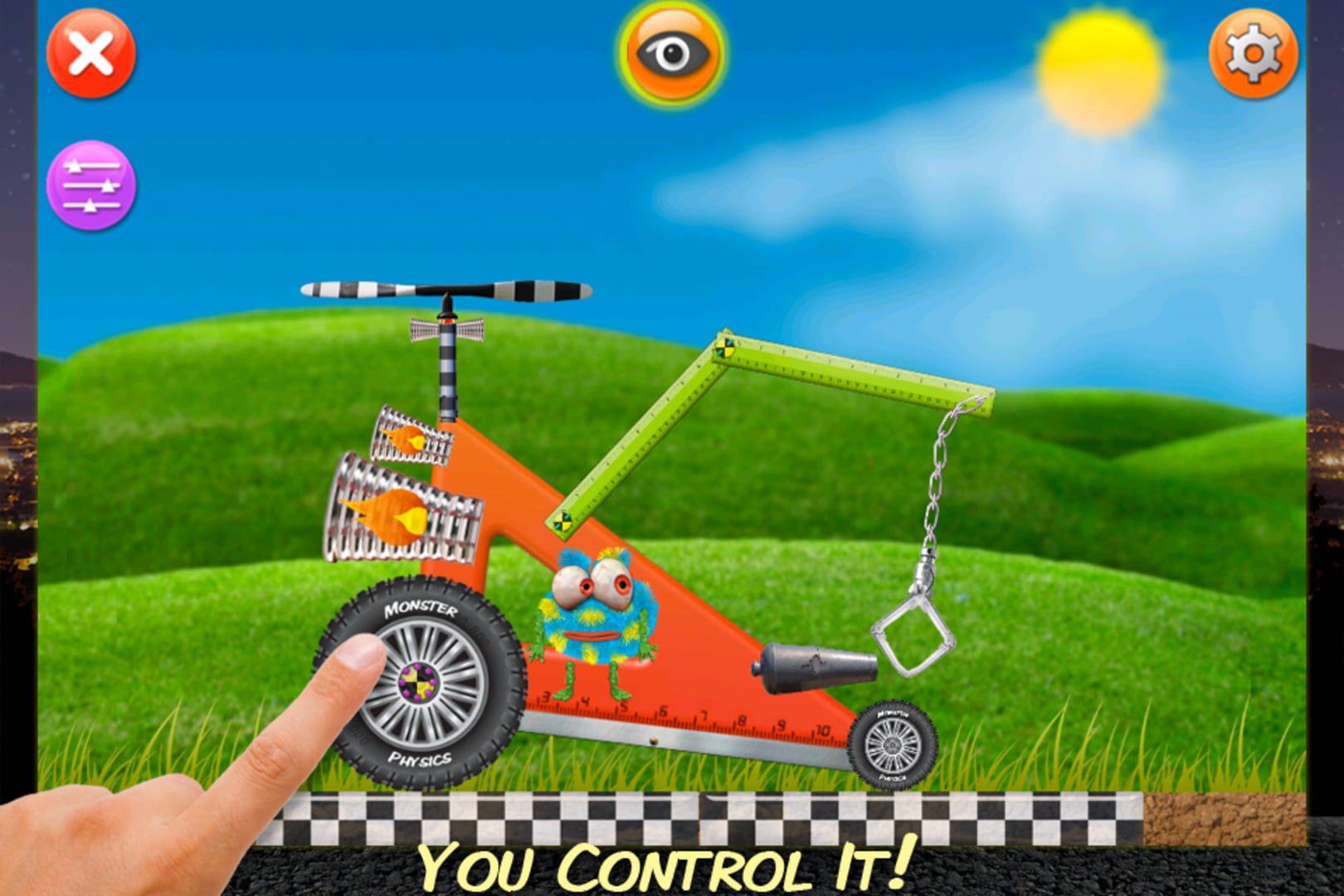
- Build Mode: An open canvas where kids select materials (wood, metal, rubber, plastic), connect parts (engines, wheels, wings, thrusters), and attach them to a customizable monster driver.
- Missions: 50 distinct challenges where kids must modify or create a machine to reach a goal, like delivering a cargo box or maneuvering past obstacles.
The real draw here is how the physics engine responds. If a car is too heavy on one side, it flips. If an engine lacks power for the weight of the frame, the vehicle stalls. Kids learn friction, density, and center of mass through trial and error rather than reading a textbook.
Living with Older Software
The visuals definitely signal its 2012 vintage with simple monster avatars and a basic interface. But because it doesn't require an internet connection, account creation, or constant updates, it remains one of the most reliable offline travel apps you can install on an iOS device.