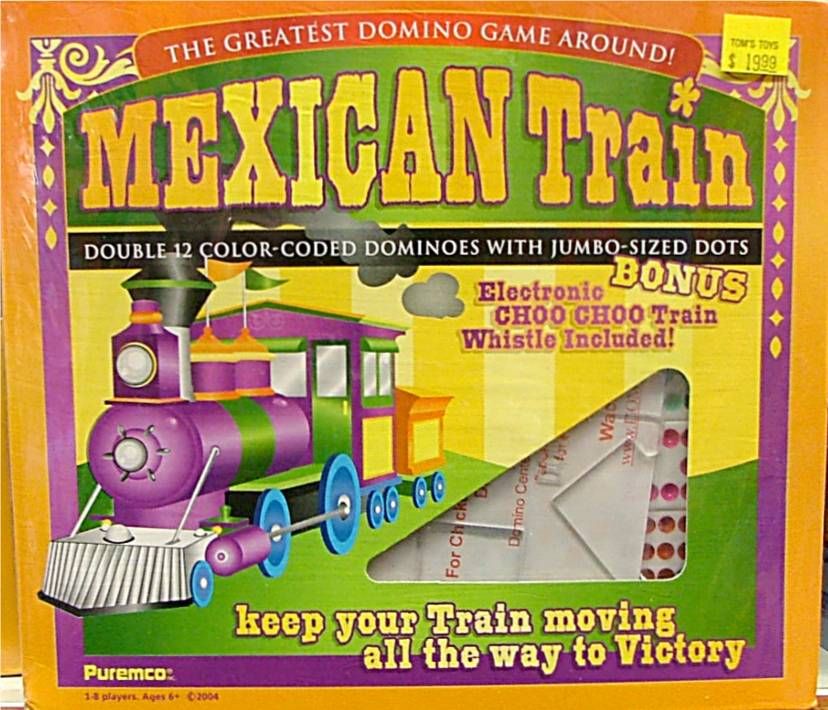
Why it still hits the table
In an era of complex 'legacy' board games and infinite digital distractions, Mexican Train survives because it understands the assignment: give people something to do with their hands while they talk. It was released in 1994, but it feels much older, tapping into that classic dominoes DNA while adding just enough structure to make it a 'real' game.
The 'Double' Trouble
The real tension in the game comes from the double tiles. When you play a double, you have to 'satisfy' it by playing another tile of the same value. If you can't, and the next player can't either, the game stalls and everyone starts putting markers on their trains. It’s a simple mechanic that creates genuine groans and cheers around the table.
Pro-tip: Don't play the full game
Most branded boxes tell you to play 12 rounds, starting with the 12-12 tile and working down to 0-0. Unless you have a rainy afternoon and a lot of snacks, don't do this. It becomes repetitive. The best way to play with kids is to pick a set number of rounds (say, three) and just tally the points. It keeps the energy high and prevents the 'when will this end' slump that kills the vibe of many classic abstract games.
If you're looking for something to bridge the gap between 'kid games' and 'adult games' during a family visit, this is your move. It’s low-stakes, high-interaction, and doesn't require a Wi-Fi password.