Beyond the Baking Soda Volcano
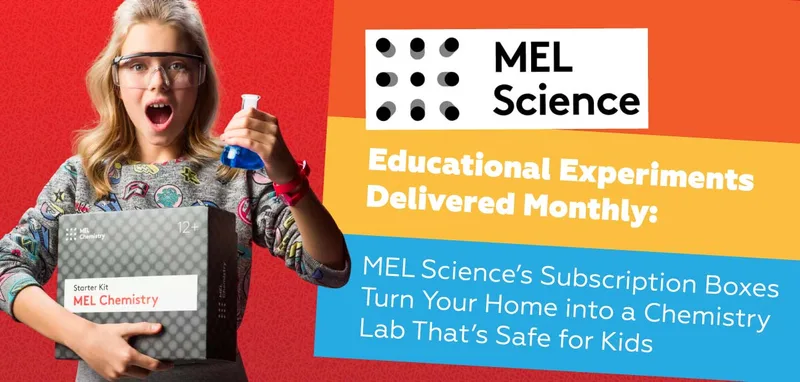
Most 'science kits' for kids are essentially kitchen pantry crafts. You mix vinegar and baking soda, things fizz, and everyone claps. MEL Chemistry is different because it treats kids like actual practitioners. You are dealing with real reagents, professional-grade borosilicate glassware, and experiments that result in actual chemical changes, like growing a tin dendrite or creating a 'silica garden.' This shift in stakes—using real tools to get real results—is exactly what sparks a genuine interest in the field.
The VR Differentiator
Chemistry is notoriously hard to learn because it is invisible. You see a liquid change color, but you can't see the electrons moving. MEL's VR component (which works with a simple cardboard-style headset and a phone) is the secret sauce. It lets kids visualize the atomic structure of the reagents they just handled. It turns an abstract equation into a spatial memory. It's one of the few cases where 'adding an app' to a physical toy actually makes the physical toy better.
The Reality of the Subscription
While the content is stellar, the logistics can be a bit 'start-up messy.' Shipping delays happen, and the customer service experience can be hit-or-miss depending on where you are in the world. Also, keep in mind that the 'starter kit' is a one-time shipment of the heavy gear (the burner, the glasses, etc.), and the monthly boxes are just the chemicals for that month's experiments. If you lose a piece of the starter gear, you're going to have to improvise or buy a replacement separately.
This is a 'do it with them' goldmine. If you're looking for a way to engage with a middle-schooler that doesn't involve a screen-only battle, this is the move. Just make sure you have a spot for it—once you start a silica garden, you’re going to want to leave it on the counter to watch it grow.