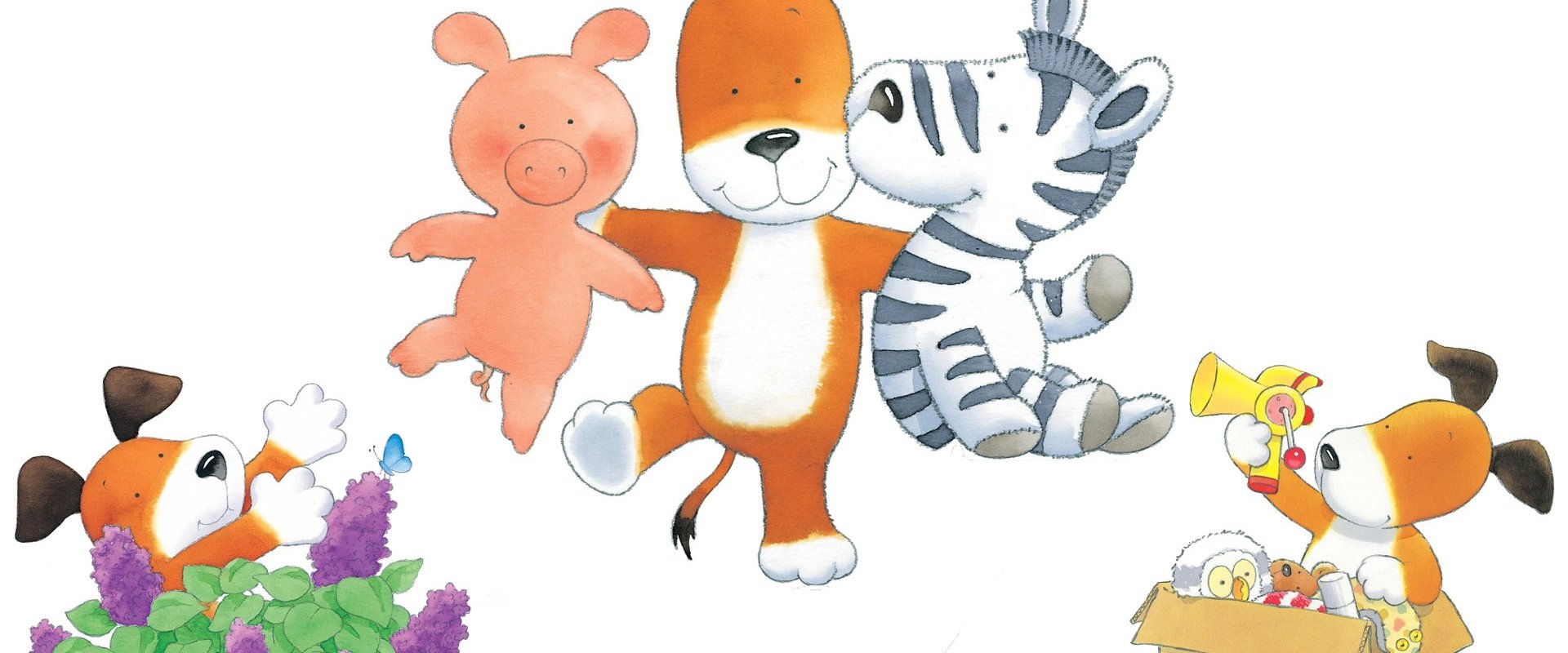
If your household is currently vibrating at the frequency of Bluey or Paw Patrol, the first thing you’ll notice about Kipper is the silence. This show doesn't just have a slow pace; it has breathing room. Based on the books by Mick Inkpen, the animation style ignores the modern urge to fill every square inch of the screen with neon colors. Instead, Kipper and his friends move against minimalist white backgrounds, making it one of the few shows that won't give you a secondary headache while your toddler watches.
The "Low-Stim" Pioneer
Long before "low-stimulation" became a buzzword for parents trying to avoid toddler meltdowns, Kipper was perfected. It’s the television equivalent of a weighted blanket. If your kid is prone to overstimulation or you’re looking for a "bridge" show to transition from playtime to naptime, this is your best tool.
The stakes are famously low. An episode might revolve entirely around finding a lost toy or dealing with a leaky umbrella. There are no villains, no ticking clocks, and no frantic musical numbers. While critics on Common Sense Media note that the 1990s animation is "stiff," that lack of fluidity actually works in its favor for the youngest viewers. It doesn't demand the high-speed visual processing that modern 3D animation does.
Accent and Vocabulary
Because this is a British production, expect some linguistic friction. Your kid might start asking for a "torch" instead of a flashlight or a "biscuit" instead of a cookie. For most parents, the British voice acting is a selling point—it feels "classier" than the screechy American dubs of the same era—but very young kids used to local accents might stare blankly for the first few episodes.
One thing to keep an eye on is the character dynamic. While Kipper is the "lovable dog" the Dove Foundation praises, his friend Tiger can be a bit of a handful. He’s the character who pushes boundaries, acts selfishly, or gets grumpy. He almost always learns a lesson by the eleven-minute mark, but if your child is a "mimic," they might pick up some of Tiger’s sass before they pick up the episode's moral.
Why it holds up (and why it doesn't)
If you’re looking for a "whole family" watch, this isn't it. You will be bored. Unlike Bluey, which writes jokes specifically for the parents, Kipper is laser-focused on the three-year-old brain.
- The Gender Gap: One valid critique often raised by modern viewers is that the core group—Kipper, Tiger, Jake, Pig, and Arnold—is an all-male squad. In 1997, this was standard; in 2026, it feels like a glaring omission. If you’re intentional about media representation, you’ll notice the lack of female voices immediately.
- The "Scary" Factor: There is a specific episode involving a "magic lamp" and a dragon that occasionally pops up in parent forums as being a bit too much for the most sensitive toddlers. It’s mild by any objective standard, but in a show this gentle, a dragon feels like a jump-scare.
If your kid liked the quiet curiosity of Pocoyo or the gentle animal friendships in Little Bear, Kipper is the logical next step. It’s a relic, sure, but it’s a functional one. It’s the show you put on when everyone just needs to turn the volume down on the world for twenty minutes.